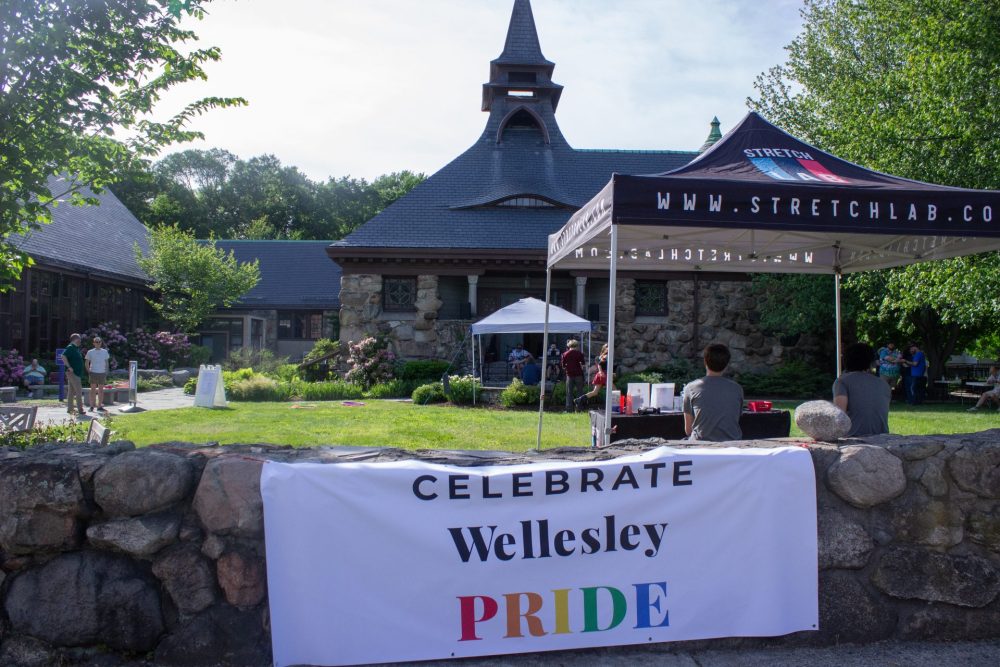
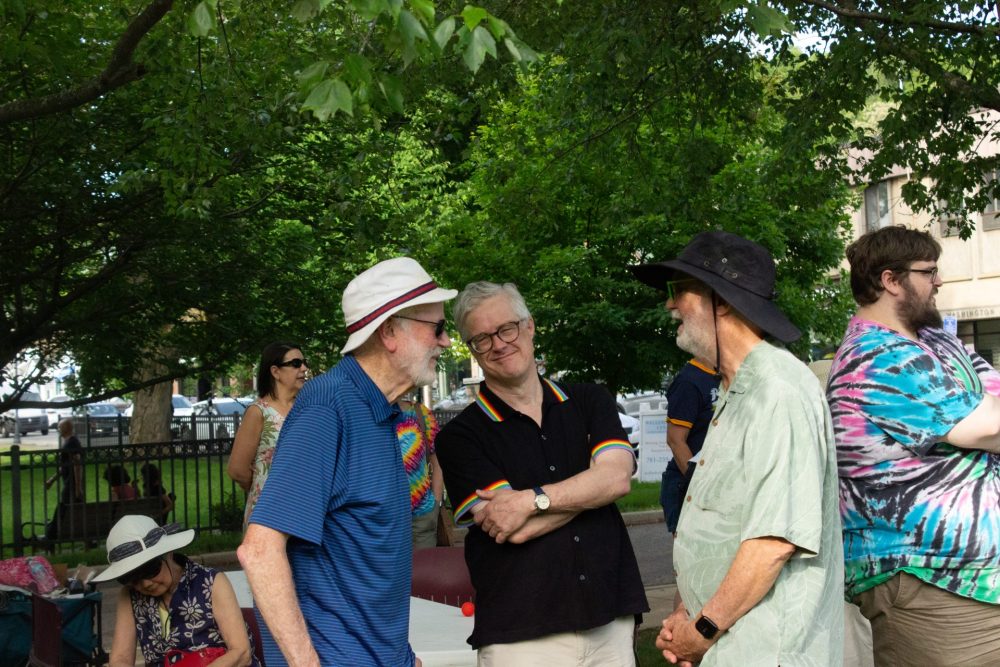
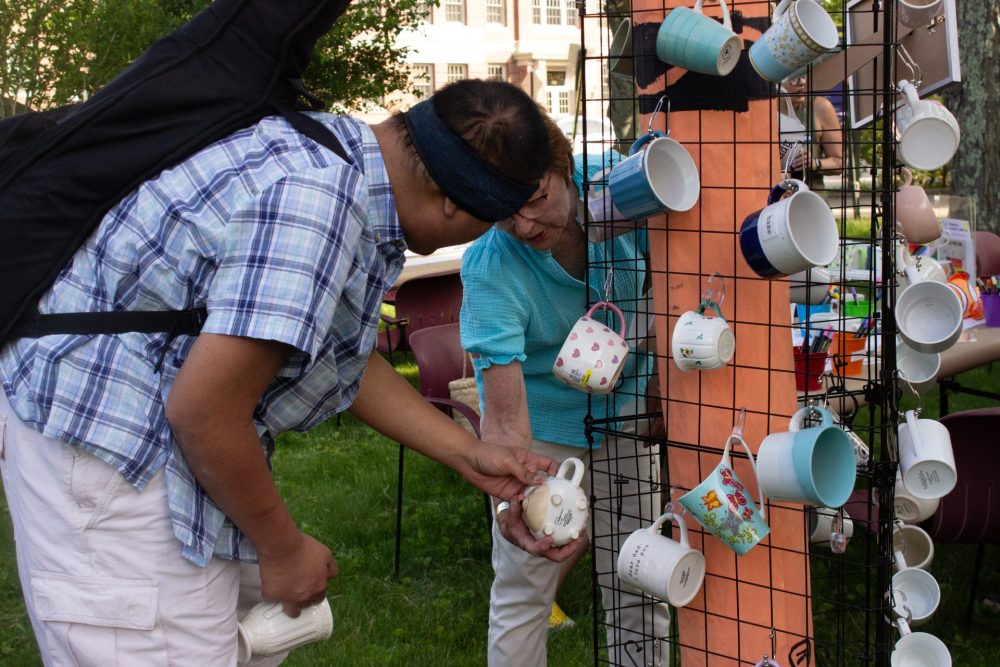
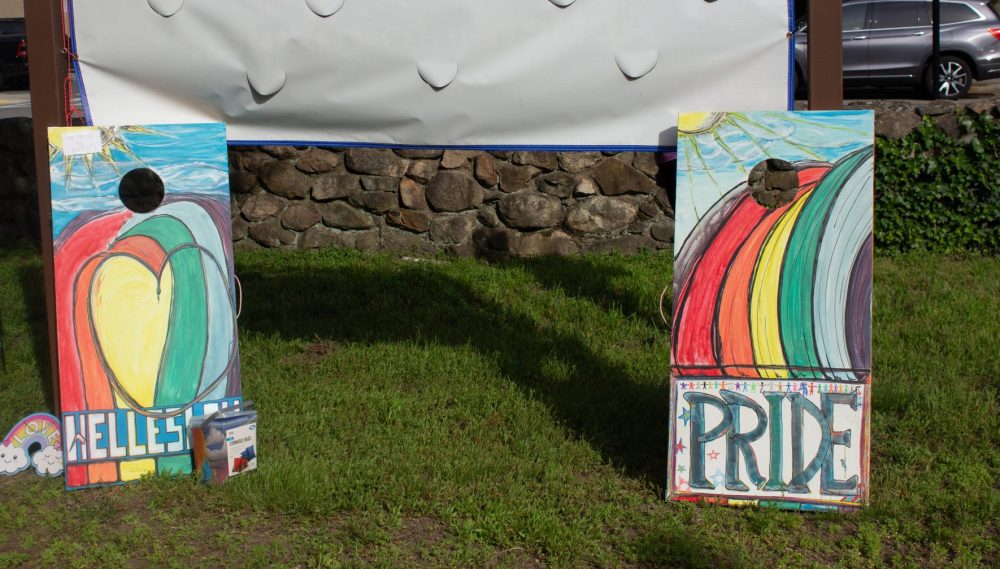
Under a sun-drenched sky, the grounds of Unitarian Universalist Church in Wellesley Hills transformed into a sea of rainbows on June 4 for Wellesley’s first-ever Pride celebration. Dozens flocked to the church lawn for a night featuring live music, food trucks, raffles and booths run by local organizations and businesses.
The event was co-sponsored by several Wellesley-based religious institutions and nonprofits, and it was primarily organized by UU Wellesley Hills and World of Wellesley, a volunteer-run nonprofit organization that educates local communities about equity and belonging.
Rama Ramaswamy, president of WOW, said in an interview that the historic event reflects a widespread desire to feel seen, welcome and connected. What mattered to her was not that the event hadn’t happened before, but rather that the community put in the effort to finally bring it to fruition, she said.
“Different ideas emerge at different times and different moments, and different opportunities arise depending on the people who are willing to step forward and bring them to life,” she said. “When the opportunity arose, so many people across the community came together to make it happen in a thoughtful, welcoming and really collaborative way.”
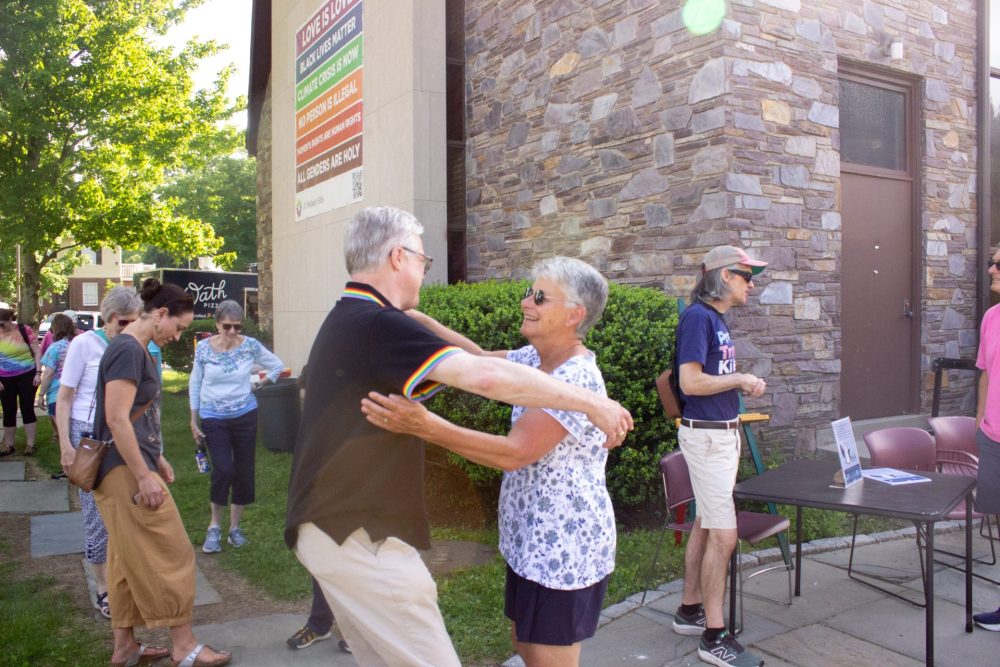
Ramaswamy said that the idea for the event started floating around after Wellesley Public School students reached out to WOW about organizing a Pride celebration.
Although that plan fizzled out as the school year grew busy, the idea persisted until Ramaswamy met Mark Robel, senior minister of UU Wellesley Hills, who had been discussing the same idea with his fellow clergy members.
After the two of them formed a planning committee, comprised of local religious leaders, community volunteers and WOW board members, they all worked toward the event for seven weeks until everything was finalized.
“No single person or organization creates change alone,” Ramaswamy said. “Everything that World of Wellesley has accomplished has been the result of the community.”
Ramaswamy said she hopes to make Pride an annual event in Wellesley so that it becomes a normal part of the town’s fabric.
Robel added that the town does not currently recognize June as Pride Month, for reasons he was unsure of, but he is hopeful that the event will inspire town leadership to do so.
Several town officials were present at the event, including Select Board Members Colette Aufranc and Tom Ulfelder and School Committee Member Costas Panagopoulos, who came with his husband and son.
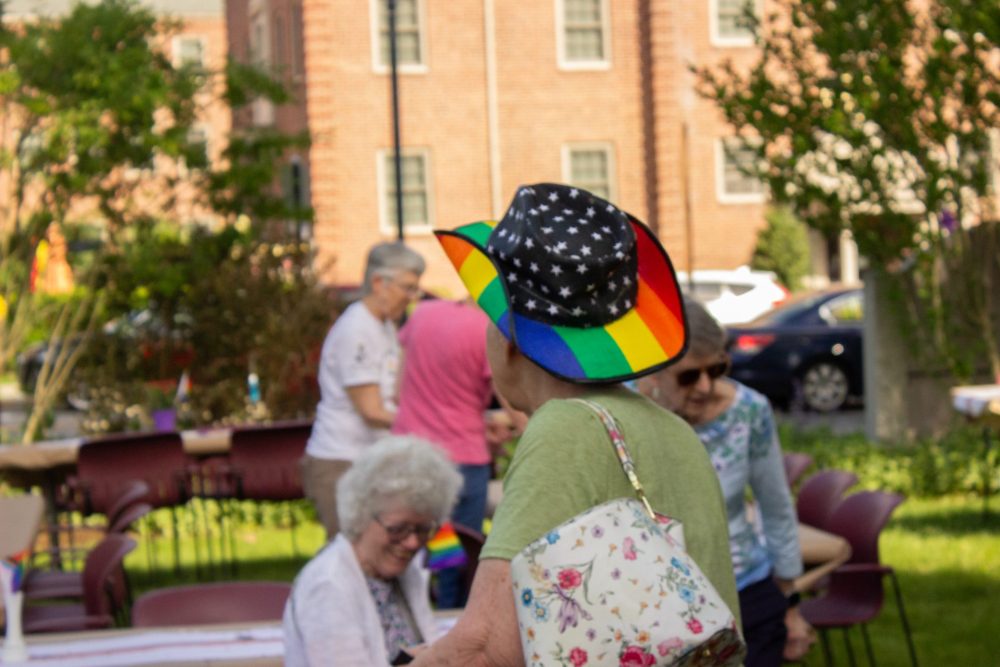
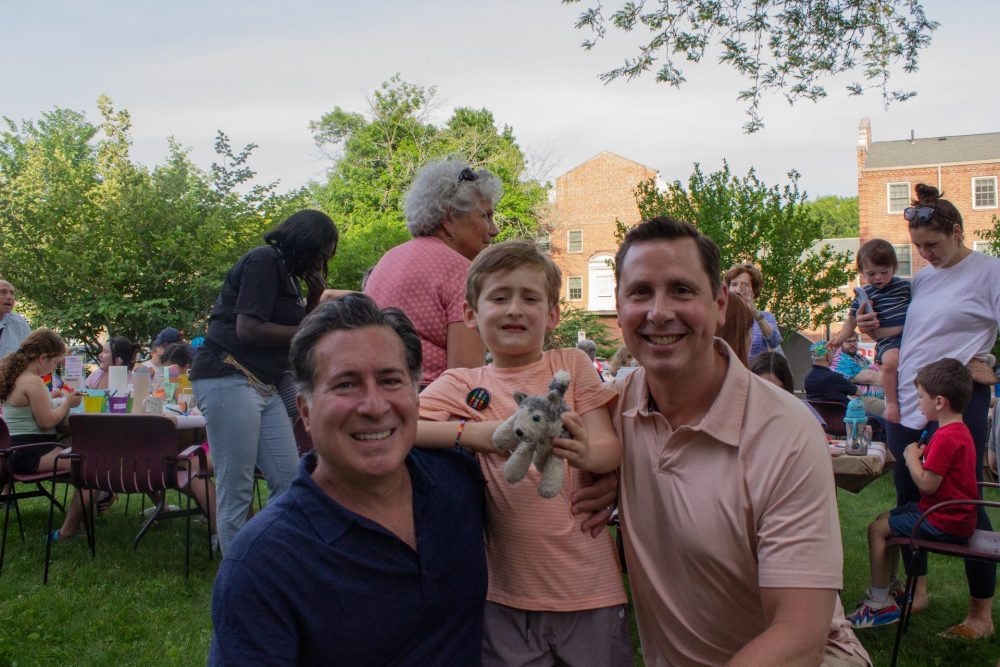
Panagopoulos, one of the town’s first openly gay elected officials, said he has always felt at home in Wellesley, and said it is beautiful that so many people, including elected officials, came to the event to show their support for the town’s LGBTQ+ community.
“It’s a testament to the support for diversity, equity and inclusion in this community, that so many of our elected officials, gay or not, are here to celebrate others in this community, and to showcase our commitment to promoting those values, which are an integral part of what this town is all about,” Panagopoulossaid.
Robel said he has been going to Pride celebrations in Boston and New York City since the 1980s. It has taken time for other communities to “jump on the bandwagon,” he said.
“Each community sort of goes at their own pace with either parades or celebrations,” he said. “This being the first time for Wellesley, I think it’s a big deal. I think it’s really a big deal.”
He said the event’s high turnout signals to him that this type of gathering was overdue in Wellesley and that the community was “hungry” for it.
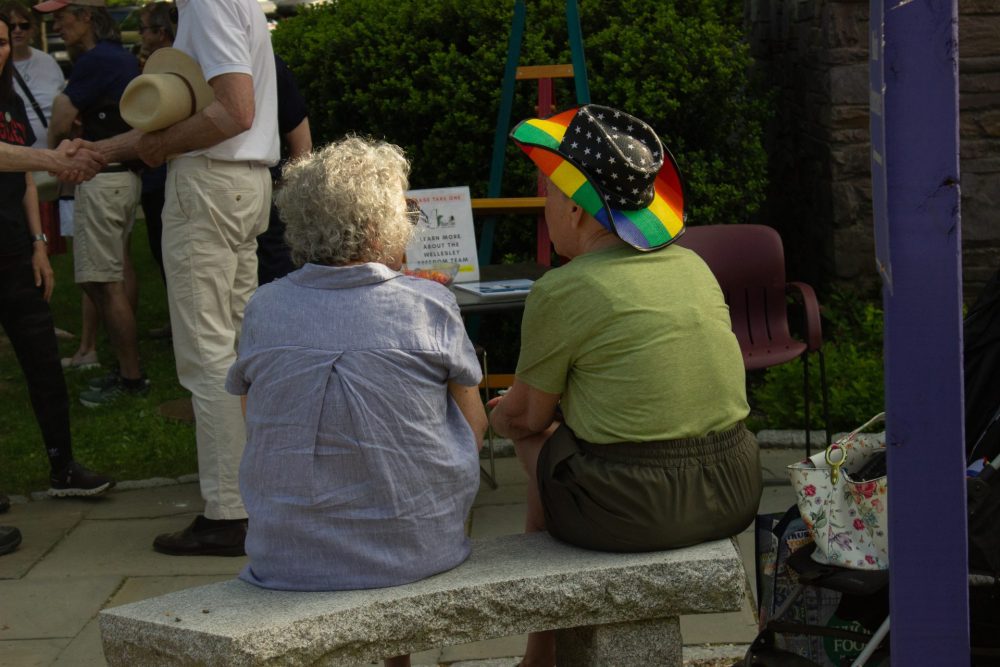
Elaine Mittell, an original member of the Wellesley Freedom Team, a rapid-response, anti-bias team of town officials and a co-sponsor of the event, said Wellesley has come a long way in terms of accepting the LGBTQ+ community.
Mittell said she has been a resident since 1984 and a member of UU Wellesley Hills since 1997. About 30 years ago, she said the church was voted to be a welcoming congregation and marched in the Wellesley parade.
While some people clapped, many pointed at them or shielded their kids from looking, she said.
Nicole Lysaght, an attendee and resident of Wellesley who recently graduated from college, said, as a transgender woman, it is good to see an event in town dedicated to supporting the LGBTQ+ community.
“It’s a shame this wasn’t around when I was growing up here in town,” she said. “But it’s good to see that at least the next generation of queer people will have resources that I couldn’t even have dreamed of, or rather, I could have dreamed of them. I just didn’t have them at the time.”
The event alone might not stop homophobia or transphobia from existing, she said, but it helps “fuel the movement” toward solving those issues.
“World’s in a bad place right now,” she said. “This event on its own may not do much, but it helps keep things going until we get to a better spot.”
Kari Sciera, an attendee and health and sexuality educator at Wellesley Public Schools for the past 22 years, said she came to the Pride event because she has a transgender son and queer daughter.
She said it was “really hard” for them to grow up in Wellesley, which led her to put them both in private school after they attended public schools for years.
“My kids struggled to grow up here. It was a hard place for them to see representation,” she said. “Had we had a supportive community like this, maybe my kids would have never left public school.”
Ramaswamy said she sympathizes with those who did not grow up with events like Pride in Wellesley, but said she is also happy that she has helped make it possible for this generation.
“When children grow up seeing different kinds of people welcomed into community life, that becomes normal to them, and then they also feel like, ‘I’m perfectly accepted and welcomed within this community, regardless of who I am and how I am,’” she said. “That’s really healthy for any community.”
What stood out to her the most about the event was that people lingered, rather than treating it like a “fleeting thing,” she said. Families took time to relax on the church lawn and neighbors talked among themselves.
“They weren’t leaving the minute the program was over,” Ramaswamy said. “They stayed, and in a time where so much of life can feel fragmented and isolated, there was really something meaningful about seeing people simply enjoying being together.”
Note: Article updated on 6/12/26 to include mention of Select Board policy on proclamations on national heritage and history months.
- Sign up for Swellesley’s free weekday email newsletter
- Expand your reach by becoming a Swellesley advertising partner
- Support our work by making a tax-deductible donation



I was so bummed I couldn’t make it – I drove past while they were setting up but I was already attending another event out of town with my wife that night. Hoping to make it next year!!!