A modern nighttime routine is familiar to most of us: a cotton towel to dry a washed face, a dollop of toothpaste, a carefully detailed pajama set. What is incredible, though, is the difference a century makes in the most ordinary of habits. When we think of the changes in daily life from the 1920s to the 2020s, we think first of the obvious: automobile transformation, civil rights expansion, and (lately!) inflation. Yet some of the most fascinating cultural shifts are reflected in the smallest of objects, even the contents of a toiletry bag.
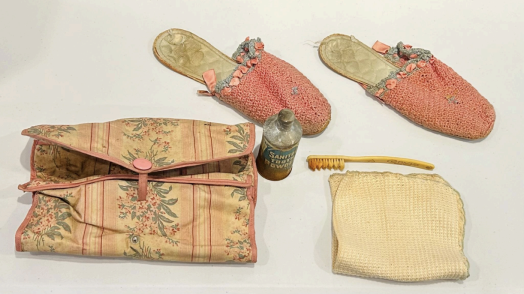
Let’s consider the toothbrush. In the early twentieth century, toothbrush manufacturers primarily whittled handles from animal bone or wood, while horse or boar hair mostly comprised the bristles. Affordable toothbrush options were imported largely from Japan in massive quantities with little packaging or sanitary precautions. Because of the expensiveness of the materials and product, almost 80% of Americans brushed their teeth with a rag or toothpick instead. In the midst of rising industrialization and market competition, employers began to encourage dental health in hopes of a more healthy and productive workforce. American oral hygiene was transformed later in 1938 with the invention of the modern synthetic nylon technology we know today. Perhaps the most bizarre of the toiletry bag’s contents is the toothbrush’s partner: tooth powder. Composed of ingredients like chalk and baking soda, the abrasive powder was the most common way to brush away stains in the early years of American dental hygiene.
The crochet slippers tell yet another story. Fashion underwent a major transformation during the 1920s. The popularization of comfort led to dramatic changes in trending styles. The rigidity of previous decades gave way to an era that valued relaxation with the rise of loungewear. Slippers became popular after World War I as comfortable indoor footwear; before homes obtained central heating, residents opted for warm, snug alternatives to formal shoes. Their soft construction and practical design reflected the growing preference for garments that emphasized ease of movement and everyday comfort. Crochet slippers, often handmade, highlighted the continued importance of domestic crafts in shaping household life during the decade.
Taken together, these humble items reveal how much a century of change can be hidden in the routines we barely stop to consider. A toothbrush, a container of tooth powder, or a pair of crochet slippers may seem ordinary, yet each reflects larger developments in technology, industry, health, and culture. The transition from handcrafted materials to mass-produced synthetics, from necessity to convenience, from rigidity to comfort, illustrates how Americans’ expectations of daily life evolved. By looking more closely at the contents of a mere toiletry bag, we gain a richer understanding of a world that was both surprisingly familiar and remarkably different from our own.
We encourage you to visit the Wellesley Historical Society at 323 Washington Street to see our new exhibit, “A Time of Revolution,” where you can see this piece of history and many more!
Every month, the Wellesley Historical Society highlights an object from its collection. These objects capture Wellesley stories, both those well-known to us and those yet uncovered. Historic artifacts symbolize and convey important narratives, whether that is the hard-working craftsman behind a piece or a written document that shaped the town’s future. As such, the Wellesley Historical Society collections capture the entirety of Wellesley as a town, from significant happenings to sentimental mementos.
This month’s post was written by Annabel Abdelal, Curatorial Intern at the Wellesley Historical Society.