For Wellesley residents struggling with the town’s high housing costs, the solution may be right under their nose—specifically, the basement.
An accessory dwelling unit (ADU) is a small secondary home built on the same property as a main house, frequently placed in backyards or converted from existing buildings like a garage or a basement. Owners often offer the space to relatives— earning them the nickname “in-law apartments”—or choose to rent them out to tenants.
Although ADUs were only legalized in Massachusetts in 2025, they have been around in Wellesley since 2022. The town has seen a modest but steady increase in ADU building permit applications over the years, with three being filed in 2025.
Andrew Mikula, a member of affordability advocacy group Building a Better Wellesley, said ADUs can help address the “harrowing housing shortage” in Massachusetts because they are typically smaller and more attainable than traditional single-family homes, particularly in a community as expensive as Wellesley.
Unlike a developer proposing a new apartment building, Mikula said, an ADU project is typically initiated by a homeowner who already lives on the property and has a specific housing need in mind.
“They’re looking for a place for their mother-in-law, or their child [who] is home from college,” Mikula said. “So you’re connecting very directly to the demand for housing.”
Instead of dramatically changing existing neighborhoods, ADUs also allow communities to add housing incrementally. They can provide options for seniors looking to downsize, young adults transitioning to living independently or families hoping to establish themselves in Wellesley before purchasing a home, Mikula said.
Wellesley amended its bylaws in April 2025 to align with statewide regulations after Massachusetts legalized ADUs two months earlier. This included eliminating the previous statute requiring the ADU owner to live on the property and removing the special permit required for detached ADUs.
Despite these changes, Mikula said Wellesley can still make ADUs more accessible, including by explaining regulations on the town website in clearer, more understandable language (here’s the town’s ADU webpage).
Mikula added that the town could do more outreach to residents “who might be in a position to benefit from ADUs,” particularly longtime homeowners who may not realize what options are available to them.
“I think there should be more information about ADUs available through the public library, the Council on Aging [and other] venues where people who are likely to be longtime homeowners can access it,” Mikula said.
Some homeowners, he said, might consider building an ADU for additional rental income, while others could eventually downsize into an ADU on their own property and rent out their primary residence.
“The vast majority of Wellesley homeowners probably won’t want to do that, but if there are a few hundred that do, that should be something the town promotes,” Mikula said.
Building an ADU in Wellesley
For Yardena and Joshua Katz, a Wellesley couple who applied for an ADU permit in July 2025, the idea was appealing in part because they had already seen the concept in practice.
Before moving to Wellesley, the Katzes lived in California, where Joshua said ADUs were “ubiquitous.” Hoping to eventually rent the unit to a student or professor at one of Wellesley’s colleges, the couple decided to build one on their property
However, the building process was considerably longer and more expensive than they expected, Joshua said, with one of the biggest challenges being uncertainty over how Wellesley’s ADU regulations should be applied.
At one point, the town was requiring the Katzes to install electric vehicle charging infrastructure, even though the couple does not own an electric vehicle and a future tenant would not be parking in their garage. After discussing with town officials, Joshua said they were able to resolve the requirement.
“I think that even the people at the town are still kind of figuring out what the specific rules mean and how to interpret different things,” Joshua said.
Despite the complications, Yardena said the project was “well-received” by neighbors, whom the couple communicated with after beginning construction.
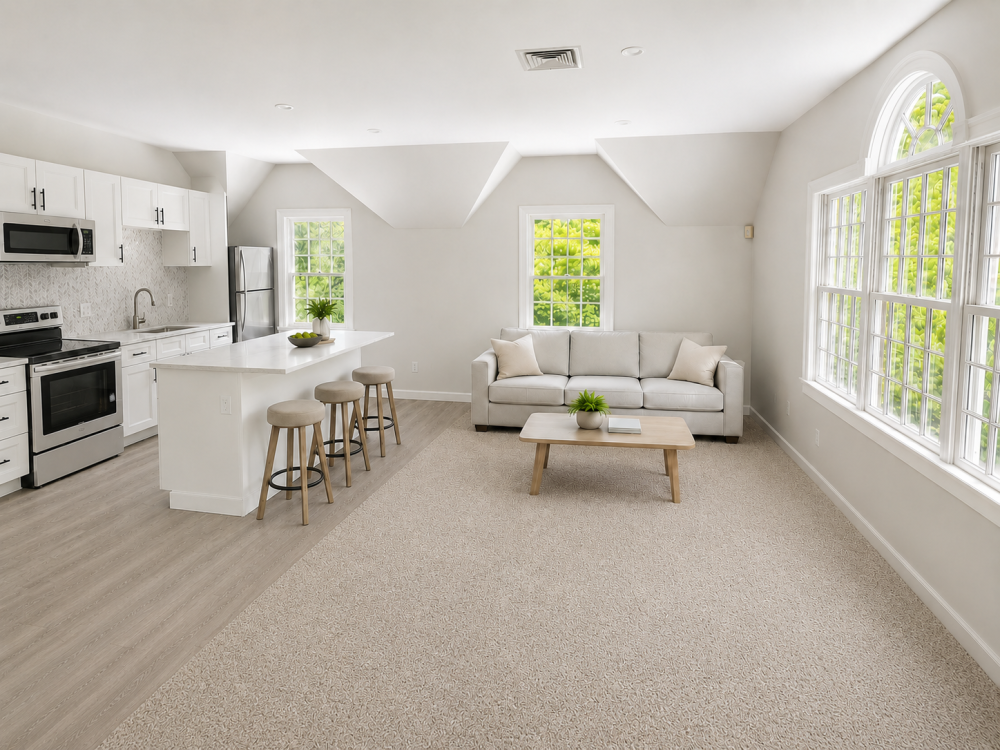
“Everyone was very supportive and excited for the prospect,” Yardena said. “They were like, ‘Oh, that makes perfect sense to turn that space into an ADU.’”
For homeowners considering an ADU, Joshua recommended finding professionals who can communicate directly with town officials and determine exactly what will be required before construction gets underway, and to prepare for the project to take longer than expected.
“Building is challenging enough when the rules are clear and well established, and it just becomes a lot more cumbersome and onerous when things are new and opaque and evolving,” Joshua said.
More: We toured Wellesley’s first official ADU (2023)
How you can help Wellesley’s only daily news source:
- Send news tips, photos, ideas, etc.: theswellesleyreport@gmail.com
- Advertise
- Make a tax-deductible donation