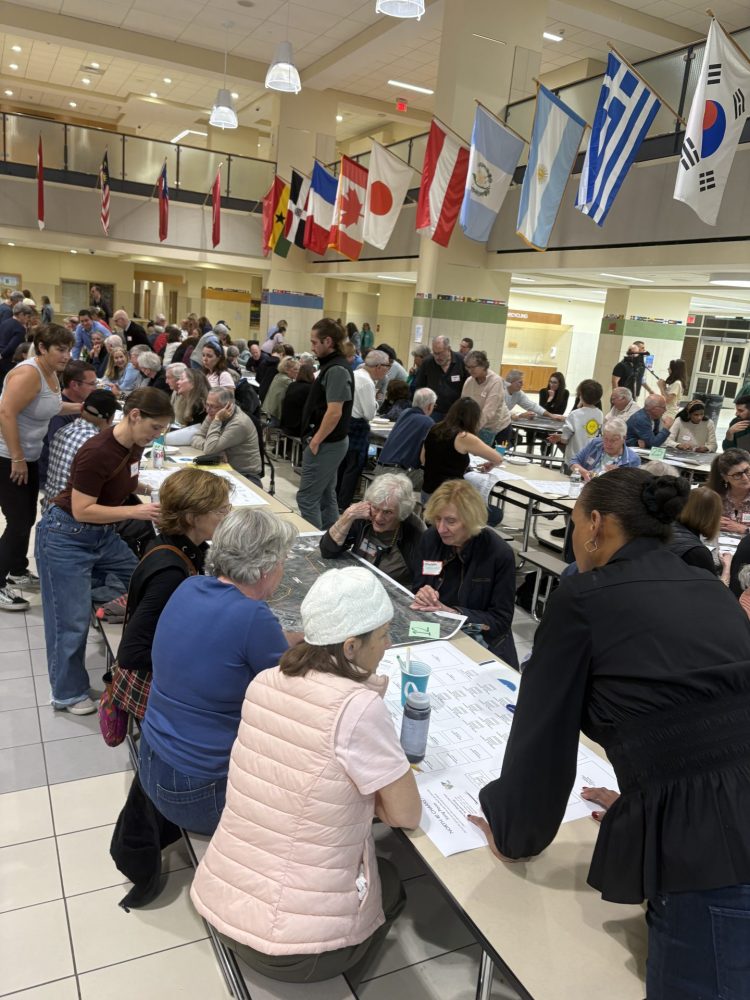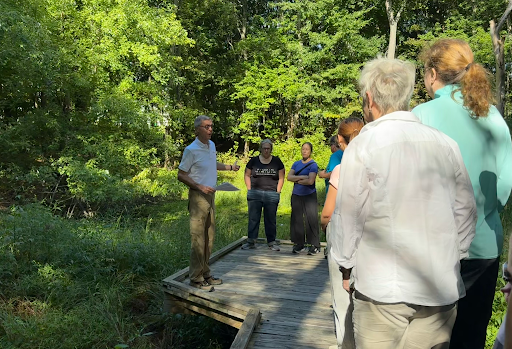
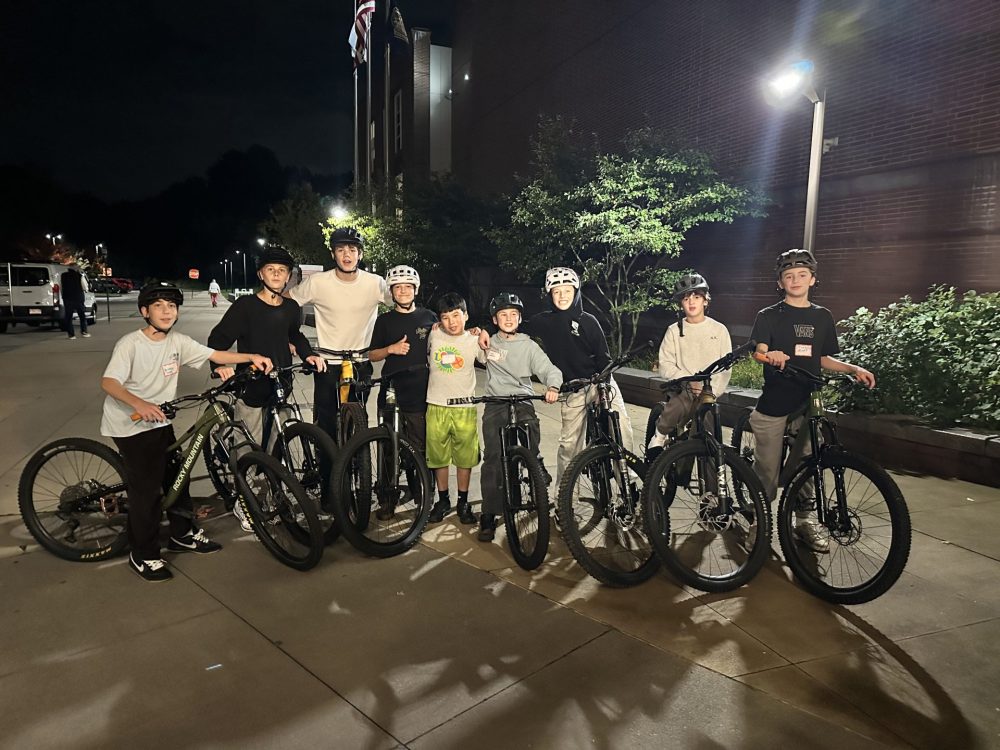
When I first arrived at Wellesley High School to attend the future uses workshop regarding the largely undeveloped North 40 property, I thought I’d gotten in the wrong line, as I found myself stuffed into the entryway with a bunch of kids. But as it turns out, these young residents were indeed headed to the same place as some 200 other residents and myself: some for a class, while others had biked over and had plenty to say about what they’d like to see happen on this 46 acres of town-owned land located between a neighborhood, railroad tracks, and Morses Pond.
Wellesley High 9th graders Brezdin Wells and Charlie Thomas joined me, along with their moms, later during the Oct. 1 meeting so that the boys could share their idea for a 5-7-acre bike skills park at the North 40. The boys, who currently need to travel far to access such parks, envision an all-ages recreation space that would feature tracks for beginner, intermediate, and advanced riders, with jumps, a gathering area, and more. Brezdin, armed with a color print-out of a bike skills park design, said such a resource would provide kids like him, who have had their fill of traditional team sports coached by adults, to have an accessible outlet for their interests. Charlie said such a park would be good for riders’ physical and mental health, and would accomodate not just bikes, but scooters and more. As we were talking, a man stopped by and shared how impressed he was with what the young men and their peers had shared at his table.
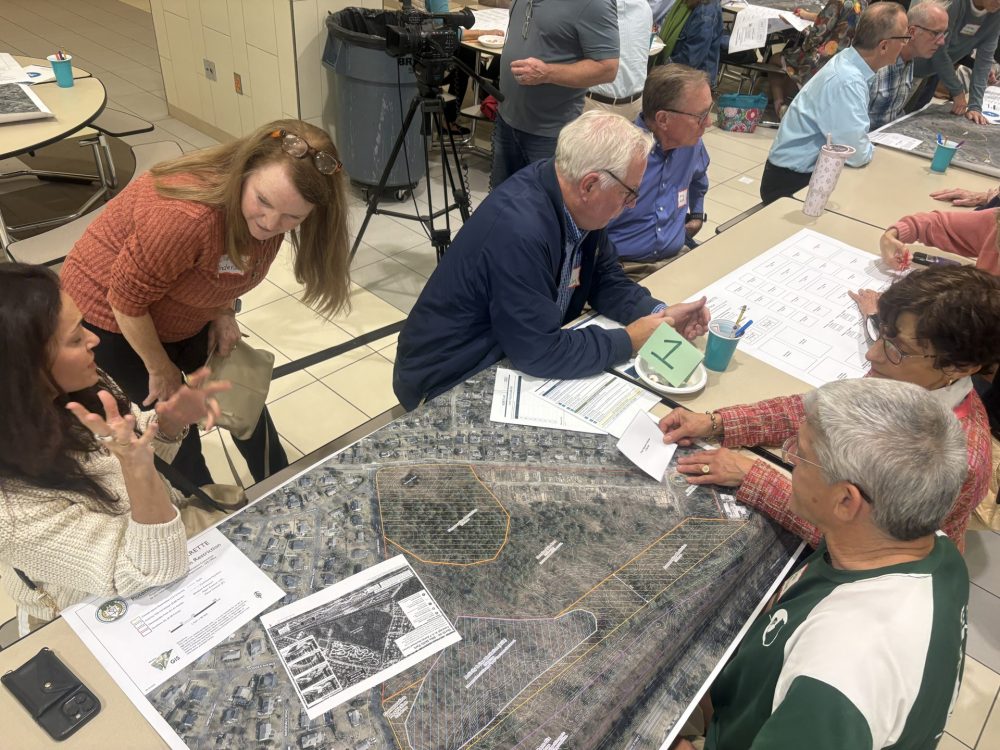
I’d met Brezdin’s mom, Alyson Adelman-Wells, at the start of the meeting. We were randomly assigned to a table for the “charrette” portion of the meeting. That involved discussing possible future use of the North 40, and gluing proportionally-scaled cutouts of fire stations, soccer fields, housing, gardens, and other shapes onto a map.
(Charrettes, if you don’t know, are hands-on design and planning exercises popular in urban planning. Consultants commonly snarf up grant money to run such workshops for municipalities, but to Wellesley’s credit, town employees and volunteers proved themselves very capable of overseeing this elaborate arts-and-crafts project. The town hopes that the feedback it gathered will be useful in figuring out future uses for the land. “I had to look up ‘charrette’ on Wikipedia when I first got invited to take part in this,” one town official told me. As for me, I checked the spelling more than once.)
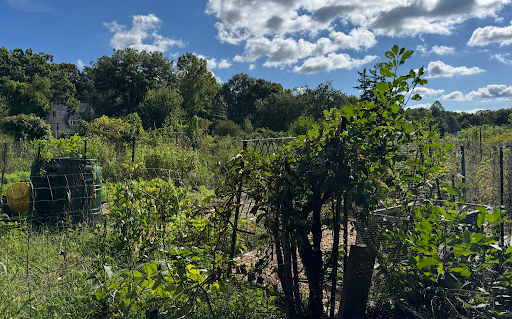
We had an all-star cast at our table, including several community gardeners who pointed out their plots on the map. We had a reverend who leads outdoor services in town, a member of the Advisory Committee that vets Town Meeting articles, and true North 40 royalty in Don McCauley, described during introductory remarks as having led the North 40 effort as a member of what at the time was called the Board of Selectmen. I outed myself to those in the group who didn’t know me.
McCauley’s presence was helpful, as he was able to answer others’ questions about the original goal of the purchase, rules against vehicular cut-throughs between the property and Rte. 135, and the status of the now off-limits former town dump site within the property. Our group discussed everything from the possible placement and challenges of having a fire station on the site, to possibly running a bike lane within the property to help keep cyclists off of Weston Road. The pros and cons of using the space for soccer fields, including the need for parking, came up as well.
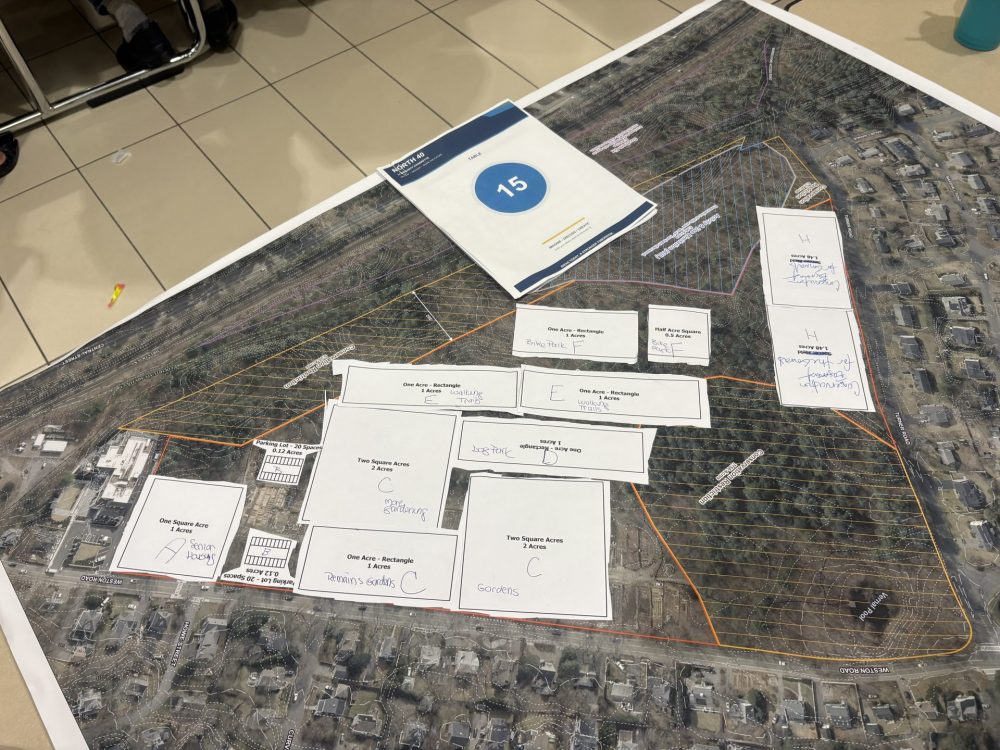
At other tables, housing advocates made their case, with some seeking a place for senior housing or for adults with disabilities. And at others—”gardens, gardens, gardens,” as one current community gardener told me. “Leave it all alone,” or something to that effect, read the words applied to one map.
Across the cafeteria, familiar faces from fire department leaders to the heads of sustainability and natural resources, hovered and offered helping hands.
The session began with a history of the town’s $35m North 40 purchase in 2014, a description of what’s happened since, and the lowdown on the town’s fire station master plan, which identified two North 40 spots along Weston Road as potential locations for a new fire department headquarters station. Town officials have been rehashing and reemphasizing the North 40 history every opportunity they get, including that “the configuration was intended to evolve” (See Wellesley Media’s recording for the full intro).
Select Board Chair Marjorie Freiman, who handled introductory remarks along with Executive Director Meghan Jop, said at one point during the workshop, with a beat between each word: “Critically, no…site…has…been…chosen” for a new fire station. The town won’t be seeking money for a site feasibility study until at least Annual Town Meeting in the spring.
Town leaders have been encouraging members of the public to review online resources on the fire station master plan and North 40. (Swellesley of course has been tracking progress on the fire station plan and North 40 along the way.)
Expect more opportunities for public input on the fire station master plan and North 40 in the weeks and months to come.