This page was updated Jan. 2026.
Nature Notes—owl mating season, who knew? (sorry)
From the Wellesley Natural Resources Commission:
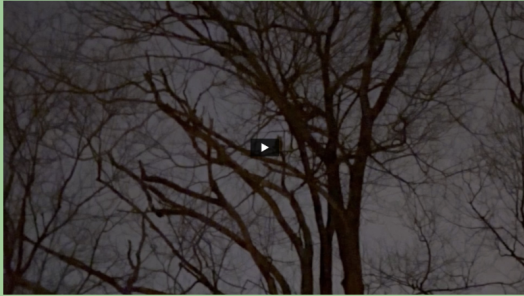
Jan. 2026—It is owl mating season. Click on the image below to check out this pair of Great Horned Owls in this short video clip from a backyard in Wellesley. Can you find the two owls? These beautiful birds are busy preparing for parenting. These owls nest in trees, usually adopting an old nest built by another bird or nesting in tree cavities. Nesting pairs are monogamous and they have one brood of 1-4 eggs. Both parents will hunt for food and protect the nest. They have a wide variety in their diet eating small insects, mammals, birds, amphibians and larger prey like other raptors or porcupines and skunks.
Nature Notes—Spotted Lanternflies have gone forth and multiplied
Nov. 2025—Spotted Lanternflies continue on their path of colonization throughout Wellesley. Residents have reported seeing dozens on the Schofield School property, reaching all the way to the top of trees, so not 100% in reach for casual eradication efforts. They’ve also been seen on the trails at Morses Pond.
The insect has a voracious appetite and poses a threat to maple trees, blueberry bushes, and grape vines in our area. It also consumes another invasive species, the Tree-of-Heaven. Although it may seem like a good idea to have a control for this other problem, Tree-of-Heaven contains toxins that then protect the Spotted Lanternfly from predators. Predators immune to this defense mechanism are not prevalent here in Massachusetts to curb the spread of this insect.
You should absolutely kill Spotted Lanternflies on sight and destroy any visible eggs.
What should you do if you think you see a Spotted Lanternfly?
If you see a Spotted Lanternfly, there are four steps to take:
- Take a photo of the insect
- Squash the bug if you can
- Report your sighting to the Wellesley Natural Resources Commission. nrc@wellesleyma.gov
- Report your sighting online to the State.
Nature Notes: Spotted Lanternflies confirmed in Needham, Mass.
From the Town of Needham:
Summer 2025–The presence of Spotted Lanternflies has been confirmed in Needham. The first sighting in Wellesley of the invasive insect was in 2023 near Carisbrooke Reservation.
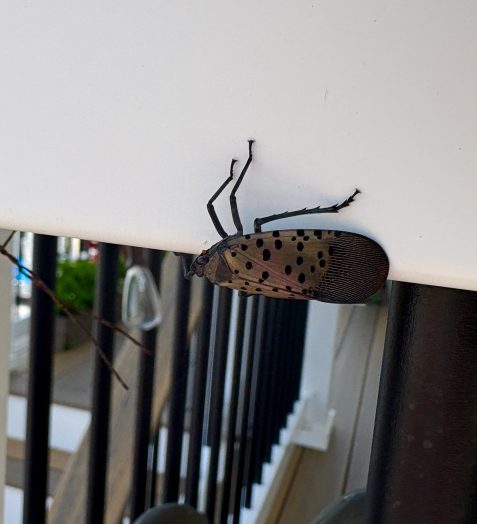
The Spotted Lanternfly is native to parts of China, India, and Vietnam and is a sap-feeding insect.
This insect has a voracious appetite and poses a threat to maple trees, blueberry bushes, and grape vines in our area. It also consumes another invasive species, the Tree-of-Heaven, which is from the same region of the world and has been disrupting our ecosystems for over 100 years. Although it may seem like a good idea to have a control for this other problem, Tree-of-Heaven contains toxins that then protect the Spotted Lanternfly from predators. Predators immune to this defense mechanism are not prevalent here in Massachusetts to curb the spread of this insect.
What should you do if you think you see a Spotted Lanternfly?
If you see a Spotted Lanternfly, there are three steps to take:
- Take a photo of the insect
- Squash the bug if you can
- Report your sighting online to the State.
Nature Notes: It’s turtle hatching season for snappers
From the Wellesley Natural Resources Commission:
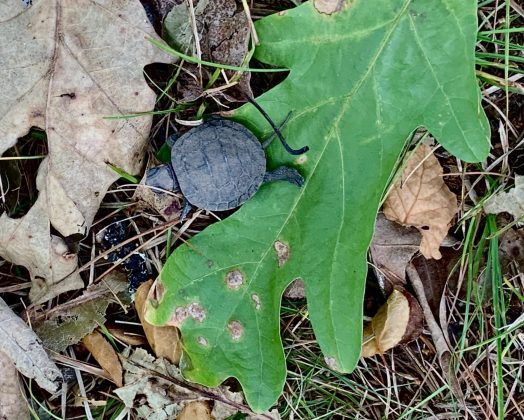
Sept. 11, 2025–It’s turtle hatching season for some species of turtles such as snapping turtles. Late August through October baby snapping turtles will emerge from their nest and make their way to a nearby body of water. Driven by instincts and clues from the sun and moon, baby turtles make their way to water. These animals are most vulnerable during this first migration from the nest, vulnerable to predators like birds, skunks, raccoon, and foxes as well as by vehicle strikes. Baby snapping turtles have been seen trying to cross route 9 from the 888 Worcester Street parking lot. Seeing a turtle away from water doesn’t necessarily mean the animal is lost. Unless the animal is in imminent danger of being hit by a car, you should not pick up or help the turtle on its way. They know what they are doing. If a turtle is in the road or crossing a roadway, only intervene if it is safe for you to do so and carefully pick the turtle up or shoo it across the road in the direction it was traveling. Be extra careful with snapping turtles as they have a very powerful bite.
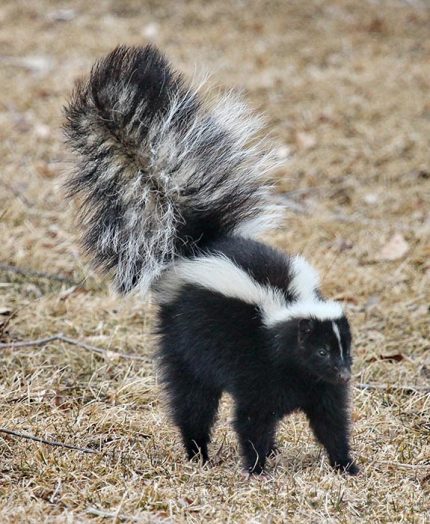
Nature Notes: The Start of “Skunking Season”
From the Town of Needham:
Aug. 29, 2025–In September, you’re most likely to see (or rather smell) skunks around Needham (and nearby towns), and there are multiple reasons for it! All animals will have to cover more ground for the same amount of food as the fall weather progresses. Adult skunks are also on the lookout to set up comfortable winter dens which can sometimes lead to daytime activity for these nocturnal scavengers, but the main driving factor behind the increase in skunk odor is the newfound independence of juvenile skunks.
Skunks that were born in May and June (called “kits”) are now old enough to be on their own, and that comes with its own trials and tribulations. Where an adult skunk may have the maturity to realize that being a skunk is protection and a deterrent in itself, these “teenagers” don’t have the same self-confidence and are “spray first, ask questions later”. Be sure to exercise caution this autumn around these pungent pals!
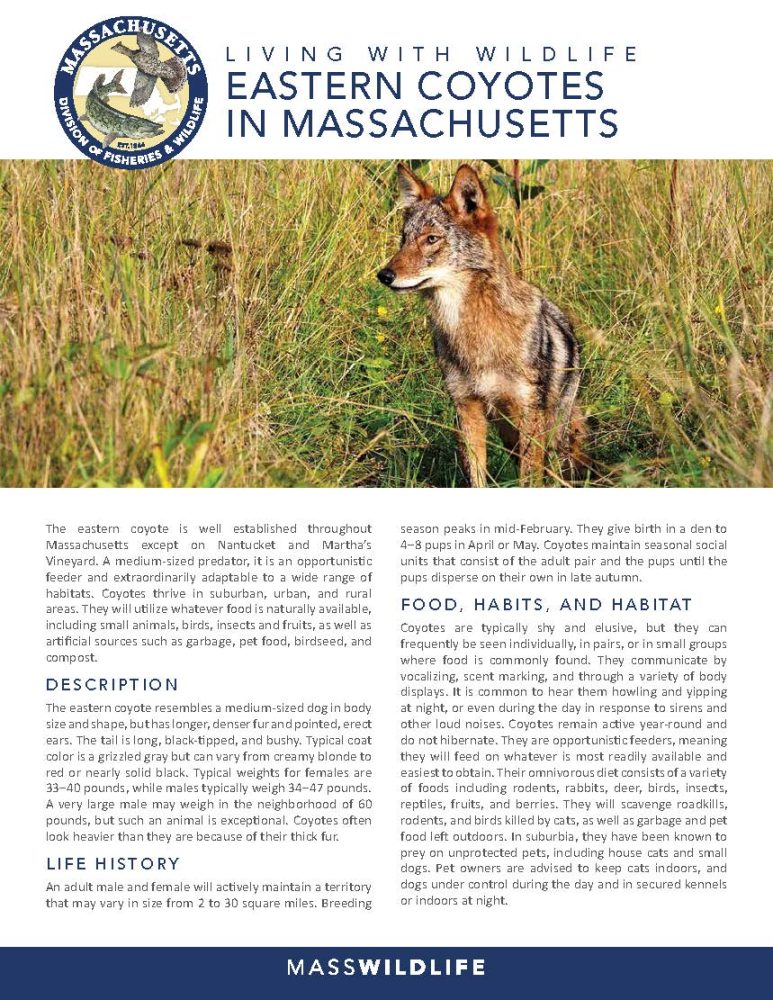
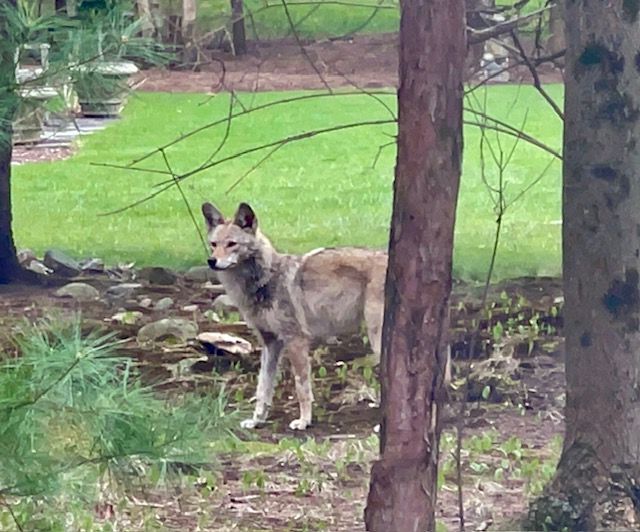
Coyotes are OK
According to the MSPCA there are over 12,000 coyotes in Massachusetts. To hear some alarmists in Wellesley tell it, they all live here in town and local government needs to come up with a plan to cull or relocate them. The reasoning goes something like this:
- coyotes aren’t happy in such a densely populated area, so they should be moved along
- sooner or later, there’s going to be a human fatality at the paws of coyotes, and then we’ll all be sorry
- they attack and kill pets
- they attack and kill chickens

Why people are the problem, not coyotes
We’re the ones who have encroached on coyote habitat, forcing coyotes to live in closer proximity to humans. A little over 2,000 of Wellesley’s total of 6,720 acres of land is open space. 60% of those 2k acres are privately owned, and therefore not protected, which can, and has, led to more development in town.
With an increase in development and population, there have been more interactions between coyotes and people. Residents have reported being chased, stalked, and intimidated by the assertive animals to Animal Control Officer Jenny Smith. Smith encourages residents to haze a coyote by “physically chasing it out of the yard, spraying it with a hose, making loud noises by banging pots and pans or blowing an air horn, and throwing small objects like a tennis ball with the intent to frighten not injure.”
But after paying upward of $1.5mil for their piece of Wellesley heaven, many residents feel like they should be able to walk the streets and enjoy their backyard without living in fear. Even though 85% of the Wellesley adults 25 years or older have a bachelors degree or more, they don’t love being lectured about the issue.
So about that fear. It’s not entirely misplaced. Coyotes are opportunistic killers, and if the opportunity arises, they can and do kill small dogs and cats. As long as someone in town has a story to tell about losing their beloved family pet to the jaws of a coyote—and those stories are not uncommon—the “kill the coyotes” contingent will be vocal.
Humans fare better during encounters. There have been fewer than 25 documented attacks over the past 25 years. In fact, you’re more likely to be one of the 17k people bitten by a dog in Massachusetts in 2022. Nobody talks about relocating Luna (Wellesley’s most popular dog name) after a biting incident. Luna just gets home quarantined for ten days. It’s highly unlikely that animal control will seize or put down your aggressive, biting dog. You’ll more likely be faced with paying court-ordered damages over the incident. There’s no payout after a coyote bite.
Coyotes have their defenders, especially when the word “cull” starts getting tossed about. Coyotes have their own ideas about how many of them a territory can support (about one adult per 10 square miles), and manage their numbers accordingly. In good times, only the dominant pair in a pack is permitted to reproduce. But when the pack’s numbers dwindle, whether due to human intervention, food insecurity, or disease, everybody in the pack gets to join the party and have babies.
One person’s report on being “chased” by a coyote is another person’s observation that they were “escorted” away by an animal who is trying to keep humans away from their den and cubs. So if a coyote approaches you, make a lot of noise as you move away from the area. Don’t run, and keep calm. Some people carry a whistle or an airhorn when walking in areas where there’s been known coyote activity.
The final, dirty little secret is that some people aren’t helping. Some people feed coyotes, a practice which endangers us all. Once a coyote gets used to humans, look out. Because when they no longer see us as a threat, that doesn’t mean they’re going to get all “good doggie” and move in for snuggles. When they no longer see us as a threat, they’re more likely to visit human spaces on the regular and, because they are still wild animals, behave unpredictably.
Animal assistance resources
- For help with animal bites or rabies quarantines, contact the Wellesley Health Department
- For help with lost pets or animals needing immediate assistance, contact Wellesley Police Department dispatch at 781-235-1212
- For questions about pet health/behavior or to report animal cruelty, please contact the Animal Rescue League of Boston
- For help with injured or problematic wildlife, please contact Tufts Wildlife Clinic or Problem Animal Control
Coyotes looking for love in Wellesley
Feb. 2025–Look out, it is coyote mating season. Keep an eye on small pets and young children. If you are confronted by a coyote here are tips to keep the coyote, you, your pets and loved ones safe: