• Sign up for free email newsletter
  • Advertise
  • Donate to support our work
  • Events calendar
  • About Us
Boston Medical Center, Wellesley
 
Pinnacle, Douglas Elliman, Wellesley
 
Wellesley Hills Dental

The Swellesley Report

Since 2005: More than you really want to know about Wellesley, Mass.

  • Restaurants, sponsored by black & blue
  • Camps, sponsored by NEOC
  • Wellesley Square
  • Private Schools, sponsored by Prepped and Polished
  • Public Schools, sponsored by Sexton
  • Preschools, sponsored by Longfellow, Wellesley
  • School news
  • Kid stuff
  • Top 10 things to do
  • Business news
  • Worship
  • Letters to the editor
  • Guidelines for letters to the editor
  • Live gov’t meetings
  • Sports schedules & results
  • Deland, Gibson’s Athlete of the Week
  • Deaths
  • Housing
  • Medical providers—sponsored by FIXT Dental
 

Top Stories

Meet the School Committee candidates
Meet the Select Board candidates
Davis Museum debuts spring exhibits

Advertisements

Needham Bank, Wellesley
FIXT
Down Under Wellesley
Government

Wellesley previews Town-Wide Financial Plan

February 25, 2026 by Bob Brown

Wellesley Town Executive Director Meghan Jop at Tuesday’s Select Board meeting (see Wellesley Media recording of Feb. 24 session) previewed the Town-Wide Financial Plan, and that itself was a sneak peek at the a Town-Wide Financial Plan presentation slated for the Feb. 25 Advisory Committee meeting.

The plan looks at both the nearly $250m fiscal year 2027 budget as well as out years (see draft in the Feb. 24 Select Board meeting agenda document). The introduction highlights that the budget is being presented separately for the town and schools at Annual Town Meeting and the ongoing impacts of shared costs—such as healthcare—for the town and schools (the breakdown shows a 35%-65% split).

The plan includes background on creation of a Town-Wide Capital Planning Committee, which has been in the works over the past year as a way to review possible future projects and possible debt implications. (The board on Tuesday voted 3-2 in favor of a Town-Wide Capital Planning Committee policy following discussion, including concerns raised about the make-up of such a body and its powers.)

This edition of the Town-Wide Financial Plan, for fiscal year 2027, includes a special focus on debt, breaking out numbers to illustrate the impact on property tax bills. Efforts are being made to work with the GIS department so that property owners can click on their property on a map and see town debt ramifications, Jop said, addressing a desire of both the Select Board and Advisory Committee.

debt
Note: Projects not shown in yellow have not been approved or happened.

 
Good news shared by Jop is that the town’s cash reserves are high, while healthcare insurance costs are coming in lower than expected. The FY27 budget is light on new strategic initiatives as well as cash capital.

Jop said she will partner during the Town-Wide Financial Plan presentation at Town Meeting with David Kornwitz, Wellesley Retirement Board Chair, and he will update attendees on the town’s strong position with its pension and other post-employment benefits (OPEB) funding, which will reap big savings in years ahead.

The plan also refers to a possible 2027 referendum related to school air conditioning construction costs, though more decisions would need to be made before such a project event gets to the design phase,  Jop said.

The Board unanimously approved the Town-Wide Financial Plan.


Filed Under: Government

Advertisements

     
black & blue, Wellesley
Olive Tree Medical, Wellesley
Wellesley Counseling and Wellness

Won’t you adopt an adorable Wellesley fire hydrant?

February 24, 2026 by admin Leave a Comment

Photo credit: Town of Wellesley

Wellesley DPW and Wellesley Fire Department are asking for your help clearing snow from fire hydrants in neighborhoods following the February 23 blizzard. There are over 1,400 hydrants in Wellesley, and each one is potentially vital in the event of an emergency.

The DPW and Fire Department appreciates all of the help they’ve already received from residents.

If you would like to adopt a hydrant and regularly keep it clear, please follow the steps below:

  1. Visit the Wellesley Adopt a Hydrant map application.
  2. Pan and zoom to your neighborhood or search for an address using the search bar. In the search bar, start typing your address and matching results will begin to show. Click on the result that matches the address you’re looking for and the map will zoom to your neighborhood.
  3. If you do not see the sidebar on the right, click on the Adopt a Hydrant tool in the top right corner, then select any RED hydrant to adopt it, the GREEN hydrants have already been adopted.
  4. Enter your information into the form and click SAVE. Changes may take up to 30 seconds to appear.

Please be careful and aware of roadway traffic throughout the rest of this storm and clean up. Thank you for volunteering to keep our neighborhoods safe!

If you have any problems with the map application, please contact gis@wellesleyma.gov.

Wellesley fire hydrants


Wellesley town departments are welcome to advertise on The Swellesley Report to reach our fantastic audience

Filed Under: Fire, Government

Advertisements


Marc Charney, Select Board candidate

Civic engagement

Wellesley, Mass., town government meetings for week of Feb. 23: Zoning amendments; AP proposal & Evolutions; Town Meeting prep

February 23, 2026 by admin Leave a Comment

A sampling of Wellesley, Mass., meetings and agenda items for the week of Feb. 23, 2026:

Planning Board (including joint meeting with RIO Task Force): Feb. 23, 6:30pm, online

Joint Meeting with R.I.O. Task Force: Discussion and Potential Vote on Amendments to Planning Board Recommendation for ATM Article 32 Motion Language; Zoning Public Hearing -2026 Annual Town Meeting (ATM) a. RIO Task Force Update/Amendment to Zoning Bylaw Section 3.2 Residential Incentive Overlay (RIO) District; Project of Significant Impact (PSI) a. PSI-25-04 – 592 Washington Street condo project

Natural Resources Commission (Feb. 24, 7pm, town hall)

Discuss Morses Pond Beach Project Supplemental Feasibility Study Report -Confirm design meets Article 97, Appoint PBC liaison ▪ Project Update: Land Conservation Plan ▪ Permit Requests: Permanent sound system for Diane Warren Field.

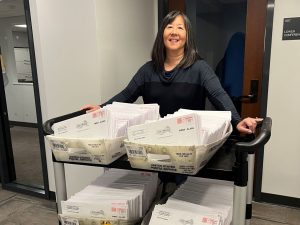
Voting Machine Testing for the 2026 Annual Town Election (Feb. 24, 9am, Municipal Light Plant, 4 Municipal Way)

The Town Clerk’s Office will be testing the voting machines for the elections to be held on March 3, 2026 per MA 950 CMR 54.02. The testing is open to the public.

School Committee (Feb. 24, 6:30pm, online)

Discussion/Vote: School Wellness Policy; Discussion/Vote: Advanced Placement Draft Proposal; Discussion/Vote: Program of Studies – Evolutions; Discussion: Mid-Year District Goals Report; Discussion: FY’26 Quarterly Financial Report (Quarter 2); Discussion: Policy Subcommittee Policies: JBB – Educational Equity (New); Discussion: Proposed School Facilities Master Plan Task Force; Discussion: Sprague Fields Update and Scoreboard Proposal

Advisory Committee (Feb. 25, 6:30 pm, town hall)

Town Wide Financial Plan Presentation – Select Board;  Select Board FY27 Budget requests; Open Public Hearing on 2025 Annual Town Meeting Warrant; Select Board ATM Articles • Article 3 – Consent Agenda • Article 7 – FY26 Supplemental Appropriations • Article 9 – Revolving Funds • Article 10 – Stabilization Funds • Article 14 – Wellesley Media Contribution • Article 27 – Authorization Use of Uber/Lyft Funds • Article 33 – Rescind or Transfer Debt, Appropriate Premiums • Article 36 – Appoint Fire Engineers

Housing Authority (Feb. 26, 9am, Washington Street Community Room – 503 Washington St.)

Financial reports, vacancy report, capital projects update

Board of Health (Feb. 26, 9am, online)

Chair, director, and nurse reports.

YES, sign me up for Swellesley’s free weekday email newsletter

Filed Under: Education, Government

Page Waterman, Wellesley
London Harness, Wellesley
Paul Macrina Electrical

Wellesley ‘Meet the Candidates Night’ hits on pressing town, school topics

February 20, 2026 by Emma Mullay

candidates forum wellesley
Select Board candidate panel (photo by Emma Mullay)

 
It was a packed auditorium at the Wellesley Free Library on Feb. 12 as 15 candidates for the upcoming local elections discussed everything from ICE to AI in education to the local economy.

Candidates for the contested races, Select Board and School Committee, addressed the school’s growing budget amid dwindling enrollment, the MassBay Forest development proposal and answered an audience question about whether the town would be willing to sign an order preventing ICE from using municipal land, among other things.

(See Wellesley Media recording of the Feb. 12 forum.)

Development

 
Hope Crosier, a Wellesley resident of about 20 years, said she is concerned about development in the community and the speed with which that is happening.

“Development is a big issue,” she said. “How it’s changing the landscape of the town is really so steep and fast that that’s an important topic.” 

All three candidates running for Select Board spoke out against the state’s MassBay Community College development proposal, which has sparked concerns that the nearby forest may be impacted. State officials have indicated the 40-acre forest abutting the 5-acre parking lot at MassBay won’t be built on, but town officials and residents still have plenty of questions for the state about its plans.

“None of us wanted this to happen — ever. We thought the forest was ours forever,” incumbent Beth Sullivan Woods said.

The development, which would be used to add housing units, comes after Gov. Maura Healey signed the Affordable Homes Act in 2024 and allowed for surplus state land to be used for the purpose of adding additional housing. The forest is included in the area determined as surplus. 

“I don’t think that the state should have the right to interfere with how this community decides how we build out our housing stock,” incumbent Tom Ulfelder said. “That property should not be the next target for the state.”

The League of Women Voters hosted the event, Meet the Candidates Night, ahead of the March 3 election. Susan Flicop moderated the conversations, which allowed all candidates, regardless of whether their race was contested, to give an opening and closing statement, as well as answer questions, selected and written by the League of Women Voters, related to their position. There are 11 total races, but only nine had candidates present. The audience was allowed to ask questions of the candidates of the two contested elections as time allowed. 

DEI Audit

 
When Flicop asked the candidates about a DEI equity audit that Town Meeting funded, Marc Charney, the current Planning Board chair who is running for Select Board for the first time, said he would use the results of it as a “governance tool” to inform how they interact, engage and communicate with the community. 

Sullivan Woods answered the question by highlighting the need for a strong community and neighborhoods to ensure that everyone feels engaged. She said she was “struck” by the fact that “only 39% of the community members feel that their voice is important to the government when we make policy decisions.” 

Ulfelder focused more on the employment aspect of DEI in his response, saying he supports “HR policies aimed at creating a diverse and welcoming work environment.”

ICE

 
After the moderated questions, an audience member, who described recently moving to Wellesley from Minneapolis, asked the candidates about their stance on signing an order to prevent Immigrations and Customs Enforcement officers from using municipal properties. 

“I do not know whether we can prohibit federal officers from being on municipal land, because it’s public land, but we do everything possible to ensure the safety of every resident and member of this community,” Sullivan Woods said. 

In his response to the audience question, Ulfelder proposed an open meeting with community members and the police department, noting that “that conversation would go a long way” towards reassuring the community while still ensuring that the town is following state and federal regulations. 

Charney said he agreed, describing how he believes “working with our police department, having more dialogue with residents, particularly at this moment in time, would go a long way towards addressing fears and concerns that folks have,” while also acknowledging the limitations that come with state and federal laws. 

Schools

 
Four candidates running for two open seats on the School Committee also spoke at the library event — Bob Sullivan, Michael Robert Cave, Costas Panagopoulos and Ayla Lari. None are incumbents. 

Each of them said it was important to add air conditioning to the schools and prioritize student facing positions—acknowledging how the budget has continued to increase over the past few years while enrollment has fallen. 

“There should be equity across our elementary [schools] and across the school system in terms of the kinds of environments in which student learning occurs,” said Panagopoulos. “I would support policies and efforts that would ensure that we do have that kind of equity and that there are learning environments conducive to improving student learning.” 

An audience member asked the candidates about the growing number of administrators amid lower enrollment. 

The candidates also discussed the role of AI in education, particularly elementary education, and most were worried about how introducing that technology at such a young age could potentially be detrimental in the long run. 

Eight other candidates for uncontested races also spoke, introducing themselves and answering questions about their positions. 

“I want to do my part to understand the candidates,” Crosier said. “It was helpful to see them in person, because you can read a bio, you could read their comments, but actually being here in person and getting to know them a little bit more and how they respond to questions is helpful.”

Kelly McCoulf Norris, who has lived in Wellesley since 2020 and been a member of Town Meeting since 2021, said the schools and education system were also priorities and she was glad to see so much of the town involved with local government. 

“It’s great to have a lot of candidates running for those really two important boards,” she said. “I think that engagement in the town’s activities is really important. It’s one of the most important things for us in government to focus on.” 


  • Meet the School Committee candidates
  • Meet the 2026 Wellesley Select Board candidates

Filed Under: 2026 Town Election, Government

Longfellow, Wellesley
Election 2026

Wellesley Select Board race heads into homestretch

February 18, 2026 by Bob Brown

Wellesley’s March 3 election is less than two weeks away, and results of the contested Select Board race will significantly shape the town’s direction on capital spending, housing, and setting priorities.

Beth Sullivan Woods and Tom Ulfelder each seek their fourth three-year terms—Woods has a background in marketing research and strategic planning, while Ulfelder cites his experience as an attorney and in the healthcare industry. Challenging them is Marc Charney, who runs business restoring older homes, serves as Planning Board chair (Charney has told us he’d step down from Planning if elected to the Select Board).

We spoke to all three candidates this week, mainly on background, to confirm facts and get a sense of where the race stands. Last week we ran Select Board candidate introductions and Q&As, and The Wellesley News (the student-run publication at Wellesley College) followed suit this week with candidate profiles of its own.

Most Select Board votes over the past year have been 5-0, though when they’ve gone 3-2, Sullivan Woods and Kenny Largess have been the dissenters from Ulfelder, Chair Marjorie Freiman, and Colette Aufranc (examples in recent months included a vote to spend $75k on a consulting contract for a visioning study—that has since been put off—about the proposed MassBay Community College development and another regarding a traffic impact assessment study related to a proposed Walnut Street development).

Based upon positions Charney has taken while on the Planning Board and articulated during his Select Board campaign, there’s reason to believe a Select Board with him and Sullivan Woods, and without Ulfelder, would result in more 3-2 votes with Freiman and Aufranc in the minority. A likely scenario if Charney and Sullivan Woods were to be on the board would be that Sullivan Woods would ascend to chair, a position that has eluded her during nine years on the Select Board.

The candidates have shared their views and priorities throughout the campaign, which officially began in December when they pulled nomination papers. Though in reality, it started well before that.

Campaign signs have been dotting snow piles throughout the winter. Sometimes all three Select Board candidates signs can be seen in the same vicinity, while solo and double configurations can be spotted in other parts of town.

Candidates at election forums this month have largely kept their focus on past accomplishments and intended goals when sharing their platforms or answering questions about hot topics, such as possible housing development on state-owned land across from the MassBay campus. The formats of these forums, including one hosted by Sustainable Wellesley and another the next night by the League of Women Voters of Wellesley, were not set up to foster debate among candidates.

Ulfelder has touted his board leadership, including during the pandemic, in helping the town come out strong financially. He’s cited forward thinking in partnership with others on the board and from other departments to get ahead of big possible capital expenses down the road in light of rising property taxes. Sullivan Woods has emphasized her attention to the local business community, amplifying residents’ concerns, and striving for a more open town government process. Charney has pointed to his efforts through the Planning Board and RIO Task Force to address residents’ worries about multifamily developments in single-residence neighborhoods, and for a need to take a different approach on the proposed MassBay development. He’s also spoken of a need for more diversity of thought at the Select Board level.

The Charles River Regional Chamber does have an online “Wellesley Select Board Debate” slated for Feb. 27 and focused on economic development, housing, and the environment. That event could elicit more back and forth between the candidates, but is being held just a few days before the actual election. With roughly half of Wellesley voters in recent years having sent in their ballots by mail, it’s possible many will have already voted by the time that debate takes place.

More fiery stuff has surfaced outside of candidate events, as was on display at the Feb. 10 Select Board meeting (see Wellesley Media recording), during which Planning Chair Charney and RIO Task Force Chair Tom Taylor appeared for a discussion about Annual Town Meeting Article 32, on RIO Zoning Bylaw modifications. The Select Board during that meeting, by a 3-2 vote, rejected a motion to add a development agreement requirement to the mix. A reference to “political theatre” was made during discussion, which got tense at times.

Separately, we received a letter to the editor this month signed by eight former Select Board (or then Board of Selectmen) members challenging Charney’s suitability for the Select Board based on permitting violations that were the subject of public hearings in 2022. We considered whether to run the letter, but based on our editorial practice and following legal consultation, we have not. A member of one local planning advocacy group this week took us to task for this decision—and without first talking to us or checking facts—sent an email to the group’s subscribers about it.

The last day to register to vote for the annual town election is Friday Feb. 20 at 5pm.The last day to request a vote by mail ballot for the election is Tuesday Feb. 24 at 5pm.

Polls will be open 7am-8pm on Tuesday March 3. Check the town website for precinct and voting location information.

Filed Under: 2026 Town Election, Government

Civic engagement

Wellesley, Mass., town government meetings for week of Feb. 16, 2026: Town Meeting articles review; Council on Aging director search update

February 17, 2026 by admin Leave a Comment

A sampling of Wellesley, Mass., meetings and agenda items for the week of Feb. 16, 2026 (it’s a light schedule because it is school vacation week with a Monday holiday):
 
Advisory Committee (Feb. 18, 6:30pm, town hall)

Article 15 – Community Preservation Fund Appropriations Community Preservation Committee; Article 21 – Comprehensive Plan Planning Board; Article 31 – Amend the Flood Plain or Watershed Protection District Bylaw Planning Board; Article 32 – Amend the Residential Incentive Overlay (RIO) District Planning Board
 
Council on Aging Board (Feb. 19, 4pm, Tolles Parsons Center, 500 Washington St.)

Director search subcommittee update; Save the Date-Ribbon Cutting Ceremony for naming of the Richard Campana Kitchen – Friday, March 6 @ 2:00 PM
 
Wetlands Protection Committee (Feb. 19, 6:30pm, online)
 
Zoning Board of Appeals (Feb. 19, 7:30pm, online)

Wellesley College dorms/swing space project
 

YES, sign me up for Swellesley’s free weekday email newsletter

Filed Under: Government

Sexton Test Prep, Wellesley
Jim Regan Services
Human Powered Health, Wellesley

Wellesley Select Board, School Committee candidates share views on sustainability

February 15, 2026 by Bob Brown Leave a Comment

A forum held this past week at the library by the volunteer-run Sustainable Wellesley organization gave Select Board and School Committee candidates a platform for sharing their views on all things green.

Wellesley Media recorded the Conversation with the Candidates event, which lasted about an hour, and that took place the night before the League of Women Voters of Wellesley’s Candidate Night, also at the library.

Select Board candidate Marc Charney, currently the Planning Board chair, cited efforts during his time on the latter board focused on long-term planning that includes environmental and fiscal responsibility. Incumbent Select Board member Beth Sullivan Woods, running for a fourth 3-year term, touted Wellesley’s willingness to be an innovator as well as to recognize changes that might be worth embracing. Incumbent Select Board member Tom Ulfelder, also seeking his fourth term, pointed to concrete actions he’s taking during his time in town government, including negotiating the electrification of the Nines apartments and supporting the electrification of town hall. The candidates also fielded questions about the state’s effort to get housing built on “surplus property” at MassBay Community College and how their votes as public officials have moved the needle on emissions reductions in Wellesley.

Sustainable Wellesley also includes information on its website about where the candidates stand on sustainability topics.

School Committee candidates—Bob Sullivan, Costas Panagopoulos, Ayla Lari, and Michael Robert Cave—also shared their level of commitment to sustainability, and commented on composting during a Q&A session. Sustainable Wellesley also posted answers from candidates to a couple of questions on its website.

During the forum, Cave said there’s an opportunity to influence generations to come on sustainability practices and issues. Lari said her family was into “reduce, reuse and recycle before it was cool,” citing the washing of Ziploc bags for reuse. Panagopoulos highlighted opportunities for the School Committee to be a partner in the town’s efforts to ensure climate justice and reduce greenhouse gas emissions. Sullivan said the School Committee needs to be smart about how it prioritizes and spends on its environmental initiatives, and that schools need to “model sustainable behavior for students.”


More: 

  • Meet Wellesley’s Select Board candidates
  • Meet Wellesley’s School Committee candidates

swellesley green ad

Filed Under: 2026 Town Election, Environment, Government

Wellesley Symphony Orchestra, 2026
Election 2026

Meet the 2026 Wellesley Select Board candidates

February 13, 2026 by admin

Wellesley depends on the active participation of its citizens in governance of the Town. Wellesley has 11 Boards and Committees on the ballot at the Annual Town election each year in March. The 2026 election will be held on Tuesday, March 3.

There are three candidates running for two open three-year terms on the Select Board, which serves as the chief executive board of the Town, and as such, oversees all matters affecting the interest and welfare of the community. The five-member Board exercises the authority vested in the Town not specifically assigned by law to any other board or office.

The Select Board candidates, in ballot order, are:

  • Marc Charney
  • Beth Sullivan Woods
  • Tom Ulfelder

The Swellesley Report invited the candidates to answer a few questions about their priorities for the Town of Wellesley.


Marc Charney


The Swellesley Report: Please introduce yourself to The Swellesley Report’s readers and share why you are running.

Marc Charney, Wellesley Select Board candidate
Marc Charney

Marc Charney: I am running for the Wellesley Select Board because our Town is at an important crossroads and needs steady, principled leadership. My family and I moved to Wellesley in 2003, where we restored a modest home, raised our three children, and built a small business renovating older houses into energy-efficient, sustainable homes. That experience shaped my commitment to thoughtful planning, fiscal responsibility, and protecting neighborhood character.

I have served three years on the Historic Commission, four years on the Planning Board—where I currently serve as Chair—founded and served on the RIO Task Force, and currently serve as a Town Meeting Member. These roles have required listening carefully to residents, balancing competing priorities, and making difficult decisions grounded in facts and long-term impact.

I am running because Wellesley faces consequential choices in the years ahead, including significant capital spending and the proposed MassBay development. With hundreds of millions of dollars in projects under consideration, we must prioritize essential investments and guard against unsustainable tax increases. Residents deserve clear, consistent leadership rooted in transparency and sound judgment. If elected, I will bring an independent, thoughtful approach focused on fiscal discipline, long-term planning, and responsible stewardship of our Town’s resources

The Swellesley Report: What steps should Wellesley take to boost economic development in town?

Charney: Wellesley can boost economic development by focusing on thoughtful, character-preserving revitalization of its village centers. The town should prioritize high-quality design standards and encourage redevelopment of underutilized retail and office space into vibrant, walkable commercial districts anchored by locally owned shops, professional services, and destination dining. Streamlining permitting for small businesses, offering targeted façade or tenant improvement incentives, and curating a strong mix of tenants can help maintain an upscale, distinctive retail environment that aligns with community expectations.

In addition, Wellesley can leverage its affluence and strong civic culture by promoting year-round events, arts programming, and partnerships with local institutions to draw visitors and increase foot traffic. Strategic parking management, improved streetscapes, and well-maintained public spaces will enhance the customer experience without changing neighborhood character. By focusing on quality over scale and reinforcing its identity as a polished, village-oriented community, Wellesley can expand its commercial tax base while preserving the attributes residents value most.

The Swellesley Report: Wellesley has taken steps to address the housing shortage in town, from complying with the MBTA Communities Act to releasing a Strategic Housing Plan. What would you like to see the town accomplish on the housing front over the next few years?

Charney: Wellesley has met its legal obligations under both the MBTA Communities Act and Chapter 40B (the Comprehensive Permit Law), and we should acknowledge that meaningful progress has been made. Having complied with these state mandates, it is appropriate to pause and assess where we stand. Rather than continuing to add zoning capacity without reflection, the town should evaluate how recent changes are affecting our neighborhoods, infrastructure, schools, traffic, and overall community character—and, most importantly, whether we are truly meeting the needs of Wellesley residents.

As Chair of the Planning Board, I have requested funding to commission a comprehensive Master Plan to guide that assessment and chart a responsible path forward. A data-driven Master Plan would allow us to understand our housing inventory, demographic trends, and long-term needs—particularly those of our seniors who wish to downsize and remain in town. As part of that conversation, I do not support development on any portion of the 45-acre MassBay site, especially the forested areas, because I do not believe such development can be accomplished in a way that is in the best interests of Wellesley residents. By stepping back, gathering facts, and engaging the community in a thoughtful planning process, we can ensure that future housing decisions are strategic, locally driven, and aligned with Wellesley’s values.

The Swellesley Report: The Town is facing a substantial number of potential capital projects in coming years. How can Wellesley best balance the need for infrastructure improvements vs. cost of living here?

Charney: Wellesley is facing a wave of significant capital requests, and we need to begin with a broader principle: every major project must be evaluated through the lens of affordability and its impact on ballooning property taxes. Even in an affluent community, rising tax bills are affecting seniors on fixed incomes and families who want to remain in town long-term. Large capital projects are typically financed through long-term borrowing, and that debt service becomes a structural driver of higher property taxes year after year. If we are not disciplined about sequencing and prioritizing, we risk pricing out the very residents who have built this community.

For example, there has been discussion of a major overhaul of the Department of Public Works facility on Route 9, where the town stores plows, large trucks, salt, and other road maintenance equipment. While maintaining effective DPW operations is important, proposing to spend close to $1 million on a study to determine whether we should then spend approximately $100 million to replace garages and related facilities raises serious questions about proportionality and timing. Similarly, allocating $28 million to renovate sparsely used space at Town Hall deserves scrutiny. These examples illustrate the broader point: before advancing projects of this magnitude, we must rigorously assess necessity, explore scaled or phased alternatives, and clearly communicate the long-term tax impact so residents fully understand the trade-offs.

The Swellesley Report: How can voters reach you and learn more about your campaign?

Charney: https://charney4sb.org/ or email: campaign4charneysb@gmail.com


Beth Sullivan Woods


The Swellesley Report: Please introduce yourself to The Swellesley Report’s readers and share why you are running.

Beth Sullivan Woods, Wellesley Select Board candidate
Beth Sullivan Woods

Beth Sullivan Woods: Thank you Swellesley for providing this forum to provide the voters with insight about the candidates as they prepare to vote before or on March 3. My name is Beth Sullivan Woods and I have both very deep Wellesley roots and a passion for using my time and talent to help lead the Town as we make decisions that impact our future. I grew up in Wellesley with my three sisters and four brothers and was educated at Perrin, Upham, Wellesley Junior High and Wellesley High, as well as Brown University. My husband and I chose Wellesley as the town to raise our family in because of its many wonderful attributes; I am the proud mother of a Class of 2023 graduate from Wellesley High who is currently a junior at Skidmore College . Several of my family members—my mother and three siblings and their families—live in Wellesley.

Professionally, my background is in marketing research and strategic planning. I am in my 25th year operating my own business, partnering with clients in a wide range of business areas including healthcare, social justice, entertainment, and financial services. Previously, I led the Research and Strategic Planning departments at both Hill Holliday and Arnold Communications. The professional skills that my clients value—critical thinking, listening, problem solving, flexibility, responsiveness, budgetary accountability, and long-term vision—have been valuable to me in serving the Town as a member of the Select Board. I believe strongly in civic engagement and volunteerism and have participated in local non-profits in several ways, including serving on the Parent Council and as a room mother at St. John School, as a member and board member of Wellesley Hills Junior Women’s Club, and as a member and current President of Kiwanis Club of Wellesley.

In terms of involvement in Wellesley town government, I have served as a Town Meeting Member for Precinct D since 2009 and served three terms as an elected member of the Wellesley Free Library Board of Library Trustees including several terms as Chair. I have served on the Select Board since 2017 and am seeking re-election to a fourth term. As a member of the Select Board, my responsibilities have included serving as the liaison to the Board of Health, the Veteran community, the Celebrations Committee, the Recreation Board, Playing Fields Taskforce, the Youth Commission, Council on Aging, and the business community.

I am committed to ensuring that resident voices and perspectives are heard and represented as we deliberate on issues that affect our community. I believe we need to preserve and foster the character and services that drew all of us to make Wellesley our home and we need to manage our budget and stage capital investments in a fiscally responsible manner. I have an in-depth understanding of the Town budget and finances, as well as strong working relationships with our Town departments. I would very much appreciate the opportunity to continue to serve the community on the Select Board.

The Swellesley Report: What steps should Wellesley take to boost economic development in town?

Sullivan Woods: Our shopping districts and resources are an important part of what makes Wellesley an attractive place to live and visit. There are several areas that are important opportunities to boost Wellesley’s economic development, including the following:

1. The first step is for all of us who live and work here to patronize our local businesses—dine at our local restaurants, buy your insurance from one of our local agencies, purchase your gifts and supplies from local merchants, buy your food from our local groceries. Spending our dollars in Wellesley supports our businesses, keeps our Town strong, attracts new businesses, and makes the community attractive to visitors and potential new residents. In addition to the wonderful experiences they provide to us, these businesses generously support our community groups—PTOs, Veteran event, etc.

2. A second area is to look at our policies, regulations, and bylaws to ensure that they align with our desire to foster a vibrant business community. Several years ago, I was an active advocate on the Select Board to revisit our rules and regulations around eating establishments, with the goal of attracting a more vibrant restaurant community. This type of strategic review to understand barriers to attracting desired new businesses is an important part of maintaining economic vibrancy in our Town. There are new opportunities to support business growth which we need to pursue. Currently, I partner with the merchant community to assist them in planning activities and events like the ice sculpture stroll, Wellesley in Bloom, and July Jubilation to encourage local shopping.

3. A third area to look at is our streetscape and the type of experience we telegraph about shopping and dining in Wellesley. We need to address our aging roadway, sidewalks and crosswalks as well as ensure our “Tree City” status is celebrated as you travel through the Town. Town Meeting approved funding to design an update for Wellesley Square and this update is intended to address this opportunity.

4. A fourth area is to educate residents and businesses about the resources of the Town. We do not currently have a welcome packet or orientation for new residents so they can quickly learn about the local businesses, understand the value of our RDF and the revenue generated when residents recycle their waste, the volunteer opportunities, or the charitable organizations that are available to them.

The Swellesley Report: Wellesley has taken steps to address the housing shortage in town, from complying with the MBTA Communities Act to releasing a Strategic Housing Plan. What would you like to see the town accomplish on the housing front over the next few years?

Sullivan Woods: Wellesley has seen tremendous growth in housing over the past several years and has reached compliance on all State mandates. There are still several challenges facing the Town over the coming years:

1. Managing growth and its impact on the community: Large parcels of land on our major corridors have been recently sold or put under agreement and the proposed future development of these parcels is unclear. The Town is likely to see meaningful change with the conversion of the existing buildings over the coming years. It is important to negotiate with developers to achieve strong outcomes for the Town that represent the priorities of our community and neighborhoods.

2. From a housing perspective, I believe we should encourage development of smaller housing units/condos/apartments (900 sq ft to 1800sq ft-ish) that target “starter” and “downsizing” residents; the Town is losing residents to age-restricted/retirement communities due to lack of options in Town.

3. Communications with our residents about proposed projects has not been as strong as we would like and has caused significant frustration. As a Town, we need to identify a stronger, more proactive communications approach so that residents do not feel “left out” or “late to the party” on learning about proposed building projects. The project approval and vetting process is complex and the Town needs to provide a clearer overview to residents of the process, timeline and how to access the timelines and documents, so they are empowered to more proactively participate and stay informed. The lack of a local paper and the dispersed way in which information is obtained today creates meaningful challenges. We need to better leverage local resources like Swellesley, which has invested significantly over the past couple of years in government coverage, look at better leveraging neighborhood networks (school communication vehicles, neighborhood listservs, etc.) and create a more user friendly website strategy for new projects to help residents stay informed. The launch of the Town newsletter, the W, which can be subscribed to on wellesleyma.gov has been a valuable first step.

4. We need to improve the dialog with our residents about projects. Developments near your home or beloved areas of Town are stressful. Citizen speak at our government meetings is an opportunity for those of us serving the community to hear concerns. I believe there is an opportunity to incorporate a feedback loop that makes “citizen speak” more of a dialog, within the challenging constraints of State laws governing board meetings. I believe we should investigate opportunities like using community briefings and discussions more regularly at the beginning of projects, posting responses to citizen questions on the website and/or addressing questions from residents at the next meeting.

The Swellesley Report: The Town is facing a substantial number of potential capital projects in coming years. How can Wellesley best balance the need for infrastructure improvements vs. cost of living here?

Sullivan Woods: Wellesley is fortunate to be in a strong financial position, with strong cash reserves and a solid approach to evaluating projects. Each of our boards takes great care in evaluating their needs and working with the Facilities Management Department to create a 5-10 year view of potential capital projects. Each project goes through rigorous study and investigation to ensure it is designed for the Town’s current and future needs, and scheduled on the capital plan which is presented to Town Meeting annually. The plans are revisited regularly to prioritize all projects relative to the Town needs and our ability to financially support them. Our Advisory Committee vets project expenditures prior to Town Meeting, with the 240 Town Meeting Members providing a final evaluation and approval of the investments. We have recently completed the funding of two elementary schools – Hardy and Hunnewell – as well as Town Hall. As we approach additional meaningful infrastructure improvements, continuing to thoughtfully vet and support fiscal prudence and responsible investments will be critical. Taxpayers have recently approved significant debt exclusions to fund the elementary schools and we need to be mindful of managing the debt burden. I am committed to strong project vetting in terms of community buy-in, timing and financing strategies to avoid overrides as well as continuing to leverage our collaborative relationships with the other Town Boards to manage the growth of our budgets.

The Swellesley Report: How can voters reach you and learn more about your campaign?

Sullivan Woods: I am grateful for the opportunity to serve this wonderful Town and would appreciate residents’ support in voting on March 3 (or before using mail-in/early voting options). I can be reached at bethsullivanw@gmail.com and welcome the opportunity to engage with residents and members of our business community.


Tom Ulfelder


The Swellesley Report: Please introduce yourself to The Swellesley Report’s readers and share why you are running.

Thomas Ulfelder, Select Board candidate
Tom Ulfelder

Tom Ulfelder: I am completing my third term on the Select Board and I am currently the Vice Chair. I served as the Vice Chair of the HHU School Building Committee, served as the board’s appointee to the Sustainable Energy Committee (now the Climate Action Committee), and have been the board member representing the Select Board throughout the successful renovation of the Wellesley Town Hall and the Warren Building. I have developed excellent working relationships with many different constituencies and individuals throughout our many boards, committees, and departments by working successfully on many often difficult issues.

I am running for re-election to the Select Board because Wellesley is facing significant change, and the associated challenges require experienced leadership. A growing municipal budget, increased housing and commercial development, the need for adequate infrastructure, and the rising cost of major building projects all demand careful evaluation and planning. I have the skill, experience, and community relationships needed to guide these decisions.

I am a father of four children and have lived in Wellesley with my wife Jean for 28 years. I have been a Town Meeting Member since 2006, served on the Town Government Study Committee, the St. John-St. Paul Collaborative Parish Council, and as a board member of Wellesley Friendly Aid. I am an attorney in private practice following a lengthy career as an Assistant District Attorney and Assistant Attorney General in Massachusetts. I retired as Chief of the Special Prosecutions Unit in Suffolk County where I was responsible for prosecutions involving white-collar crime, public corruption, and police misconduct. Prior to my career as an attorney, I was employed as a hospital administrator and as a senior consultant with Arthur D. Little working on healthcare cost containment.

The Swellesley Report: What steps should Wellesley take to boost economic development in town?

Ulfelder: The steps Wellesley should take depend on the definition of economic development we choose to apply. In broad terms economic development is a process of creating and utilizing physical, human, financial, and social assets to improve the quality of life for a community. At a minimum, we must support a sustainable commercial and retail presence. This includes efforts to reduce traffic and assure convenient parking that encourages local shopping and dining. The Select Board is also focused on improving access to arts and entertainment including identifying appropriate venues for both. Attendance at galleries and performances helps drive retail and restaurant sales. Housing is a component as well as it generates customers and a vibrant local economy. There are different opinions about how best to address each of these components and resolving these differences is essential to moving forward with broad community support. The sale of the Haynes commercial properties, the Taylor Block, and multiple sites along Washington Street, and potential development through the MBTA Communities Act represent an opportunity Wellesley has not seen in years. The time is now for the Select Board, Planning, and the community at large to work together to determine what Wellesley will look like once this work is complete. We cannot reverse poor decisions once built so we are responsible for ensuring that the Town follows a careful, deliberative process that respects community values and Wellesley’s character both today and in the future.

The Swellesley Report: Wellesley has taken steps to address the housing shortage in town, from complying with the MBTA Communities Act to releasing a Strategic Housing Plan. What would you like to see the town accomplish on the housing front over the next few years?

Ulfelder: A critical step toward developing the right housing in the right place is the initiation of a strong and inclusive process of community engagement. We often hear that residents feel they learn of a residential development project too late in the process to participate meaningfully. The Planning Board is required to complete a new Comprehensive Plan every ten years and funding for a new plan is on the Warrant for the 2026 Annual Town Meeting. This is an important opportunity to engage the community and evaluate the types of residential projects the community will support. Residents have not expressed an unwillingness to build housing. Rather they want projects that are appropriate for the location, supported by the municipal infrastructure, respectful of our commitment to open space, and consistent with the character of the location and the Town. Compliance with the MBTA Communities Act required the elimination of certain permitting requirements that previously allowed greater oversight over the final project approved.. In addition, the Town is required to allow developers to build by right on the parcels acquired. These two factors lead to a level of uncertainty over what ultimately will be built. Completing the Comprehensive Plan will allow a shared vision to guide new or revised bylaws, establishing clear guidelines for developers before their development proposals move forward.

The Swellesley Report: The Town is facing a substantial number of potential capital projects in coming years. How can Wellesley best balance the need for infrastructure improvements vs. cost of living here?

Ulfelder: The Select Board has proposed a Capital Building Committee through which the Town will evaluate and prioritize all municipal capital projects. The Select Board has a five year capital plan, which looks at potential projects, methods of financing, and tax impact based on both timing and financing. I share concerns over tax impact and an evaluative process will ensure that the project is necessary and will evaluate alternatives that may be more cost effective. The prioritization needs to be enforceable and as presently written Town Bylaws permit any department to submit capital projects directly to Town Meeting. In the future, Town Meeting will be asked to consider a change in the Bylaws that would recognize the list of prioritized projects as the order in which they will be presented to Town Meeting. This will ensure that the Town and taxpayers understand and can plan for the tax impact associated with a project approved.

The Swellesley Report: How can voters reach you and learn more about your campaign?

Ulfelder: Voters can go to my website at WWW.electtomulfelder.com and reach me through my email, thulfelder1@gmail.com


More: Meet the School Committee candidates

Filed Under: 2026 Town Election, Government

Next Page »

Tip us off…

Please send tips, photos, ideas to theswellesleyreport@gmail.com

Please support your local online news source with a tax-deductible donation by scanning the QR code
or by clicking on it.

QR Code

Advertisements

Wellesley Square Merchants
Wellesley, Jesamondo
Fay School, Southborough
Sexton test prep, Wellesley
Feldman Law
Wellesley Theatre Project
Prepped and Polished Boston Tutoring and Test Prep
Natural Resources Commission, Wetlands, Wellesley
Human Powered Health, Wellesley
Admit Fit, Wellesley
charles river chamber
entering-swellesley-1
  • Bluesky
  • Facebook
  • Instagram
  • Twitter

Subscribe to our free weekday email newsletter

* indicates required

Follow Swellesley on Google News Showcase

The Swellesley Report has been selected to be highlighted on Google News Showcase. Please follow us there.

Most Read Posts

  • Sign up now for summer camp in Wellesley (and beyond)
  • Restaurants in Wellesley, Mass.: more than 50 dining options
  • Friday is Letters to the Editor day on The Swellesley Report
  • Won't you adopt an adorable Wellesley fire hydrant?
  • Wellesley's new ice rink: 'nothing more special than skating outside'

Click on Entering Natick sign to read our Natick Report

Entering Natick road sign

Recent Comments

  • Tom peisch on Wellesley Citizen Police Academy to kick off in late March
  • Bob Brown on Wellesley Citizen Police Academy to kick off in late March
  • Linda R Senecal on Wellesley Citizen Police Academy to kick off in late March
  • Jeff on Obituary: Jameson O’Neil, age 26, of Wellesley
  • Ben Matejka on Obituary: Jameson O’Neil, age 26, of Wellesley

Calendar

Upcoming Wellesley events

Upcoming Events

Feb 25
6:30 pm - 8:30 pm

Colossal Collage: Maker night

Feb 26
9:00 am - 10:30 am

Wellesley Select Board office hours with Board chair Marjorie Freiman

Feb 26
6:00 pm - 7:00 pm

Freedom’s Cause: Wheatley, Washington, and Poetry of a Revolutionary Headquarters

Feb 27
5:30 pm - 7:30 pm

WSYMCA Winter Carnival- Free Family Event

Feb 28
9:00 am - 10:00 am

“Music at the Blissful” at Fay School

View Calendar

Links we like

  • Danny's Place
  • Great Runs
  • Tech-Tamer
  • Universal Hub
  • Wellesley Sports Discussion Facebook Group

© 2026 The Swellesley Report
Site by Tech-Tamer · Login