• Sign up for free email newsletter
  • Advertise
  • Donate to support our work
  • Events calendar
  • About Us
DAF
 
Pinnacle, Elaine Bannigan
 
Wellesley Hills Dental

The Swellesley Report

Since 2005: More than you really want to know about Wellesley, Mass.

  • Restaurants, sponsored by black & blue
  • Camps, sponsored by NEOC
  • Wellesley Square
  • Private Schools, sponsored by Prepped and Polished
  • Public Schools, sponsored by Sexton
  • Preschools, sponsored by Longfellow, Wellesley
  • School news
  • Kid stuff
  • Top 10 things to do
  • Business news
  • Worship
  • Letters to the editor
  • Guidelines for letters to the editor
  • Live gov’t meetings
  • Sports schedules & results
  • Deland, Gibson’s Athlete of the Week
  • Deaths
  • Housing
  • Medical providers—sponsored by FIXT Dental
 

Top Stories

Wellesley imagines what North 40 can do for community going forward
Maugus Cafe reopening; plans for dinner service
Single-family home sales

Advertisements

Needham Bank, Wellesley
FIXT
Down Under, Wellesley

Public Notice

early voting october 2026
 

Town of Wellesley commemorates 25th anniversary of Sept. 11 attacks

September 12, 2026 by Amanda Ciminello

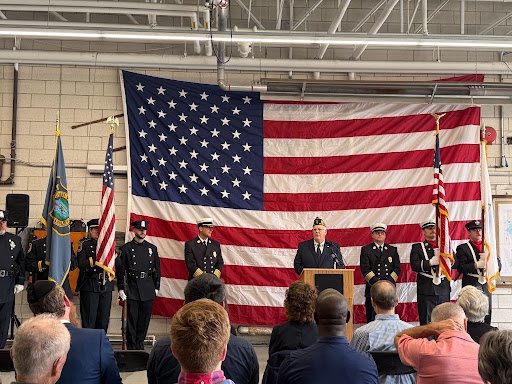
Retired Marine veteran Pete Jones speaks during Wellesley’s 25th anniversary Sept. 11 remembrance ceremony Friday at the Wellesley Fire Department.
Retired Marine veteran Pete Jones speaks during Wellesley’s 25th anniversary Sept. 11 remembrance ceremony (photo by Amanda Ciminello)

Rabbi Moshe Bleich remembers how he was asked to comfort the wife and children of an MRV Communications executive who was killed on the American Airlines Flight 11 that crashed into the World Trade Center. Bleich’s brother worked in the World Trade Center, while other family members worked with the New York Police Department.  

Twenty-five years later, Bleich continues to attend Wellesley’s annual remembrance ceremony, where he shares a prayer for peace and healing and reflects on his own memories of the day.

“It’s shocking to me that 25 years have passed and that the world has changed,” Bleich said to the crowd. 

Bleich, who moved to Wellesley from New York in 2000, was among dozens of residents, firefighters, police officers, veterans, town representatives and other community members who gathered Friday at 10 a.m. at the Fire Department headquarters on Worcester Street to commemorate the 25th anniversary of the attacks.  

The ceremony included reflections, speeches and prayers to honor the nearly 3,000 people who lost their lives on Sept. 11, 2001, as well as those who died in the years that followed from Sept.11-related illnesses.

Bleich attends the ceremony each year despite the busy time of Rosh Hashanah. 

He recalled being asked to comfort the wife and children of a man who was killed in the attack just hours after it happened. 

For Bleich, the ceremony remains important regardless of how much time has passed.

“But some things must never change,” he said to the crowd. “We must never forget the people who were taken from their families.” 

Four Wellesley residents, Patrick Quigley, John Cahill, Neilie Casey, and Edmund Glazer, were killed in the attacks on Sept. 11. 

Quigley’s widow, Patti Quigley, along with another 9/11 widow, Susan Retik, founded “Beyond the 11th” in 2003 after seeing the struggles of Afghan widows affected by war and recognizing the difference between the support they received as 9/11 widows and the hardships faced by Afghan women. 

“These are truly inspirational actions taken by people who lost the lives that they knew, their husbands leaving them with infant children, and it was quite remarkable that that was how they chose to respond to some credit,” Rep. Alice  H. Peisch said to the crowd. 

Wellesley Fire Department Chief Steve Mortarelli led the ceremony, emphasizing the importance of remembering the people who lost their lives and preserving their stories for future generations.

“Today marks the 25th anniversary of September 11, 2001,” Mortarelli said to the crowd. “Twenty five years have passed, but for those who lived through that day, the memories remain marked and clear.”

Mortarelli noted that while some attendees remember exactly where they were when the attacks occurred, younger generations only know Sept. 11 through short history lessons and stories from their parents. 

“That is why ceremonies such as this remain so very important,” he said to the crowd, emphasizing the need to carry the lessons and sacrifices of Sept. 11 forward. 

Mortarelli also reflected on the challenges faced by first responders and their families—many unfolding in the years since the attack. 

“The courage came at an enormous cost,” Mortarelli said to the crowd. “For those families, September 11 did not end when the buildings stopped burning.”

Retired Marine veteran Pete Jones, who was at the event, described how he thinks, in some ways, we have “lost our history.” 

“We must remind the next generation that freedom is not free,” Jones said to the crowd. 

Jones said that while the anger and fear Americans felt in the immediate aftermath may have faded, the responsibility to remember has not. 

“What I fear is September 11 is slowly fading from the collective memory, relegated to a paragraph in a newspaper and occasional reference on television,” Jones said to the crowd. 

In an interview, Jerry Kelley, now retired, said he attends Wellesley’s ceremony annually and has noticed fewer people showing up over the years.

Kelley, who was activated at the age of 54 to serve for a year following the attacks, said it is important for the younger generations to understand what happened 25 years ago.

At the ceremony, Wellesley Select Board chair Marjorie Freiman reflected on how Sept.11 changed the way communities viewed firefighters, police officers and public works employees.

“Before September 11, we tended to measure communities by what we could see… not everyone focused on the routine shape of the community: fire stations, police departments, public works groups, 9/11 dispatches, custodians,” Freiman said to the crowd. “As a result of that terrible time, we understood how much those ordinary institutions matter and are indeed extraordinary.”

For some Wellesley firefighters, the annual ceremony is a consistent way to honor those who died. 

James Claflin, who has worked for the Wellesley Fire department for 14 years as a firefighter and previously spent six years as a dispatcher, including during the time of the Sept. 11 attacks, described in an interview how he thinks the event is a good way to honor those affected by the tragedy. 

“I think the ceremony itself is the same, we get a pretty good turnout every time,” Claflin said. 

Claflin said his attitude toward remembering the attacks has not changed, regardless of the anniversary. 

Claflin says his mindset “never changes.” 

Patrolman Michael Pino of the Wellesley Police Department said it is important to bring awareness about what happened Sept. 11 and the years following to the younger generations. 

No matter the anniversary, it is “important to never lose sight of it,” Pino said in an interview a few days prior to the event.

As the ceremony came to a close, a firefighter performed the traditional 5-5-5-5 bell signal, a fire service tribute to those who died. 

The ceremony ended with a continued call to remember the victims while looking forward to the future. 

“In doing so, we pay tribute to the memory of those lost and pledge to continue to build a future of peace and understanding,” Peisch said to the crowd. 


This story is part of a partnership between the Swellesley Report and the Boston University Department of Journalism’s Newsroom program.


Filed Under: Community, History


Advertisements

black & blue, Wellesley
Olive Tree Medical, Wellesley
Haskins Automotive, Wellesley
MIT Museum, Cambridge
September 2026: Wellesley Historical Society Object of the Month

Wedding Dress of Genevieve Shaw, 1925

September 7, 2026 by admin

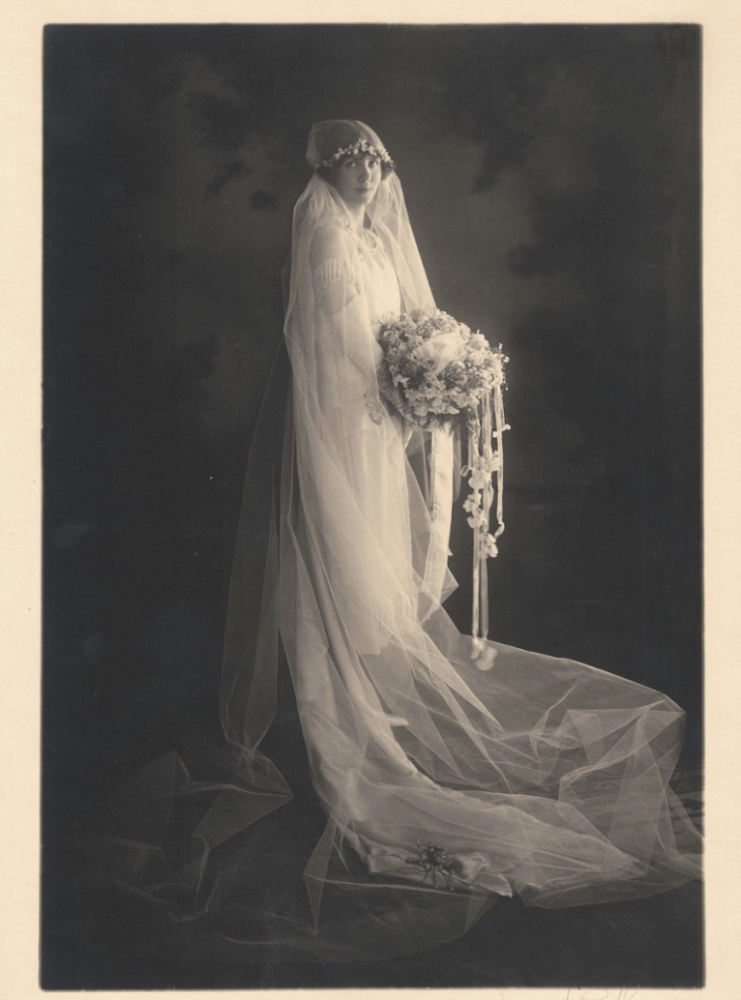
Featured photograph is Shaw in her wedding dress, 1925
Shaw in her wedding dress, 1925

 
Some objects survive because they are useful. Others survive because they are treasured. This remarkable wedding ensemble belongs firmly in the second category. Crafted from luminous silk fabrics and adorned with delicate orange blossom decorations, this bridal outfit captures a glimpse of wedding hopes and traditions at the turn of the 20th century. As a symbolic object and a fashionable statement, the dress transforms a personal milestone into a memorable public celebration in the folds of its intricate design. In honor of wedding season, let us take a closer look at the ensemble that comprises this shimmering statement of matrimony.

Worn by Genevieve Shaw on the eve of her wedding to Walter H. Sturgis, this 1925 piece features sleeve caps of lace with satin tassels, a scooped neckline, and a long train in sheer pink crepe. Yet some of the most meaningful details are also the smallest. Scattered throughout the ensemble are carefully crafted wax decorations of orange blossoms, one of the most beloved wedding symbols of the Victorian era. Prized for their sweet fragrance and short-lived beauty, orange blossoms represent innocence, fertility, abundance, and the promise of new beginnings. Brides incorporated them into bouquets, veils, wax crowns, and gowns. The flower was an emblem of marriage and of hope. In addition to the dress itself, the display includes details and pieces from other members of the wedding party: the blue suede patterns of her mother’s gloves, the lacey ecru fabric from her bridesmaids’ dresses. As a collection, these accessories complete the story. Family, friends, and loved ones gathered in celebration in carefully coordinated attire—outfits that conveyed elegance, modern femininity, and an embrace of cultural change.

Families devoted considerable resources to creating a dress worthy of the occasion, often selecting luxurious fabrics and fashionable embellishments that reflected both personal taste and cultural expectations. In the late 19th and early 20th centuries, bridal attire was expected to make an impression. The flowing silhouette, ornamental flourishes, and carefully balanced structures wove an image of elegance and refinement. Brides in the ‘20s sported dresses with the iconic “drop” waist, where a seam appears below the natural hip. Championed by designers like Coco Chanel, these styles emerged in a transformative era in women’s fashion: a time where comfort began to overtake style.

Today, the dress serves as a vessel of memory. The silk, lace, and blossom details speak to the emotions that surround a wedding day: anticipation, joy, optimism for new beginnings. More than a century later, these fragile materials tell a powerful story about love, family, and the enduring human desire to commemorate life’s most significant moments with beauty. In preserving this wedding ensemble, we preserve the dreams and traditions woven into each stitch.


Every month, the Wellesley Historical Society highlights an object from its collection. These objects capture Wellesley stories, both those well-known to us and those yet uncovered. Historic artifacts symbolize and convey important narratives, whether that is the hard-working craftsman behind a piece or a written document that shaped the town’s future. As such, the Wellesley Historical Society collections capture the entirety of Wellesley as a town, from significant happenings to sentimental mementos.

This month’s post was written by Annabel Abdelal, Curatorial Intern at the Wellesley Historical Society.

Filed Under: History, Uncategorized, Wellesley Historical Society Object of the Month

Page Waterman, Natick
London Harness, Wellesley
Dedham Country Day School

Historical narrative—what happened in Wellesley on the first V-J Day, Aug. 14, 1945

August 14, 2026 by admin

The following is a first-person historical narrative to commemorate the first V-J Day, sent to The Swellesley Report by former Wellesley resident Channing Wagg. In addition to his written report, we spoke to Mr. Wagg for a while by phone to clarify some points. Although he now lives elsewhere, Mr. Wagg says he’s never forgotten that day when Wellesley took to the streets to celebrate the end of World War II.

For some historical context, V-J Day, which means “Victory Over Japan Day,” is now officially observed in the United States on Sept. 2. On that date, aboard the Navy ship the USS Missouri, while anchored in Tokyo Bay, Japan, Army Gen. Douglas MacArthur signed the Instrument of Surrender for the United Nations, and Fleet Adm. Chester Nimitz signed for the United States. In addition, Japanese representatives signed the official Instrument of Surrender. 

However, it was on Aug. 14, 1945, that President Harry S. Truman announced that Japan had surrendered unconditionally, effectively ending World War II. This news triggered immediate celebrations across the United States. 

Many other countries including Australia, the Netherlands, New Zealand, South Korea and the United Kingdom celebrate Aug. 15 as V-J Day. On that date in 1945, Japanese Emperor Hirohito broadcast the surrender to the Japanese people on Radio Tokyo.

Here’s what Mr. Wagg recalls about how August 14, 1945 unfolded in Wellesley, Mass.

A day like no other

When Japan announced its surrender, it stopped formal hostilities for the United States in World War II. I was exactly six and one-half years old that day, too young to grasp its larger significance, but old enough to remember the pandemonium in usually sedate Wellesley Square that evening. And pandemonium it was, freed like an uncoiling spring by the ending of 1,346 days of US direct involvement in combat operations (December 7, 1941 – August 14, 1945), spanning the 3,300 nautical miles across the Pacific from Pearl Harbor to Tokyo. The announcement also marked and end to the the flow of telegrams, some 100,000 of them, beginning, “The Secretary of War desires me to express his deep regret….”

Two of those telegrams were delivered on Solon Street, where I lived with my maternal grandparents and my mother from spring, 1944 until early 1946 while my father, drafted just before his 37th birthday, served in the Navy which included time at Sea Gate Naval Hospital, Brooklyn. My father made it through the war. But not every family on my street was as lucky.

One telegram brought bad news related to fleet action in the Pacific. The other telegram relayed information about the crash of an airplane with MIT Radiation Laboratory personnel aboard testing radar equipment.

Another household had received news earlier that year that a son had been evacuated from the Battle of the Bulge. His mother told us his evacuation was due to to a self-inflicted gun-shot wound. Another family received bad news about a fireman who served on a destroyer off Okinawa.

Indeed, World War II dealt a heavy hand to four families on our short road with under a dozen houses.

One soldier on Solon St. got through more lightly. We kids knew him only as Dick, who lived in the house at the corner of Brook and Solon Streets. He came back from Europe and occasionally would talk and joke with us kids, something like an older brother. He went back to school at Babson on the G. I. Bill. One day the gang went by his house, and his sister told us he had a date. We asked who with and she told us her name was Bubbles Dolly. That gave us something to talk about.

A celebration in the streets

On August 14th, The bells of the Wellesley Congregational Church pealed continuously from late that afternoon until almost midnight. The Square was filled with automobiles jammed with passengers, most drinking. Those who couldn’t fit inside the car jumped onto the running boards, bottle in one hand, the other gripping a hand strap. Horns were beeping, bugles played, people yelled, waved flags, kissed each other, confetti showered around. The War was over, finished, the vengeance of Pearl Harbor done with. Peace was finally here.

Eighty-one years later, Woodlawn Cemetery has its share of graves marked with a small flag in commemoration of military service performed. V-J Day is now observed throughout the United States on Sept. 2, the date of the formal signing (with the exception of Rhode Island, which sticks with August).

I just wanted to remind folks about V-J Day, and tell everyone what it was like in Wellesley. As one of the few left who can remember the August 14th that Wellesley Square erupted in laughter, tears, bells, and celebration, it seems important. These anniversary days matter, and taking a few minutes to remember means something.

Sincerely,

Channing Wagg
Former Solon St. resident, from 1944-1948


Filed Under: History

Wellesley Youth Basketball
Longfellow, Wellesley

Happy birthday to Wellesley’s own Katharine Lee Bates

August 12, 2026 by Deborah Brown

Updated story from August 2020.

Happy birthday to 1874 Wellesley High School graduate and Bates Elementary School namesake Katharine Lee Bates, widely known as the author of the patriotic song America the Beautiful. In honor of the prolific writer, born on Aug. 12, who taught at Dana Hall School before landing a job as a professor of English literature at Wellesley College, I took a spin on the Shining Sea Bikeway. The 11-mile paved and level bike path stretches from Bates’ birthplace of Falmouth, to Woods Hole.

Katharine Lee Bates, Shining Sea Bikeway
The Shining Sea Bikeway is an easy-going way to get in a 22-mile round-trip bike ride on a summer’s day. The path is well-kept with plenty of places to pull off and take a break. Mile markers help you keep track of your progress.

I started out at the Depot Road trailhead in Falmouth, about a 90-minute drive from Wellesley Square. There’s a free parking area there for about 80 cars, and you can’t miss the trailhead right across the street from the lot. Although the path is well-known and popular, during my mid-week trip, the bikeway generally looked about as crowded as the above picture. As I got closer to busy Woods Hole, I saw more cyclists.

Katharine Lee Bates, Shining Sea Bikeway
A marker along the path is engraved with the lyrics to America the Beautiful. Bates, who died in 1929 at the age of 69, isn’t buried under the tombstone-sized monument. She lies in eternal rest at Oak Grove Cemetery in Falmouth.


Katharine Lee Bates, Shining Sea Bikeway
Cyclists on the Bikeway will enjoy beautiful vistas of Vineyard Sound, Little Sippewisset Marsh, Great Sippewisset Marsh, Buzzard’s Bay, and other beauty spots.

Once at Woods Hole, I was ready for a bathroom break. The Steamship Authority restrooms in ticket building were open (and sparkling clean), and the fountains were functional and supplying ice-cold water. One of my favorite parts of Woods Hole is the drawbridge, of course. Here’s a video:

Last stop: Landfall restaurant, where a table overlooking Woods Hole Harbor awaited. After a half-dozen beautiful raw oysters and a Caprese Ciabatta sandwich, I was ready for the 11-mile trip back to Falmouth.

Woods Hole, Landfall restaurant
These beauties hit the spot. The iconic Landfall restaurant has 22 tables inside and 13 outside, and accepts walk-ins or reservations. My table benefited from the water view and a lovely breeze.

Lunch over, I hit the Shining Sea Bikeway once more and pedaled under the Cape’s spacious skies, meditating on Bates’ line, “America, America, God shed his grace on thee…”

The trail must be on an incline on the way back, because getting back to Falmouth seemed to take longer than powering through to Woods Hole. It couldn’t have been me. I wasn’t tired or saddlesore, no way. Those weren’t tears of joy when I saw my car. Just a little trail dust in my eye, that’s all. Bring on the next adventure.

Happy birthday, Katharine Lee Bates.

Filed Under: Beyond Wellesley, History, Outdoors, Restaurants

Wellesley Symphony Orchestra
Wellesley Marketplace 2026
August 2026: Object of the Month

Wellesley Historical Society digs into a 1922 toiletry bag

August 3, 2026 by admin

A modern nighttime routine is familiar to most of us: a cotton towel to dry a washed face, a dollop of toothpaste, a carefully detailed pajama set. What is incredible, though, is the difference a century makes in the most ordinary of habits. When we think of the changes in daily life from the 1920s to the 2020s, we think first of the obvious: automobile transformation, civil rights expansion, and (lately!) inflation. Yet some of the most fascinating cultural shifts are reflected in the smallest of objects, even the contents of a toiletry bag.

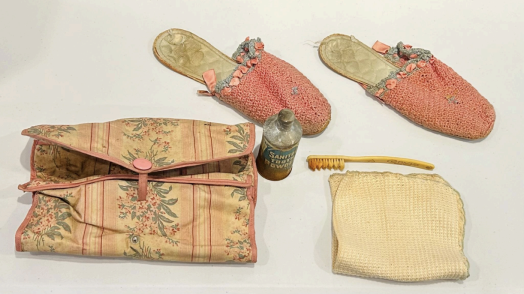
Toiletry Bag, 1922
Toiletry Bag, 1922

Let’s consider the toothbrush. In the early twentieth century, toothbrush manufacturers primarily whittled handles from animal bone or wood, while horse or boar hair mostly comprised the bristles. Affordable toothbrush options were imported largely from Japan in massive quantities with little packaging or sanitary precautions. Because of the expensiveness of the materials and product, almost 80% of Americans brushed their teeth with a rag or toothpick instead. In the midst of rising industrialization and market competition, employers began to encourage dental health in hopes of a more healthy and productive workforce. American oral hygiene was transformed later in 1938 with the invention of the modern synthetic nylon technology we know today. Perhaps the most bizarre of the toiletry bag’s contents is the toothbrush’s partner: tooth powder. Composed of ingredients like chalk and baking soda, the abrasive powder was the most common way to brush away stains in the early years of American dental hygiene.

The crochet slippers tell yet another story. Fashion underwent a major transformation during the 1920s. The popularization of comfort led to dramatic changes in trending styles. The rigidity of previous decades gave way to an era that valued relaxation with the rise of loungewear. Slippers became popular after World War I as comfortable indoor footwear; before homes obtained central heating, residents opted for warm, snug alternatives to formal shoes. Their soft construction and practical design reflected the growing preference for garments that emphasized ease of movement and everyday comfort. Crochet slippers, often handmade, highlighted the continued importance of domestic crafts in shaping household life during the decade.

Taken together, these humble items reveal how much a century of change can be hidden in the routines we barely stop to consider. A toothbrush, a container of tooth powder, or a pair of crochet slippers may seem ordinary, yet each reflects larger developments in technology, industry, health, and culture. The transition from handcrafted materials to mass-produced synthetics, from necessity to convenience, from rigidity to comfort, illustrates how Americans’ expectations of daily life evolved. By looking more closely at the contents of a mere toiletry bag, we gain a richer understanding of a world that was both surprisingly familiar and remarkably different from our own.

We encourage you to visit the Wellesley Historical Society at 323 Washington Street to see our new exhibit, “A Time of Revolution,” where you can see this piece of history and many more!

Every month, the Wellesley Historical Society highlights an object from its collection. These objects capture Wellesley stories, both those well-known to us and those yet uncovered. Historic artifacts symbolize and convey important narratives, whether that is the hard-working craftsman behind a piece or a written document that shaped the town’s future. As such, the Wellesley Historical Society collections capture the entirety of Wellesley as a town, from significant happenings to sentimental mementos.

This month’s post was written by Annabel Abdelal, Curatorial Intern at the Wellesley Historical Society.

Filed Under: History, Wellesley Historical Society Object of the Month

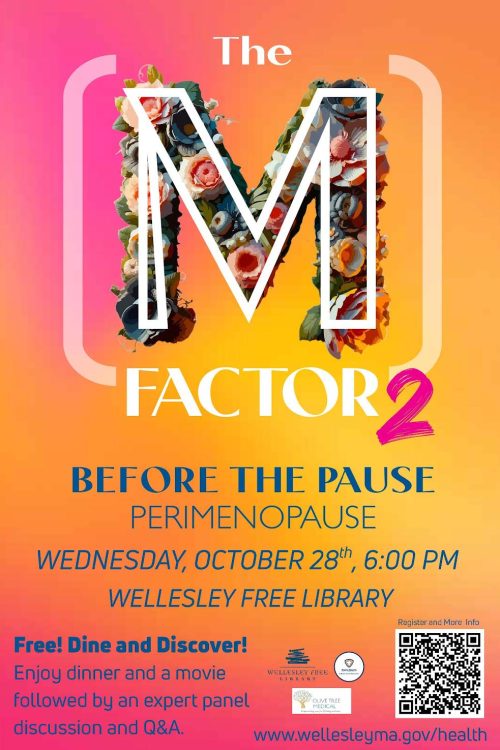
Wellesley, Health Dept., Menopause movie
July 2026: Object of the Month

Dress from George Washington Bicentennial (1932) in Wellesley Historical Society collection

July 7, 2026 by admin

The Wellesley Historical Society highlights an object from its collection each month for The Swellesley Report. This month’s post was written by Annabel Abdelal, Curatorial Intern at the Wellesley Historical Society.

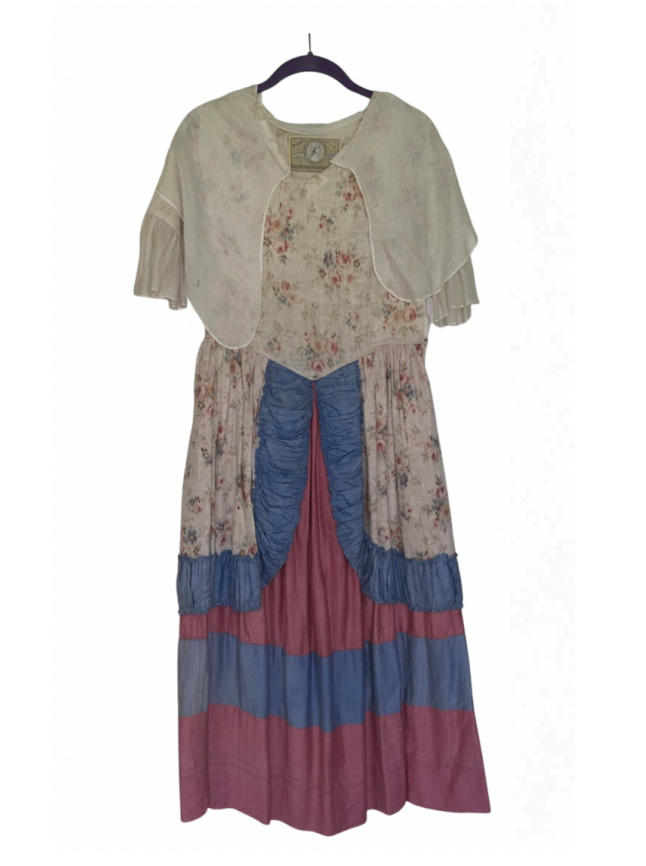
Dress from George Washington Bicentennial, 1932

In an elaborate display of national pride, this striking dress represents a celebration much larger than fashion. Delicate floral fabric, flowing skirt, dramatic shoulder ruffles, and bold bands of red, white, and blue cascade down its front. It is a surviving artifact from the patriotic celebrations of the bicentennial of George Washington’s birth. Preserved nearly a century later, the dress offers a colorful window into how Americans commemorated shared history and national identity.

In 1932, the United States marked the 200th anniversary of Washington’s birth with parades, pageants, exhibitions, concerts, school programs, and civic ceremonies, all of which stretched from the golden coast to the eastern seaboard. Amidst the crippling hardships and uncertainty of the Great Depression, the bicentennial provided an opportunity to find inspiration in the richness of the country’s life and history. Washington occupies a distinct place in the American imagination. He was a symbol of perseverance, leadership, and national unity. Communities large and small organized elaborate celebrations, which often featured historical reenactments and colonial-inspired costumes. Dresses like these were designed to evoke an idealized vision of early America and blend historical references with the fashion sensibilities of the 1930s.

The garment’s soft floral prints recall 18th-century textiles, while the vivid patriotic colors boldly announce its purpose. The piece is both theatrical and sincere as a wearable expression of civic pride and a transformation of history into living experience. The 1932 bicentennial spirit was quite different from that of the nation’s better-known bicentennial celebrations of 1976—the commemoration of 200 years of American independence. The Washington bicentennial emphasized reverence. Americans largely viewed the founding generation through a heroic lens, and public celebrations brought unity and shared ideals to the spotlight. By contrast, the 1976 bicentennial arrived after decades plagued by political upheaval, the Vietnam War, and dramatic social change. Americans still celebrated enthusiastically—with tall ships, fireworks, community festivals, and an explosion of patriotically colored memorabilia—but there was also a greater willingness to examine history from multiple perspectives.

Despite their differences, the anniversaries shared a common purpose: an invitation to reflect on whence we came and where we were headed. Whether through a colonial-inspired dress in 1932 or a bicentennial parade in 1976, ordinary citizens became participants in a national conversation about identity, memory, and belonging. This dress is evidence of how history was interpreted and worn. Its faded fabrics and exuberant colors remind us that every generation finds ways of honoring the past. The outfit tells a vivid story about Washington, the Americans who celebrate him, and the enduring desire to connect with history through celebration, creativity, and community.


Every month, the Wellesley Historical Society highlights an object from its collection. These objects capture Wellesley stories, both those well-known to us and those yet uncovered. Historic artifacts symbolize and convey important narratives, whether that is the hard-working craftsman behind a piece or a written document that shaped the town’s future. As such, the Wellesley Historical Society collections capture the entirety of Wellesley as a town, from significant happenings to sentimental mementos.

This month’s post was written by Annabel Abdelal, Curatorial Intern at the Wellesley Historical Society.

Filed Under: History, Wellesley Historical Society Object of the Month

Advertisement

maverick ad sept

Wellesley, Mass. population numbers

According to the US Census Bureau, the most recent official count in 2020 put Wellesley’s population at 29,550.

The 2010 census showed residents numbered 27,982.

Wellesley’s estimated population as of July 1, 2025 is 31,239, an increase of almost 12% over the 15-year period from 2010 – 2025.

These numbers indicate a positive growth trend, reflecting an average annual growth rate of approximately 0.74% during this timeframe.

The next official Census will take place in 2030.

What county is Wellesley, Mass. in?

Wellesley, Massachusetts is located in Norfolk County.

The town is part of the Greater Boston metropolitan area. The United States Census Bureau estimates Wellesley’s 2025 population at 31,239. Wellesley College, Babson College, and a campus of Massachusetts Bay Community College are located in the town.

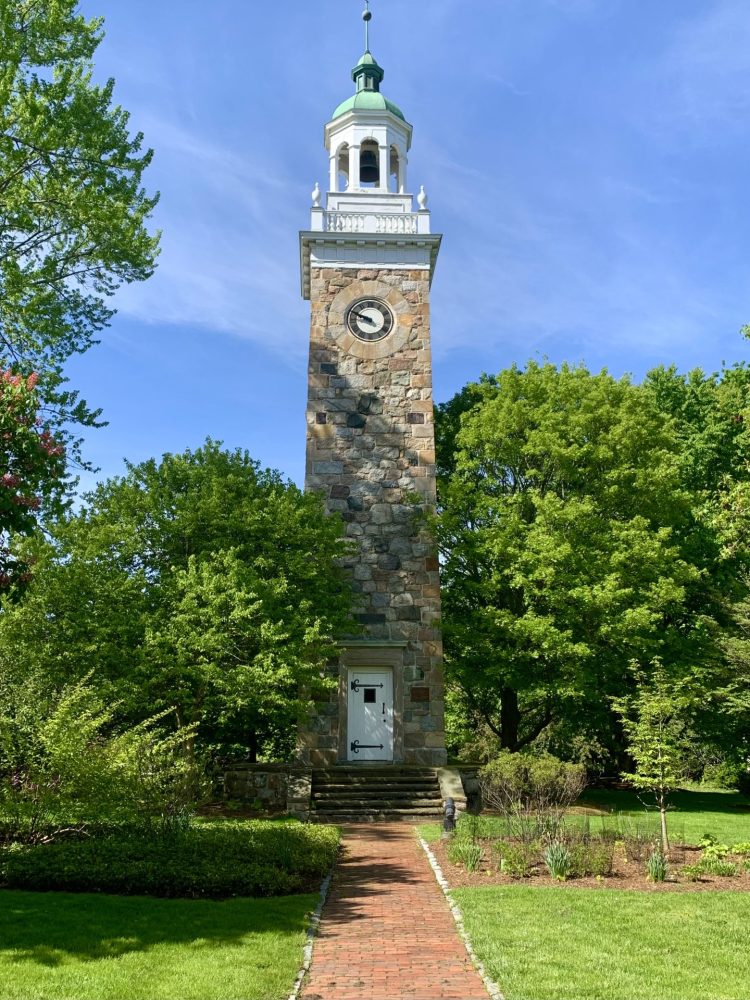
Clock Tower Park, Wellesley, spring 2026

Other towns/cities in Norfolk County

In addition to Wellesley, there are 26 other towns (22) and cities (five) in Norfolk County

  • Avon
  • Bellingham
  • Braintree (city)
  • Brookline
  • Canton
  • Cohasset
  • Dedham
  • Dover
  • Foxborough 
  • Franklin (city)
  • Holbrook
  • Medfield
  • Medway
  • Millis
  • Milton
  • Needham
  • Norfolk
  • Norwood
  • Plainville
  • Quincy (city)
  • Randolph (city)
  • Sharon
  • Stoughton
  • Walpole
  • Westwood
  • Weymouth (city)
  • Wrentham
Next Page »

Tip us off…

Please send tips, photos, ideas to theswellesleyreport@gmail.com

Please support your local online news source with a tax-deductible donation by scanning the QR code or by clicking on it.

QR Code

Advertisements

Wellesley Square Merchants
The Village Bank, Wellesley
Wellesley, Jesamondo
Fay School, Southborough
Sexton test prep, Wellesley
Wellesley Theatre Project
Prepped and Polished
Perdocere, Wellesley
Wellesley HIlls Dental
Admit Fit, Wellesley
entering-swellesley-1
  • Bluesky
  • Facebook
  • Instagram
  • Twitter

Subscribe to our free weekday email newsletter

* indicates required

Most Read Posts

  • Wellesley Halloween happenings—2026 edition
  • Friday is letters-to-the-editor day
  • Indigenous Peoples Day 2026 Wellesley—what’s open and closed, nearby events
  • Wellesley Service League Men’s Group Speaker Series to welcome Social Entrepreneur
  • Wellesley imagines what North 40 can do for community going forward

Click on Entering Natick sign to read our Natick Report

Entering Natick road sign

Recent Comments

  • Concerned Resident on Wellesley imagines what North 40 can do for community going forward
  • Ann Gagliano on Wellesley artist mashes up ‘Birth of Venus’ & Halloween
  • Select Board Should Listen (to some music) on Wellesley imagines what North 40 can do for community going forward
  • How is this affordable? on Wellesley All Board Meeting brings who’s who of town leaders together to look ahead
  • Gwen Baker on Wellesley School Committee extends superintendent’s contract, refines AC funding request

Upcoming Events

Oct 12
All day

Indigenous Peoples Day

Oct 12
1:00 pm - 3:00 pm

Learn to Play Rummikub

Oct 12
7:00 pm - 8:00 pm

Wellesley Choral Society rehearsals

Oct 14
6:30 pm - 8:00 pm

Wellesley Square Improvement Project public meeting

Oct 15
10:30 am - 1:30 pm

Friends of the Wellesley Council on Aging present Health & Wellness Fair

View Calendar

Links we like

  • Danny's Place
  • Great Runs
  • Tech-Tamer
  • Universal Hub
  • Wellesley Sports Discussion Facebook Group

© 2026 The Swellesley Report
Site by Tech-Tamer · Login