For over a century, the Clapp Library at Wellesley College has stood as the intellectual heart of Wellesley College. But after an ambitious 18-month renovation, the building has emerged, fresh from library staff is calling “a complete glow up.” Reopening its doors this past September, the 180,000-square-foot facility now blends its historic 1910 roots with the needs of the 21st-century student.
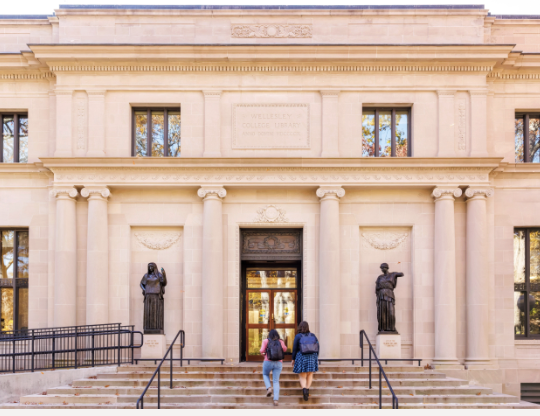
The original plan was for modest, low-key updates to address deferred maintenance. As with most renovations of historic buildings—the thoughtfully designed ones, anyway—a lick and a promise wasn’t going to cut it. The project quickly morphed into a full-building intervention as the project team realized the library required the kind of transformation that meets modern needs—and must conform to modern rules. So many building code requirements. So much for a low-key, easy-peasy reno job.
Alexis Veigas, Clapp’s Office and Building Manager and Jenifer Bartle, Director of Library Collections took time out of their day to show me around a renewed space of which they’re rightfully quite proud.
Boston-based Shepley Bulfinch was the architectural firm chosen for the job. The Boston-based company has over 100 years of history with the College. The original library building was designed by Shepley, Rutan and Coolidge and opened in 1910. Two subsequent additions were designed by Shepley, Bulfinch, Richardson and Abbott, opening in 1959 and 1975, respectively.
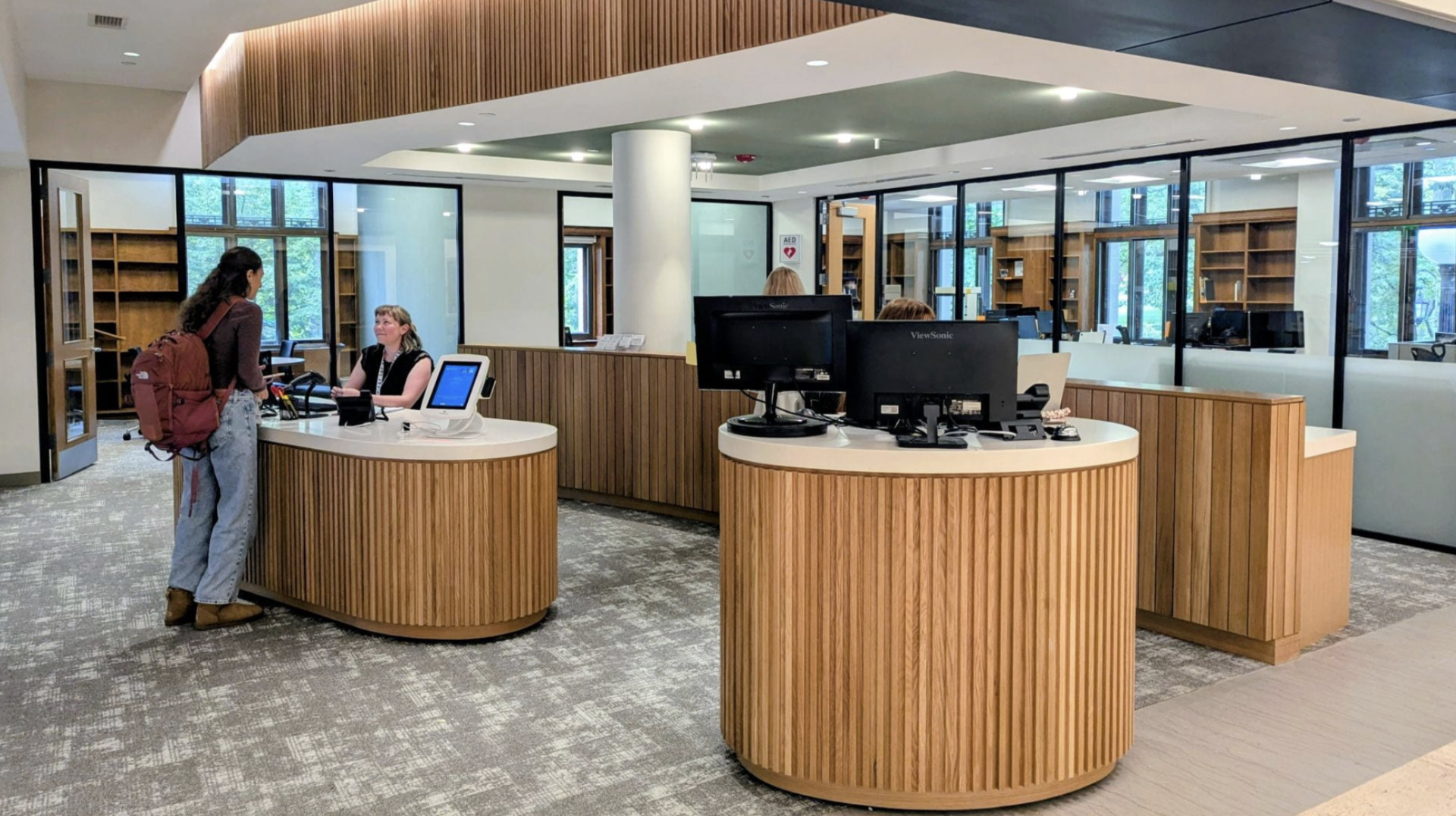
Walking into the refreshed lobby, visitors are immediately greeted by a vibe that is both welcoming and professional. Student-staffed kiosks and a redesigned service desk anchor the main entrance which, for the first time, is wheelchair accessible. In fact, the whole building now features new accessibility features. All four floors of shelving are now wheelchair accessible, and the building was designed to support both neuro- and physical diversity.
The jewel in the Clapp Library crown has always been the Presidents’ Reading Room. But over the years, some hodge-podge elements had infiltrated. After consulting historical photographs, the team tracked down and returned original study tables that had been dispersed throughout the building over decades.
“This space is one of my wow factors for sure,” said Jenifer Bartle, Director of Library Collections.
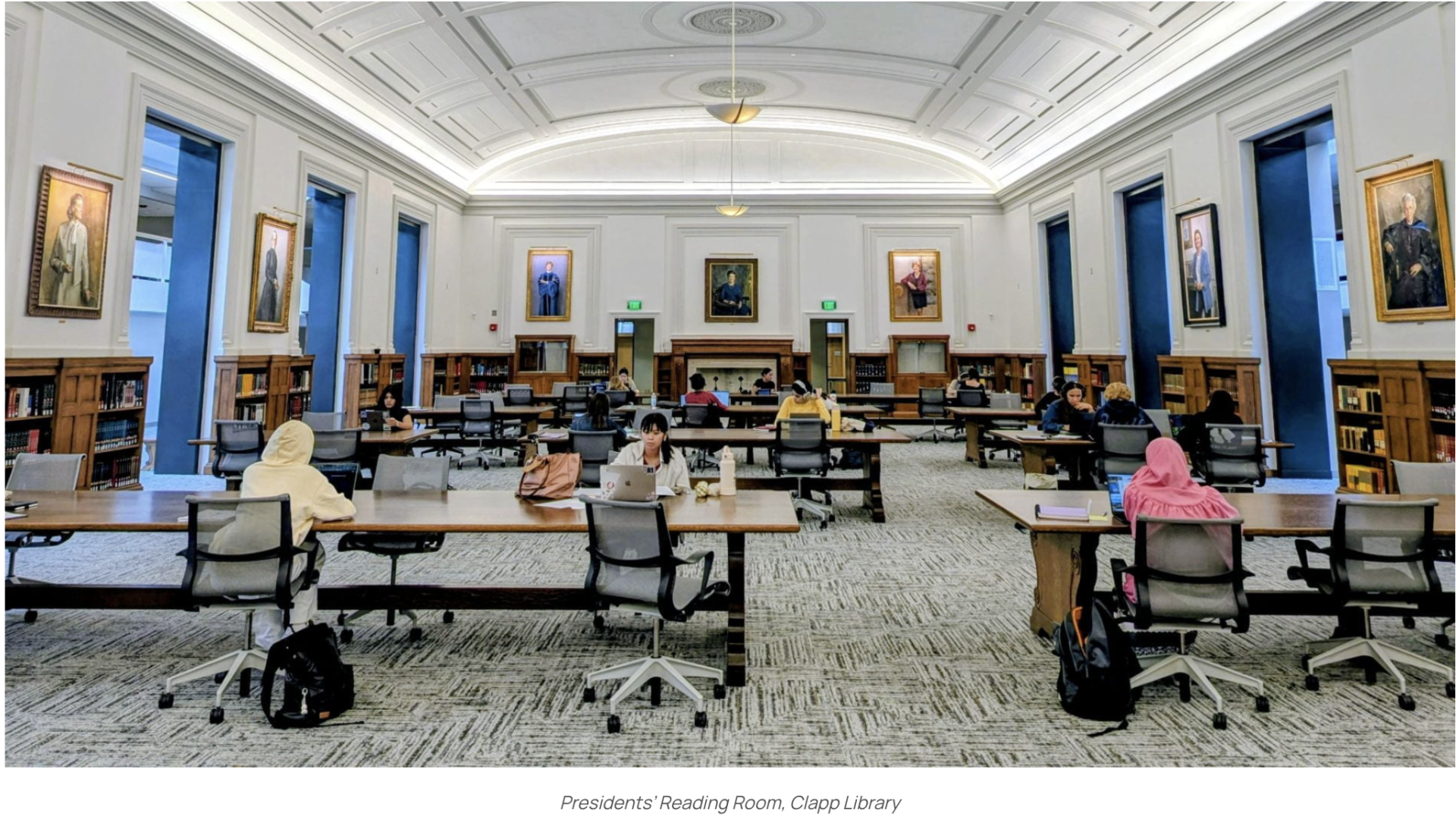
The room now features new chandeliers—replacing outdated, “big-box store” fixtures—along with lighting that highlights the portraits of Wellesley’s 14 presidents dating back to 1875. Bookshelf-lined walls give the space a classic reading room feel while modern comforts were added. Those original study tables are as cool as they were 100 years ago, but the vintage straight-backed wooden chairs—not so much. So new chairs were tested by students and staff for comfort, promptly replacing the old back-breakers.
History has been preserved, but modern technology certainly was not left behind. The new Knapp Makerspace and Multimedia Center has been added, equipped with fabrication tools and high-end creative software. A new equipment check-out desk allows students to more efficiently borrow Chromebooks, laptops, and professional media gear like cameras and audio recorders.
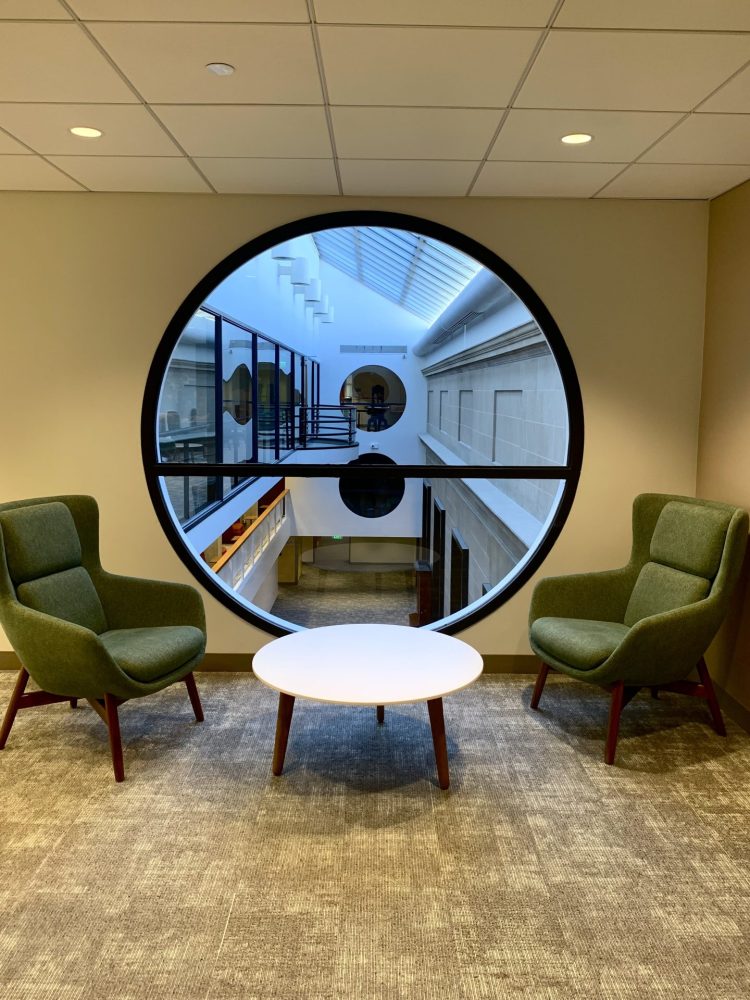
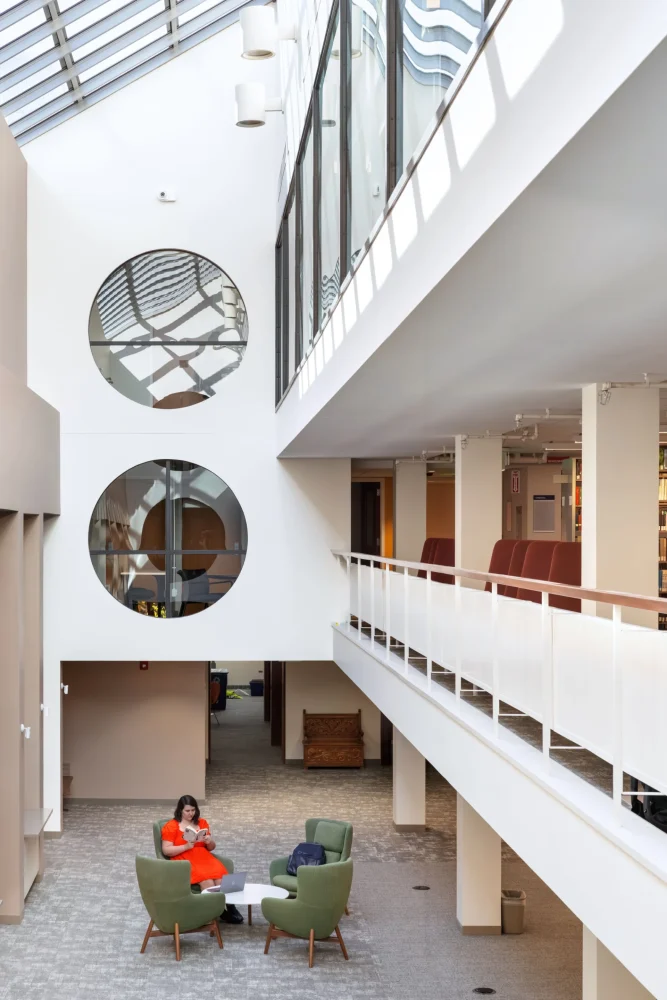
The much-anticipated cafe opened last month, because who wants to venture outside for a bite to eat during a marathon study session? When we were there, the cafe and lounge area looked like it had been discovered. Although the cafe won’t be staffed all 20 hours per day the library is open to students, there is a vending area for those late-night nosh needs. While the wider Wellesley community is welcome from 9am to 4pm to the library or the cafe, the Clapp Library is truly a student space.
Generous alumna comes through
The renovation was made possible through the generous support of Trustee Emerita Lia Gelin Poorvu ’56 and her husband, Bill. Their contribution allowed the college to go beyond surface-level repairs and address critical, “invisible” infrastructure including new HVAC systems, two new elevators, and fresh paint and carpeting throughout, along with enhanced humidity and temperature controls to protect the archives and special collections—and, as Bartle noted, “our people too.”
Sustainability was also at the forefront of the new design. Green features include all-electric HVAC systems and energy efficient lighting. Ignoring the siren call of teardown/rebuild, and instead reusing the existing structure to minimize new embodied carbon, was another key move that also kept as many materials as possible out of the landfill.
A flexible future
Flexibility, adaptability, and student-facing were the watchwords that informed every feature of the design. With a couple hundred additional seats added to the footprint (which, by the way, remained intact), Clapp Library is ready for the future. The design philosophy centered on flexibility and adaptability. Rooms that serve as faculty-student consultation areas during the day easily transition into student-led group spaces on evenings and weekends.
“We needed flexibility in space, and flexibility in how the spaces are used over time,” Bartle said. As the college moves forward, Clapp Library stands as a testament to the idea that a historic building can evolve, providing a light-filled sanctuary for generations of students to come.




I had the opportunity to work in the Clapp Library in the summer of 1969 in their reclassification project. It had been going on ten years or so to change from the Dewey decimal system to the Library of Congress classification system. I worked with two librarians, two full time clerks and one or two Wellesley students.
At that time the only male on the payroll in the library was the custodian as far as I knew. When we had a proscribed coffee break about fifteen or more woman plus me sat in the breakroom. I realized that my goal to be a librarian was going to be a nontypical career for a male. It was an enjoyable though hot summer because most of the library was not air conditioned yet.
I grew up in Wellesley on Summit Road and went to the University of Illinois at Urbana and received an AB in history and a MS in Librarianship. My prior work at Wellesley College was useful.
After three years in the Army (two in Korea working as a librarian while being a Specialist fourth class) I went to Tulane Law School. I spent the next 36 years at the University of Akron School of Law as the Law Librarian and Professor of Law.
I still remember fondly pulling all the catalog cards for specific books to be reclassified out of the card catalog at the Clapp Library. Many of the cards where 19th century handwritten card only half-size. My summer job at Clapp really paid off in a rewarding career in legal educcation as a librarian.
Thanks for sharing this Paul….