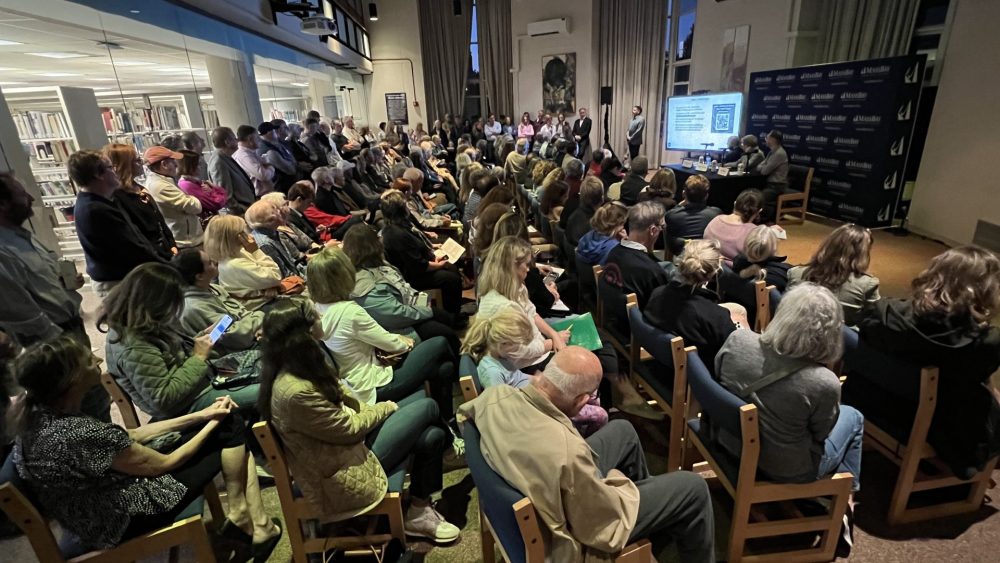
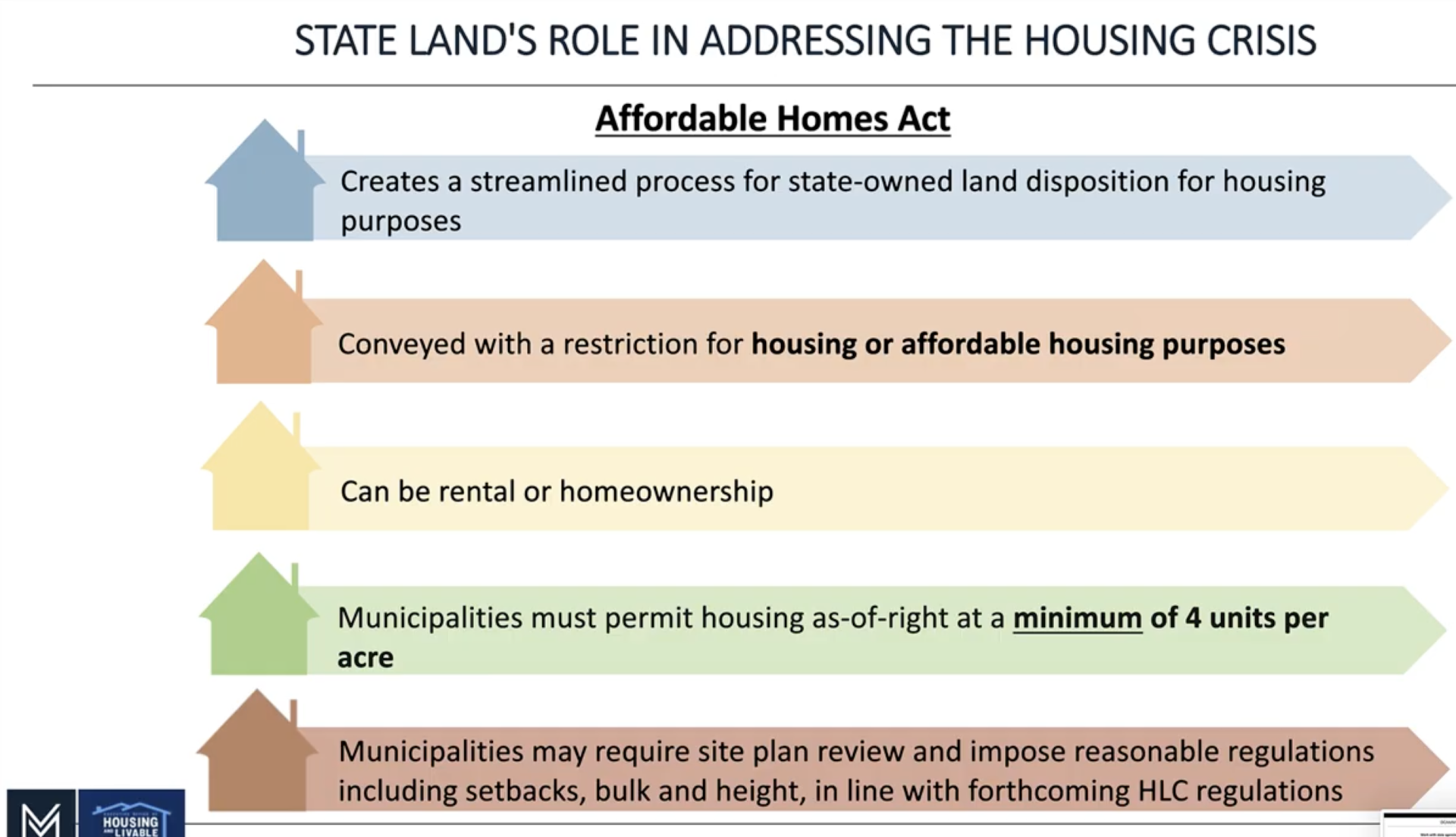
The Select Board and Planning Board at a joint meeting this week acknowledged receipt of a Strategic Housing Plan designed to give the town guidance in diversifying its housing stock and updating its policies even as state initiatives like the one involving MassBay property might throw Wellesley curveballs along the way (see Wellesley Media recording of the Oct. 28 meeting and a final version of the 100-plus page plan).
The Strategic Housing Plan process started in May of 2024, and has involved various public outreach opportunities and board discussions. The plan is designed to pick up from Wellesley’s dated Housing Production Plan, which helped the town meet the state’s 10% affordable housing stock threshold and thwart unfriendly 40B developments.
Consultants from Barrett Planning shared an updated plan with the boards based on feedback from those town bodies and the public over the summer. The revised plan captures more community feedback, stresses the plan’s role as a guiding document, and offers ideas for coming up with metrics. Among the recommendations are revisiting and possibly revising the town’s affordable housing and fair housing policies, and figuring out what role the newly launched Affordable Housing Trust will play.
Please consider supporting your local news source with a tax-deductible donation
Barrett Planning’s Alexis Lanzillotta said the study reemphasizes that Wellesley’s “zoning and town-owned land are the most meaningful ways that you’re going to be able to reach the range of income that you need to reach to address the wide range of housing gaps that exist.”
The updated plan also addresses the need for traffic improvements, a topic that residents emphasize based on their lived experiences.
Select Board member Beth Sullivan Woods asked about the way the plan discussed rethinking the number for units that count as affordable vs. those that actually are designed to be affordable to low- or moderate-income income households. That sparked some discussion of the possibility that the state could at some point change the way it tallies affordable units (as is, all units in some developments count toward the town’s subsidized housing inventory even if only a portion of them are affordable based on a state formula). Wellesley could be wise to move toward more truly affordable housing both to satisfy its own housing diversity goals as well as to account for any possible policy change at the state level. The Planning Board’s Jim Roberti commended the consultancy for acknowledging actually affordable units in the plan, describing this as “forward thinking,” and warning that the state is only going to get tougher on its housing rules.
Barrett Plannings Judi Barrett said: “I think the issue is that 10% under the current policy scheme at the state level is simply a metric for compliance with state policy, but it is not a measure of housing need,” she said.
Select Board member Tom Ulfelder stated that the Strategic Housing Plan should be neutral in tone and fact based. He said one challenge in developing town housing policy is that the state keeps rolling out new initiatives (as it did with the MBTA Communities Act and more recently the Affordable Homes Act). “You meet all of the goals, all of the mandates, and the goal posts are simply moved because the state wants to. And that is no way to give us confidence in trying to shape policy. It disincentivizes that work that we might do in terms of housing policy,” he said. Regarding the Strategic Housing Plan, he said later, people in town will have more comfort with its components if they can understand where the impact will be, say with the possible conversion of single family homes into duplexes or triplexes.
Fellow Select Board member Colette Aufranc stood by the town’s decision to comply with the MBTA Communities Act rather than take a “compliance-plus” approach, then go forward with a Strategic Housing Plan to address other needs. She expressed support for the plan, which she said contains potentially useful tools.
Planning’s Tom Taylor said he felt the plan met the scope that the consultants were given, and that getting more specifics would have required a pricier project. The job for the town now is to set its own benchmarks, he said. Fellow Planning Board member Patty Mallett said she thinks members of the community will be happy to see their concerns documented in the plan.
Board members were generally supportive of the plan, though some did not vote to accept it based on reservations.
Select Board member Kenny Largess described the plan as thoughtful but incomplete. He was looking for more in the way of documented needs. He pointed to city and state plans that used population forecasts and other data to come up with estimates on needed housing units by certain dates.
Select Board member Woods also was looking for “the size and area of need.”
Barrett pushed back that such requests were not within the scope of the project, and Lanzillotta noted that gathering certain data of this type is much harder on the local than regional level.
Select Board Chair Marjorie Freiman said: “I think… if there had been clear consensus in the town about what we wanted to do targets would have been much easier to identify, but there’s no consensus,” she said. “They tried to get us consensus in every possible way and consensus did not reveal itself.” She also added during the discussion that there was some quantification of need in a Wellesley Housing Development Corp. market study.
Planning’s Kathleen Woodward, who was complimentary of the revised plan, picked up on the consensus theme from Freiman and said the plan identifies “emerging areas of consensus and opportunity to meaningfully address housing needs of Wellesley citizens…” Two areas identified, she said, were renovation and expansion of existing affordable housing hubs on Wellesley property such as Barton Road and Morton Circle, and repurposing existing structures, such as commercial properties now changing hands, combined with zoning incentives.
The Strategic Housing Plan is just one of many plans in town that fit together, and more plans are on the way that will also have a focus on building consensus on housing and other developments. A big one will be a comprehensive plan to be led by the Planning Board, which will be asking Town Meeting in the future for possible $400k or $500k to do that, said Planning Chair Marc Charney.