• Sign up for free email newsletter
  • Advertise
  • Donate to support our work
  • Events calendar
  • About Us
 
Pinnacle, Douglas Elliman, Wellesley
 
Wellesley Hills Dental

The Swellesley Report

Since 2005: More than you really want to know about Wellesley, Mass.

  • Restaurants, sponsored by black & blue
  • Camps, sponsored by NEOC
  • Wellesley Square
  • Private Schools, sponsored by Prepped and Polished
  • Public Schools, sponsored by Sexton
  • Preschools, sponsored by Longfellow, Wellesley
  • School news
  • Kid stuff
  • Top 10 things to do
  • Business news
  • Worship
  • Letters to the editor
  • Guidelines for letters to the editor
  • Live gov’t meetings
  • Sports schedules & results
  • Deland, Gibson’s Athlete of the Week
  • Deaths
  • Housing
  • Medical providers—sponsored by FIXT Dental
 

Top Stories

Air conditioning & EV buses inform School Committee’s Special Town Meeting articles
Paying tribute to loooongtime DPW employee Smitty Rogers
Yet more new fitness & wellness studios

Advertisements

Needham Bank, Wellesley
FIXT
Down Under, Wellesley

Wellesley Theatre Project brings community production of “The Sound of Music” to the stage

July 20, 2026 by Maya Hazarika

wellesley theatre sound
Courtesy photo


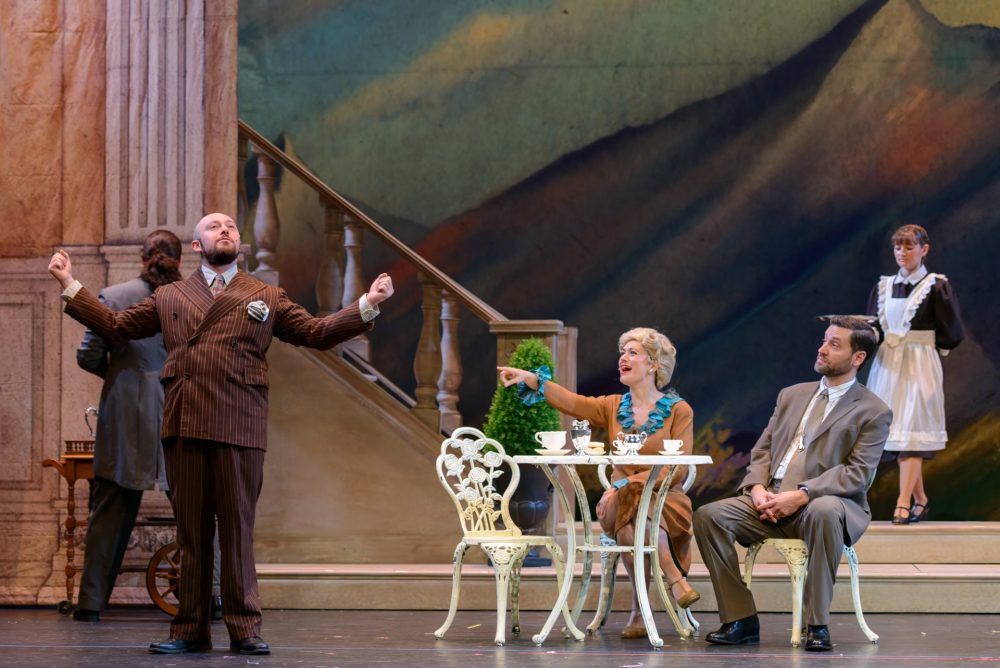
Wellesley Theatre Project presented the first three performances of its inaugural community production of “The Sound of Music” this past weekend at Babson College’s Sorenson Center for the Arts. A departure from WTP’s typical youth-focused work, this musical tapped the talents of WTP staff, alumni, current students, and community members from across Wellesley and throughout the Greater Boston area.

“The Sound of Music,” with music by Richard Rodgers, lyrics by Oscar Hammerstein II, based on the book by Howard Lindsay and Russel Crouse, is set in Austria in the late 1930s and follows Maria, a spirited novice nun who becomes governess to the seven von Trapp children. The musical’s well-known songs, including “The Sound of Music,” “Do-Re-Mi,” and “Sixteen Going on Seventeen,” help tell the story of Maria’s growing connection with the von Trapp family before they face the threat of Nazi occupation.

The cast delivered strong musical performances, with the production placing a greater emphasis on singing than on dramatic acting.

Before the performance, Executive Director Hillary Drew welcomed the audience and reflected on what it took to bring the production to the stage. She shared that 91 people auditioned for the show, with 37 cast members selected, and noted that the production also features a 17-piece orchestra and more than 45 performers overall. Drew also pointed out that this summer marks WTP’s 15th anniversary, making the production a bit of a celebration of the organization’s success over the past decade and a half.

The production is directed by Chris Cavallo, with musical direction by David Wright. Katelyn Geary is associate musical director and conductor, and Erica Lundin is the choreographer.

“The Sound of Music” will be performed again on July 30, July 31, and Aug. 1 at 7:30pm, with a bonus 35-minute kids’ production set for Aug. 1 (purchase tickets online).

WTP provides year-round theater education for students from PreK through 12th grade as a nonprofit. They offer classes, productions, workshops, and summer camps. These range from one-week camps- for example, “Unicorns and Dinosaurs!” or “Bluey and Friends”- all the way to selective professional internships for high schoolers. This summer’s community production reflects the organization’s first significant work beyond youth programming.


Filed Under: Theatre


Advertisements

black & blue, Wellesley
Olive Tree Medical, Wellesley
Haskins Automotive, Wellesley
MIT Museum, Cambridge
Education

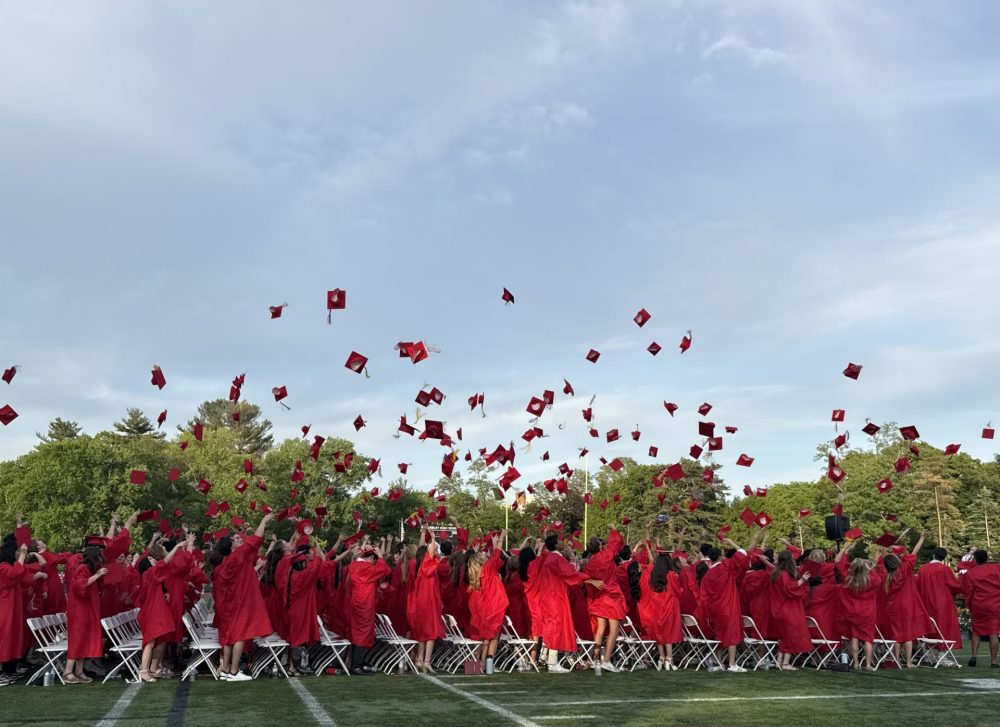
Wellesley High School’s graduation speakers call on Class of ’26 to show up and care

June 6, 2026 by Maya Hazarika

WHS graduation
Photos courtesy of Wellesley Public Schools

 
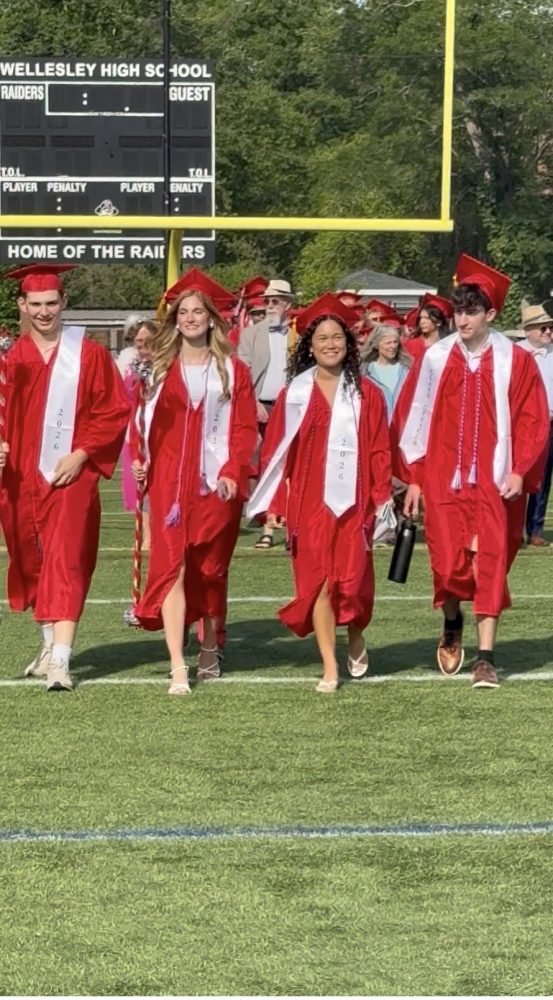
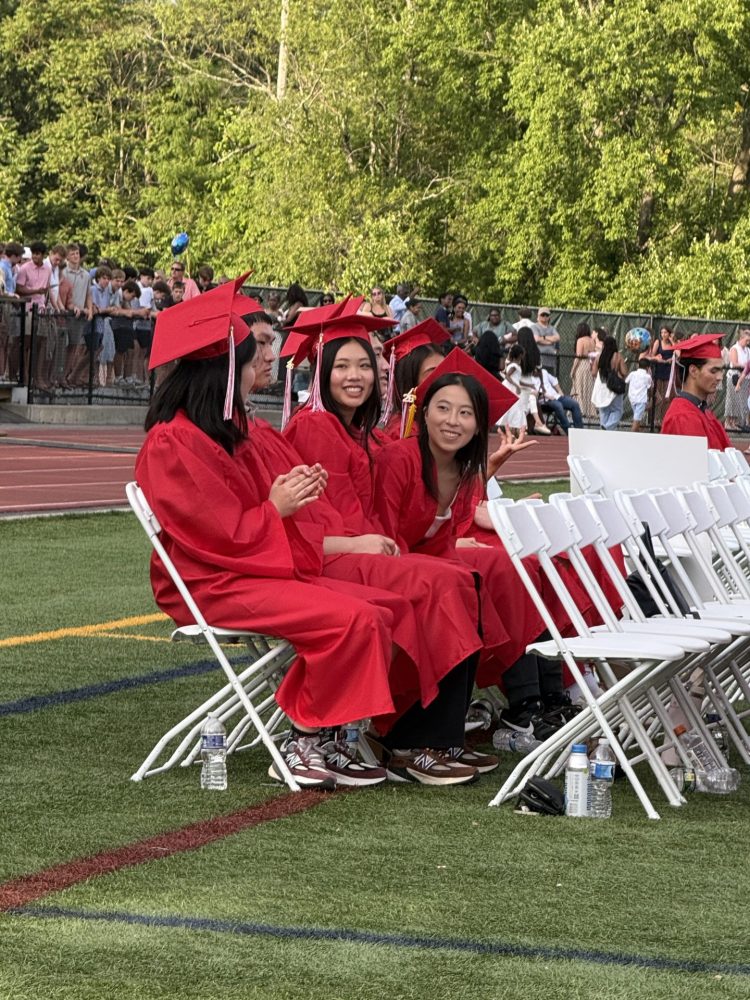
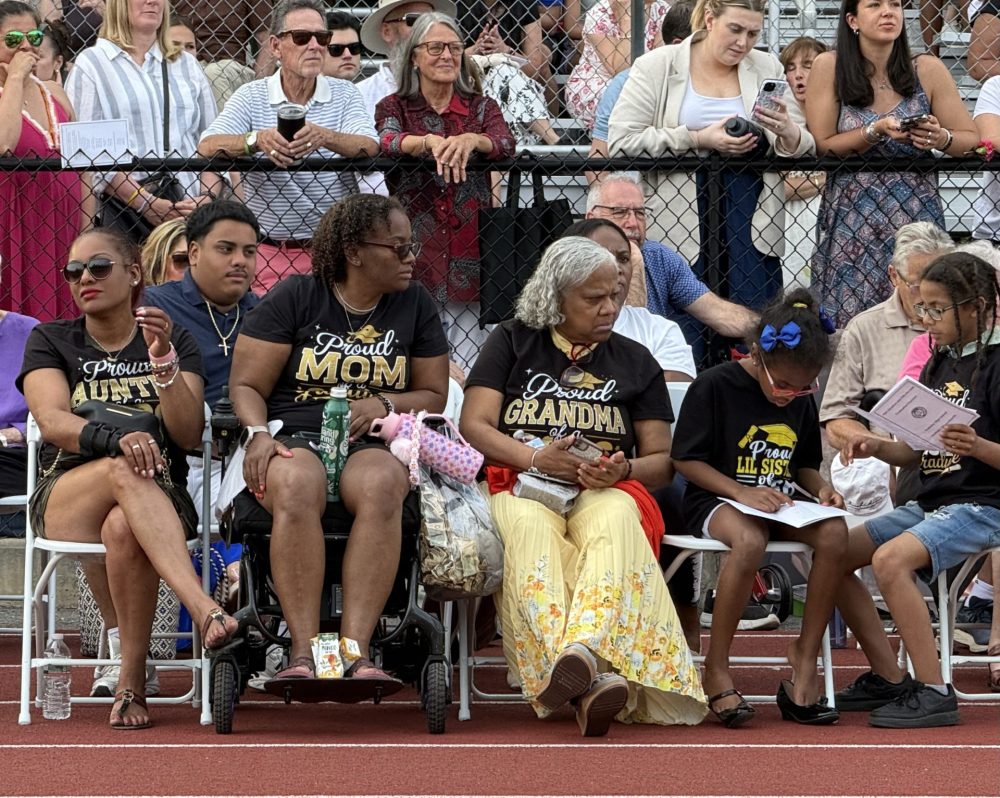
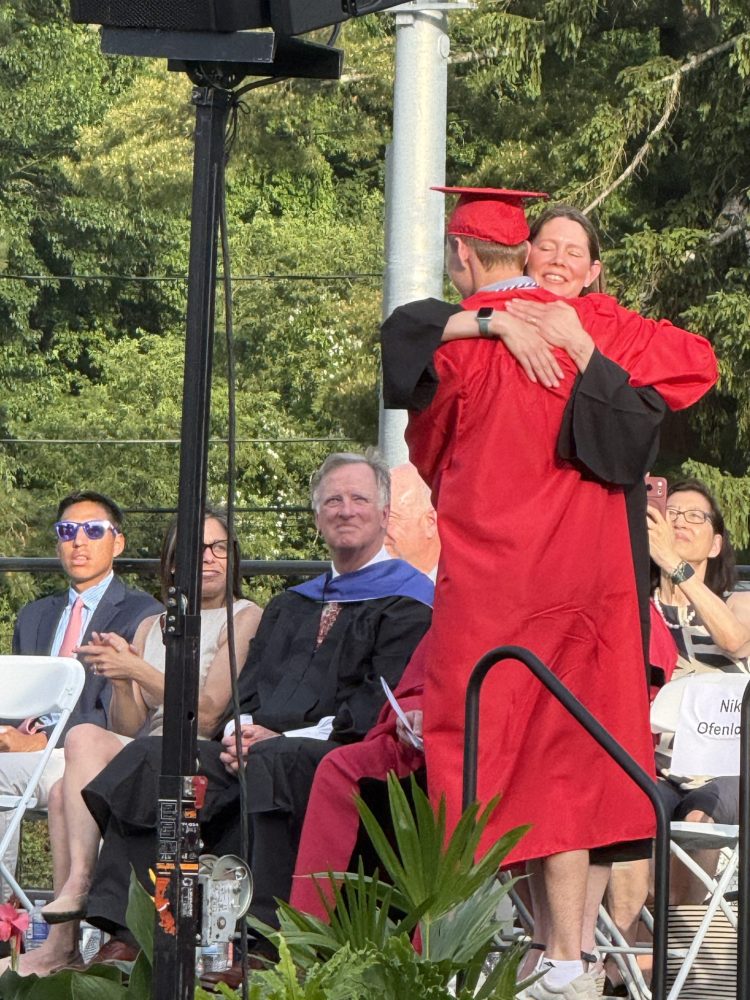
Wellesley High School’s 157th Commencement Ceremony on Friday evening brought together graduating seniors, their families, and members of the WHS community. The WHS Band, conducted by Steven Scott, opened with “Pomp and Circumstance” as seniors processed in, followed by the WHS Choral Ensembles performing “Lift Every Voice and Sing” and the National Anthem.

Of the 319 seniors who received diplomas, 71 were members of the National Honor Society, and 46 earned the Seal of Biliteracy.

Class Officer Naomi Vella, who will attend Colgate University, delivered the welcome address. Drawing on her experience as a cross country captain, she spoke about the difficulty of showing up before you know the outcome. Vella said seniors are graduating into “a world changing technologically, politically, environmentally, socially, faster than any generation before [them] has experienced,”acknowledging that “many are anxious about the future.” She encouraged her classmates to choose curiosity over fear and to dare greatly rather than watch from the sidelines.

Class Officer Sophia Pavano, heading to Middlebury College, presented the Class Gift: a scholarship for Leaders in 10th or 11th grade at Wellesley High School, awarded to students who demonstrate a passion for leadership. Pavano explained that the class chose a living gift over a physical one because it’ll directly support Wellesley High School students. She concluded, stating it “reflects the values of the class of 2026, a class with endless ambition and diligence.”

On being ‘chalant’ and taking your own minds seriously

Senior Class Speaker and Class Officer Cameron Lynch delivered one of the evening’s most warmly received addresses. Lynch made the case against nonchalance, arguing against his generation’s agreement that  “the best way to be considered popular is to not care about the world around you.” 

Lynch proposed the word chalant as its own positive concept, saying that “being chalant means you actually care. You show up when it counts. You say what you were thinking instead of deciding it’s weird. You cheer too loudly, wave back with genuine enthusiasm, and call just because you want to check in. Deep down, everyone cares. Being chalant just means you’re not pretending otherwise.” 

WHS Principal Dr. Jamie Chisum offered his remarks and took the opportunity to honor several retiring faculty members, including Tim Eagan, head of WHS’s language department, who was praised for teaching with empathy and serving as “a true teacher of our teachers.” He also recognized Andrea Holbrook, who worked in tech support, Jill Lapato, a math teacher, and Heidi Marquedant, who taught in the Child Lab. Finally, he honored Janet Sozio, who served as both a school counselor and a dance teacher.

Dr. Chisum set aside particular warmth for David McCullough, appreciating being able to speak before a “world-class speechmaker.” 

McCullough has taught English at Wellesley High School for 40 years, and also delivered the Faculty Message. Citing Emily Dickinson’s line that “the brain is wider than the sky,” he urged students to take their own minds seriously: to read often, think deeply, and spend time with people who sharpen their judgment. 

McCullough used The Wizard of Oz to caution against accepting constructed realities, noting that the Scarecrow had a brain all along, and that spectacle and artificial temptations can mislead those who stop thinking for themselves. 

Lastly, he warned against eight-hour screen days, social media validation, and political disengagement. Inspired loosely by Ralph Waldo Emerson’s idea of self-reliance, McCullough shifted the thought toward interdependence, reminding graduates that people influence one another and should take that responsibility seriously.

Assistant Principal Andrew Kelton, a WHS Class of 1987 graduate and a 25-year administrator, recognized co-Valedictorians Stephanie Xia, heading to MIT, and Elaine Cheng, heading to Harvard.

Next, Sami Juma, class officer, presented the Excellence in Teaching Award, voted on by students, to David Charlesworth. He taught Honors 12th Grade English and ACP 9th Grade English this year, and delivered last year’s faculty message. Students noted how Charlesworth “doesn’t just teach students how to read; he teaches them how to write their own stories”, while colleagues stated he is the “world’s greatest mentor.”

Dr. Chisum presented the final award of the evening. The Annual Senior Cup recognizes outstanding students nominated by faculty, and was awarded to two members of the Class of 2026.
First, Jolie Chen, who will attend Yale, was described by her teachers as “an exceptional student, a deep thinker, a thoughtful reader, and a great writer.” She was especially notable for her relationship with special needs students. Outside the classroom, Chen is a Red Cross volunteer, Jimmy Fund walker, volunteer for the Chinatown Business Association, and a captain of the cross country and track teams.

Cameron Lynch, the aforementioned senior speaker, was also named a Senior Cup recipient. His teachers described him as “not only a tremendous student and athlete, but most importantly, a gentleman and a leader.” Dr. Chisum added simply: “It’s hard not to like him.” Lynch is a member of the varsity hockey and baseball teams, a four-year Class Officer, and one of two WHS representatives to the State Student Advisory Council. He will attend Harvard University.

The evening’s recurring theme, expressed differently by each speaker, was a call to show up in a world that makes disengagement easy. Whether framed as courage, chalantness, or faith in the width of one’s own brain, the graduating class was sent off with the same call to care about their work and share it with others.

WHS graduation

WHS graduation

WHS graduation

WHS graduation


Help us fund student intern stipends with a tax-deductible donation

Filed Under: Education, Wellesley High School

Page Waterman, Natick
London Harness, Wellesley
Longfellow, Wellesley
Wellesley Wonderful Weekend

Coffee and community at Wellesley’s Annual Pancake Festival

May 17, 2026 by Maya Hazarika

Pancake festival
Photos by Maya Hazarika

 
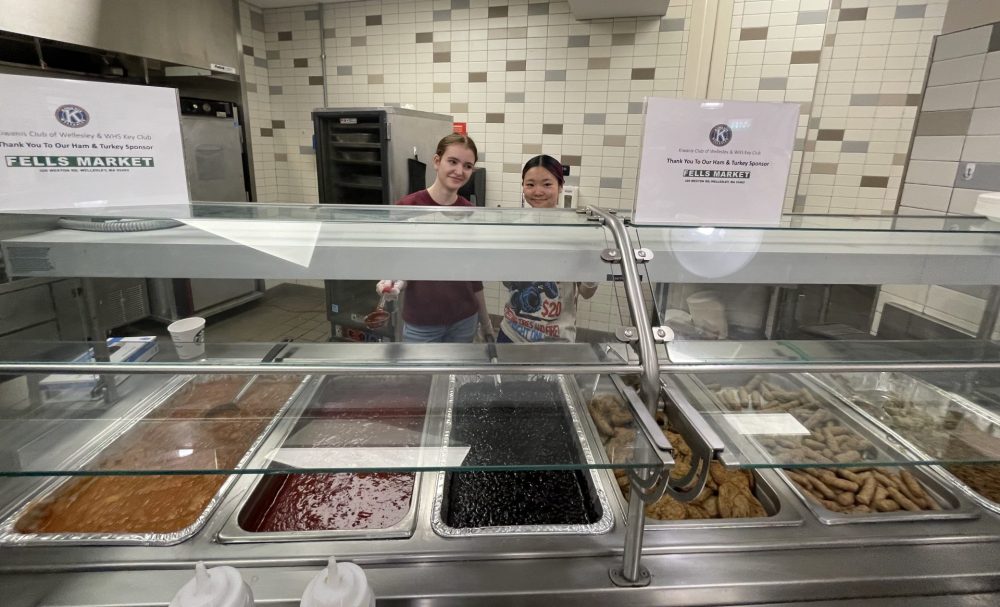
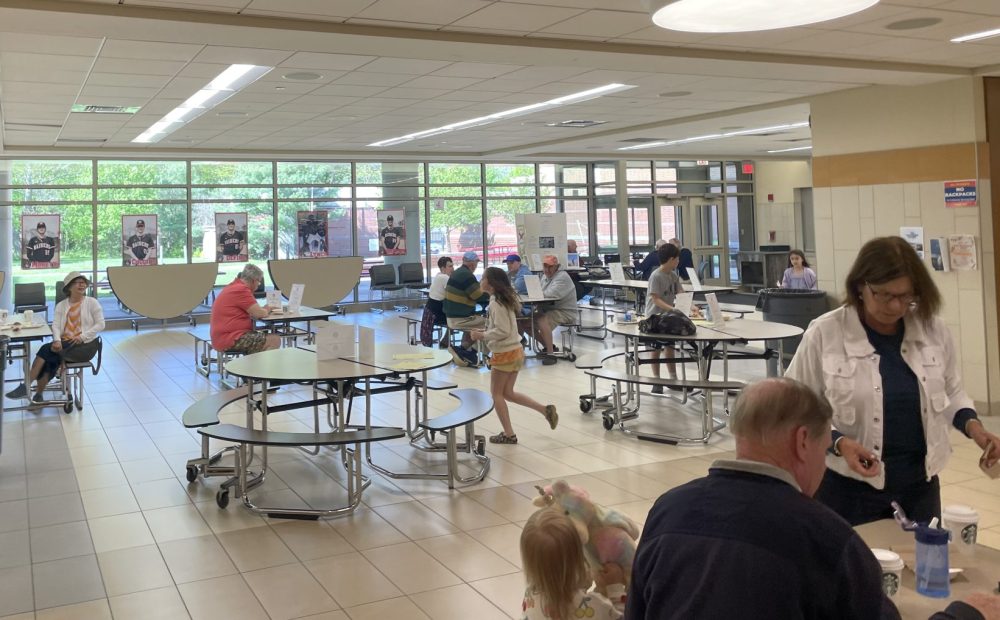
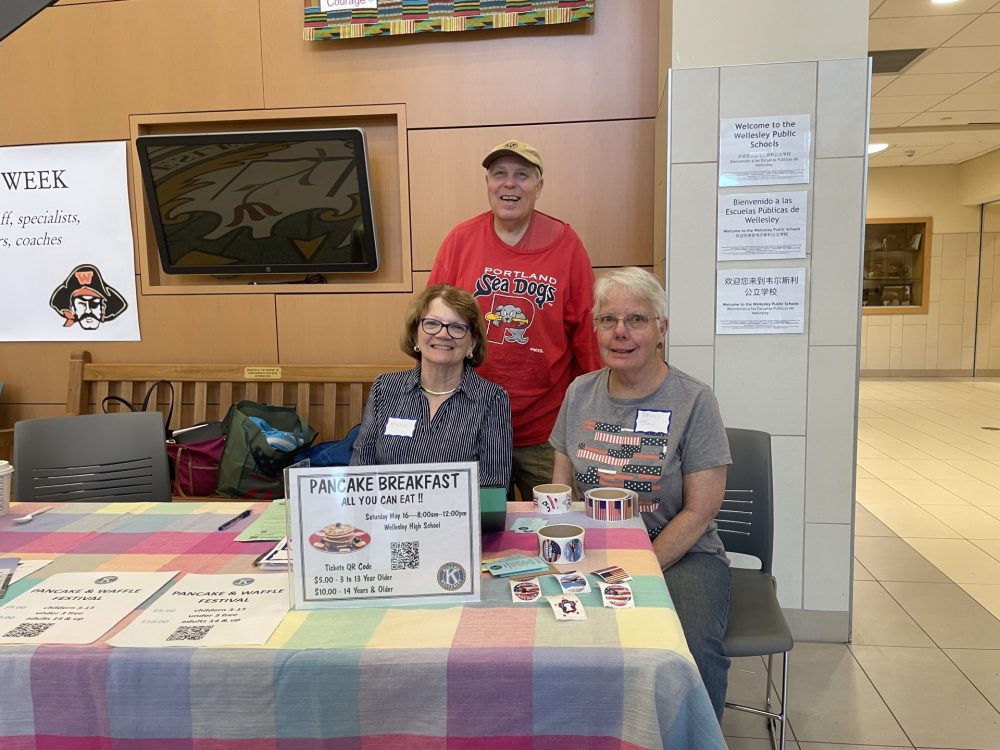
By 8 a.m. on Saturday, May 16, the Wellesley High School Cafeteria was filled with the smells of sizzling sausages and fresh pancakes, the sounds of families trickling in from early morning routines, and the cheerful greetings of volunteers. The annual Kiwanis/Key Club Pancake Festival, part of Wellesley Wonderful Weekend, ran for four hours, allowing the public to enjoy an unhurried brunch.

Guests arrived intermittently, including young children on their way to sports games, older residents who return out of tradition, and those simply interested in all-you-can-eat pancakes for a good cause.

The event, hosted by the Wellesley Kiwanis Club, was also made possible by the help of High School student volunteers. Around 20 Key Club members signed up to help cook and serve. One described the event as a great opportunity to speak with neighbors and greet those they might otherwise pass by, while another remarked that simply asking people about their mornings became the most enjoyable part of their shift.

The Kiwanis Club, which recently celebrated its 100th anniversary, has long centered its mission on supporting children and strengthening the community through scholarships, volunteer work, education, and various local outreach programs.

The Pancake Festival extends past Wellesley. The celebration traces back to fundraising traditions beginning in the 1950s, where local clubs across the US organized community breakfasts to support children’s charities and youth initiatives.

Pancake festival

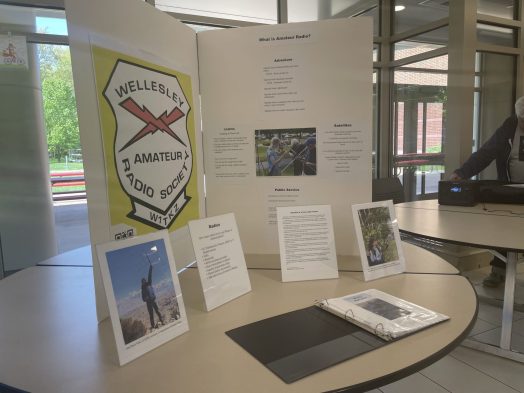
In addition to the food, the Wellesley Amateur Radio Society set up a tri-fold, along with radios and antennas, to demonstrate amateur (“ham”) radio to visitors. They explained how operators communicate, using voice transmissions, Morse code, satellites, and microphones. Children interacted and learned about the benefits of getting a ham radio license (no age limit to get one!), the 27 currently operating satellites, how radios assist with gaming, and the 7–8 radios built into a typical cell phone.

Pancake festival

Of course, a highlight for many attendees was the brunch itself. The $10 fee ($5 for children 13 and under) included unlimited blueberry, chocolate, and plain pancakes, waffles, sausages, potatoes, and an assortment of jams. Attendees could also enjoy Starbucks coffee, fresh fruit, and plenty of gluten-free options.

Pancake festival

Attendees detailed why they returned each year, noting the event’s tradition and feeling of closeness. One suggested music or live entertainment might add more energy, though many appreciated the quiet atmosphere.

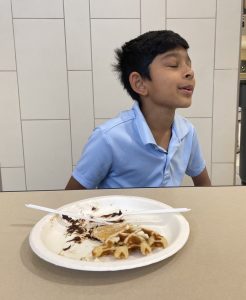
Among them was my younger brother, who declared the pancakes “really good” and especially enjoyed the chance to spend time inside the high school. That seemed to capture the spirit of the morning itself. Despite the title “festival,” the event centered less on spectacle than on familiarity and warmth. For four hours, attendees and volunteers greeted each other over coffee and syrup, and community and tradition were calmly celebrated.

Pancake festival


Your tax-deductible donations support our independent news venture. Thank you.

Filed Under: Food, Wellesley Wonderful Weekend

Wellesley Wonderful Weekend

Reenactors portray life in the Royal Irish Artillery—in the middle of Wellesley

May 17, 2026 by Maya Hazarika

Military encampment, Wellesley Wonderful Weekend
Photos by Maya Hazarika

 
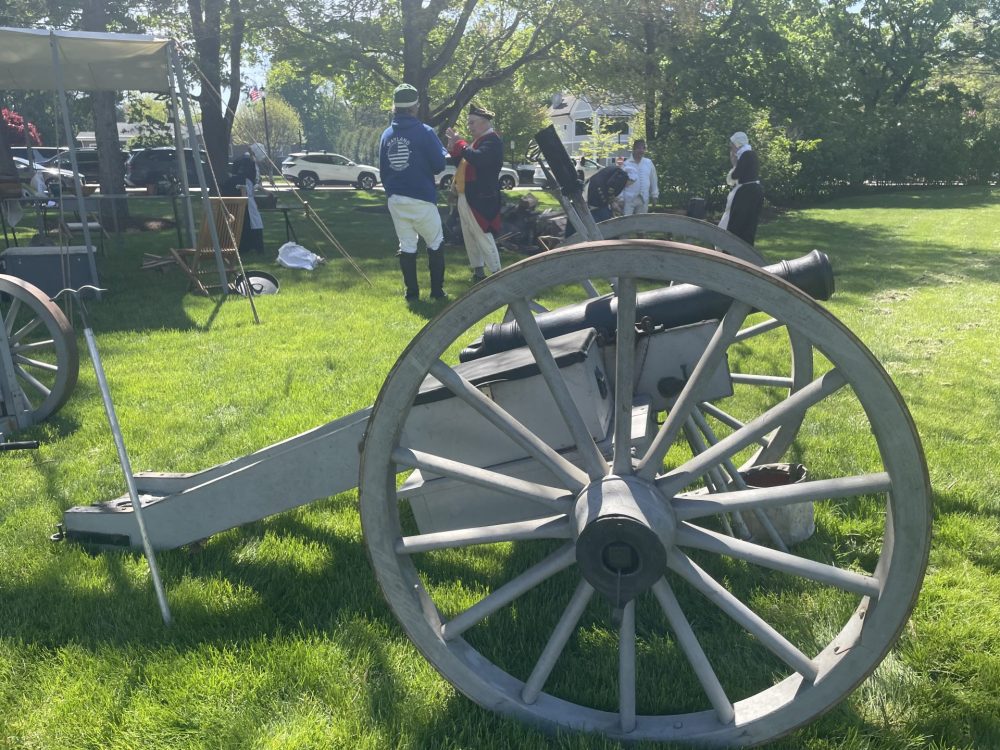
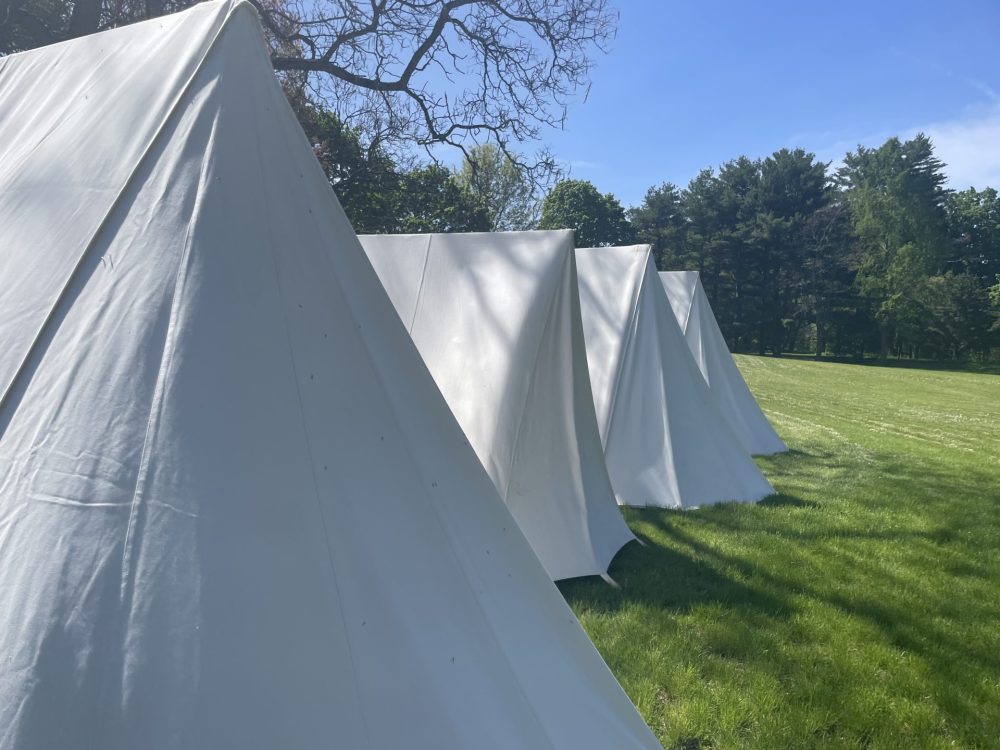
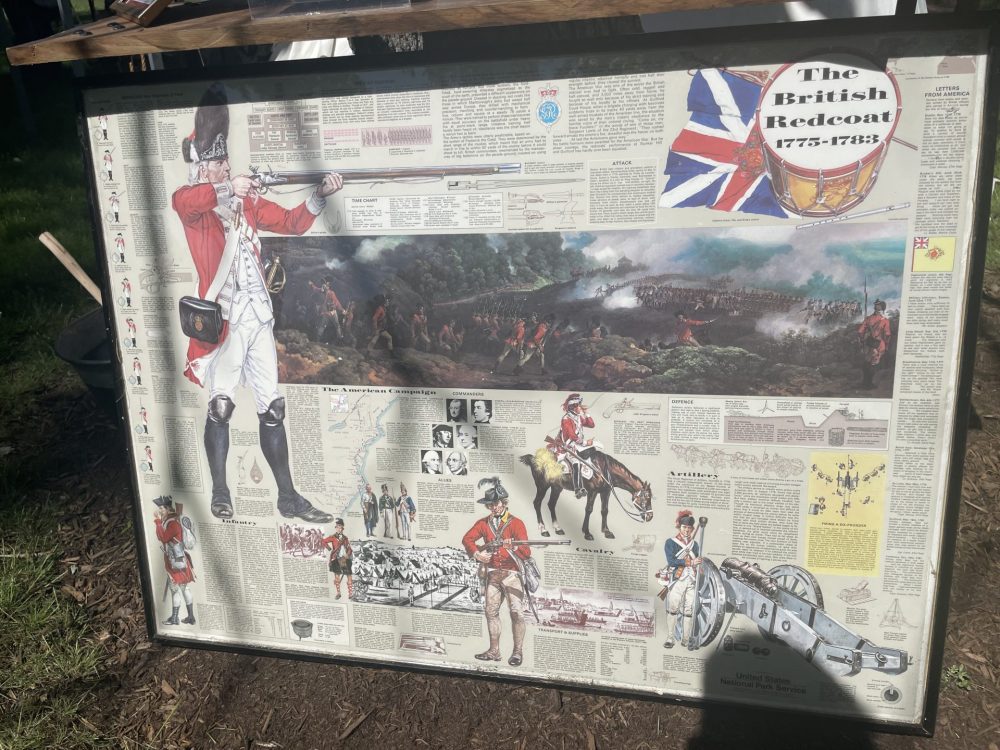
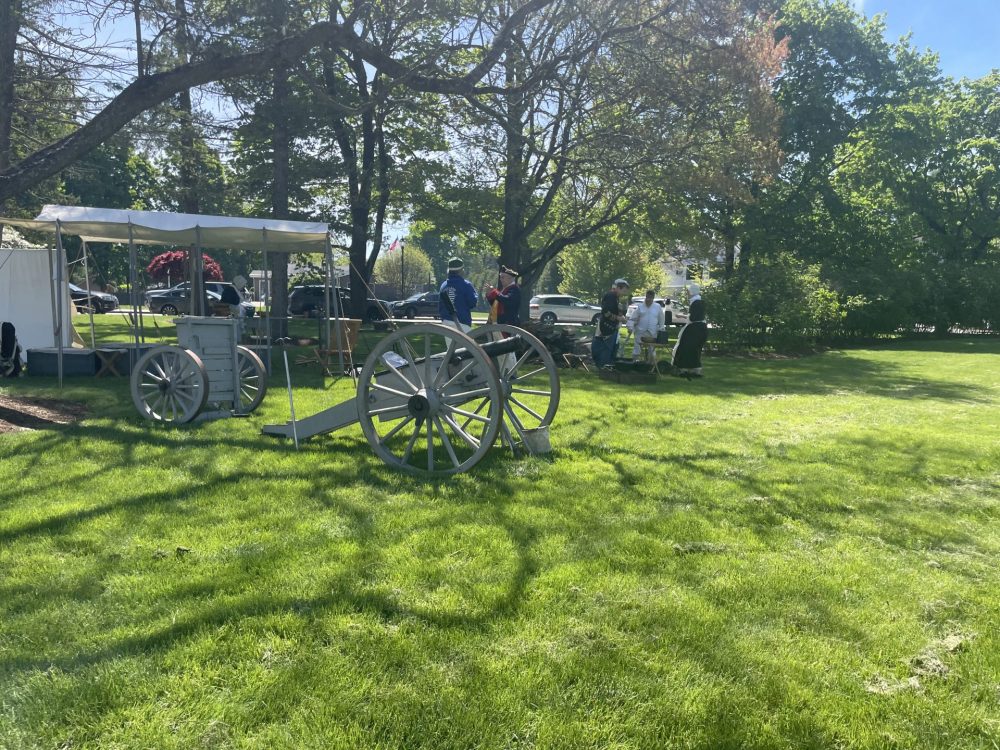
On both Saturday and Sunday, an interactive, 18th-century living history reenactment ran as part of Wellesley Wonderful Weekend. Re-enactors and historical interpreters assembled a military camp with careful attention to detail, pitching cream-colored tents into the dirt, watching a campfire crackle the scent of ash, and interacting with visitors as if they’d lived and experienced the lives of members of the British Army.

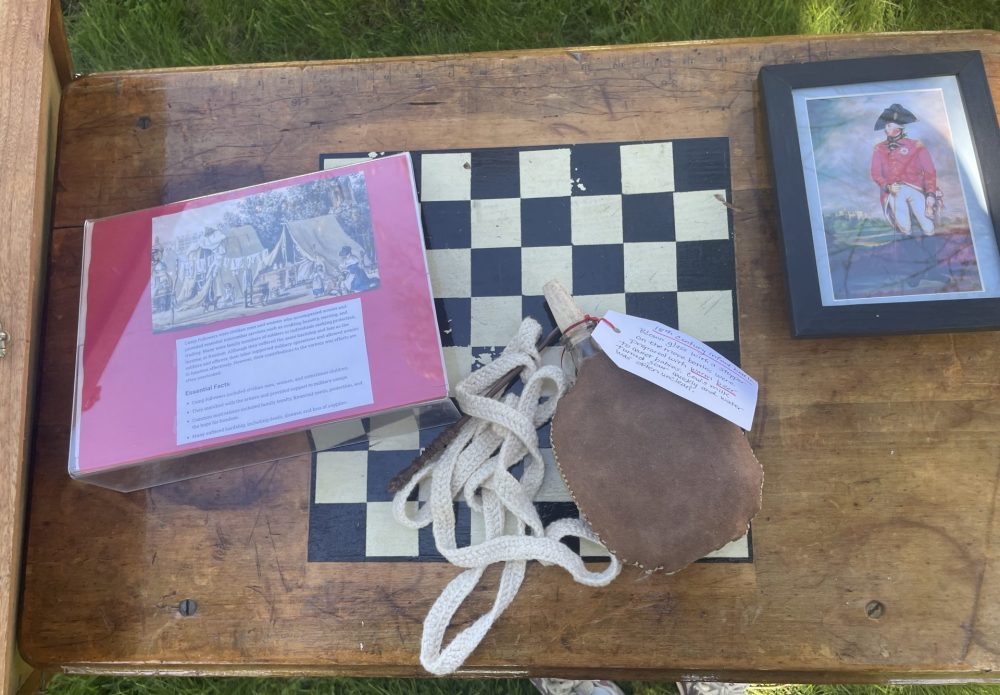
This took place at Morton Park Field, by the police department. Visitors wandered through the encampment slowly, able to read and appreciate recreated documents. These documents focused on culture and traditions, such as the types of teas under tax, the lives of “Camp Followers”, or the function and use of an Infant Bottle. Others highlighted more practical realities, for example, the duties and use of cavalry.

Military encampment, Wellesley Wonderful Weekend

The event spotlighted the Royal Irish Artillery, a British regiment established during the American Revolutionary War. Despite its name, many of the regiment’s soldiers never actually served in Ireland. Instead, the unit was created by the British Army in 1777 to strengthen artillery forces fighting in North America during the Revolution.

Interpreters also demonstrated the complexity of 18th-century artillery work. Units such as the Royal Irish Artillery were regarded as highly skilled because firing a cannon accurately required mathematics and precise coordination. Preparing a single shot could take several minutes, with every crew member having specific responsibility.

In Wellesley, the cannon was shot a total of three times on Saturday: 12:30 PM, 1:30 PM, and 2:30 PM, allowing for a fun visual display alongside the encampment.

Throughout the weekend, visitors explored the grounds, examined antique artillery and weaponry up close, and spoke directly with interpreters about the realities of military and civilian life during the Revolutionary era. The demonstrations and conversations worked together, resulting in visitors earning a clear sense of the discipline and daily realities of Revolutionary-era military life.

Military encampment, Wellesley Wonderful Weekend

Military encampment, Wellesley Wonderful Weekend

Military encampment, Wellesley Wonderful Weekend

Filed Under: Military, Wellesley Wonderful Weekend

Wellesley Middle School celebrates Deutschfest

May 4, 2026 by Maya Hazarika

WMS Deutschfest
Photos by Maya Hazarika

 
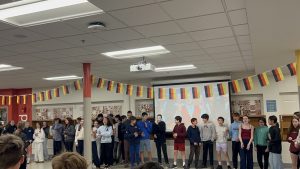
The Wellesley Middle School cafeteria this past week transformed from a typical dining hall into a Deutschfest gathering filled with student-made signs, the smell of warm bread, and a rotating series of performances. 

A “Deutschfest” is a celebration dedicated to German heritage, culture, and traditions. Generally, they serve as community-oriented gatherings focused on the “Gemütlichkeit” (spirit of comradeship and good times) of German roots.

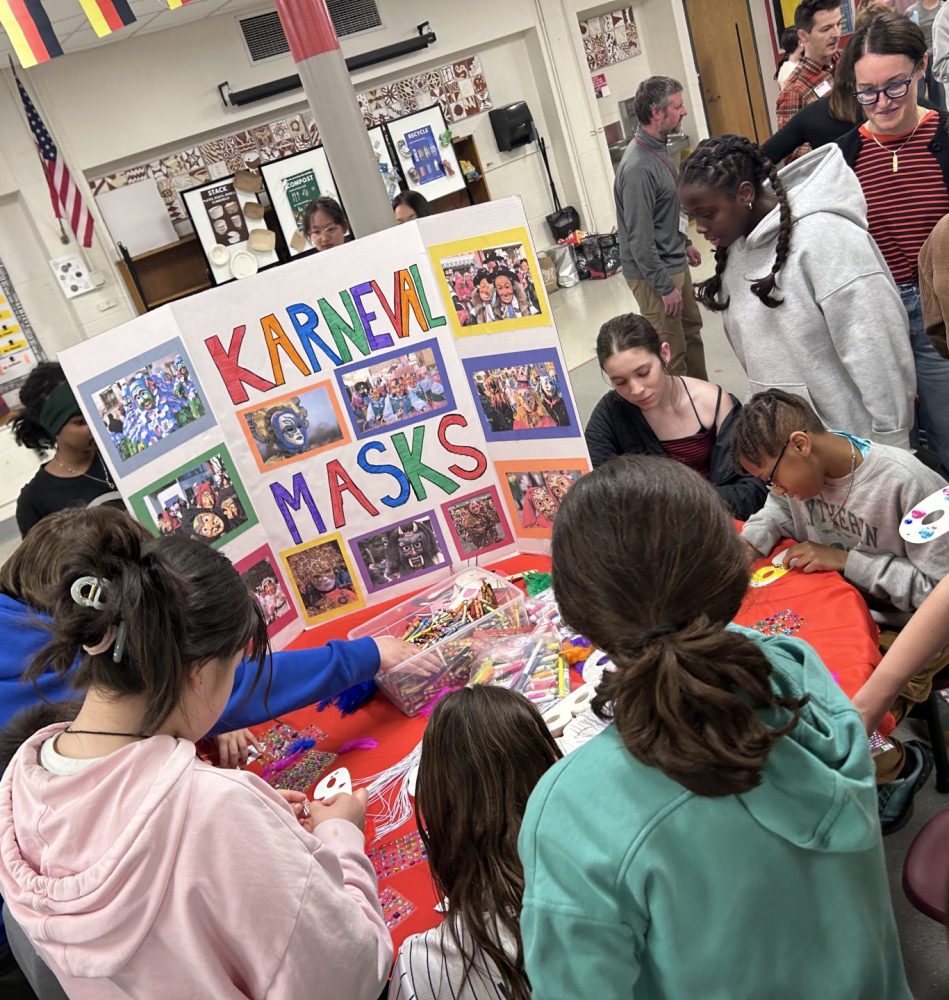
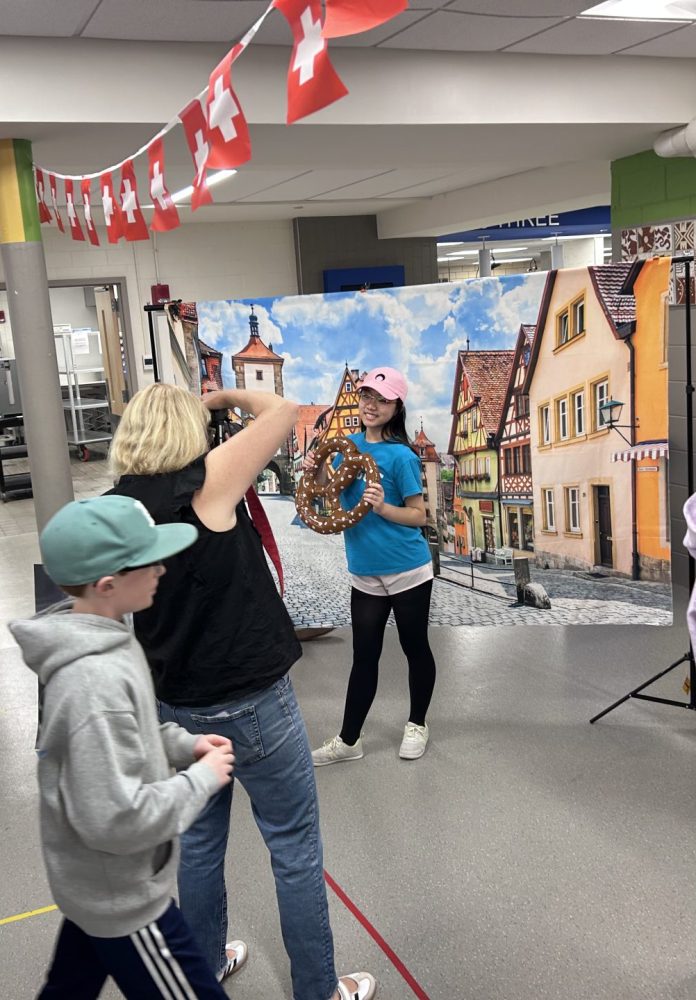
This is the second iteration of the event, celebrating German, Swiss, and Austrian culture. Stations featured crafts such as Karneval mask making and introduced aspects of German culture, including the language, automobiles, soccer teams, and more.

Like other cultural fairs at WMS, including the French Fête and Lunar New Year celebrations, food played a central role. Tables offered cheeses, cakes, sausages, soft pretzels, and sweets, with parent volunteers and Wellesley High Key Club members helping prepare and distribute items. Apple and marble cakes were baked in advance, while pretzels were served warm and quickly became one of the most visited stops. At one craft station, students assembled Schultüten, traditional German school cones filled with treats, using donated candy and decorated paper cones prepared ahead of time.

WMS Deutschfest
Photo by Maya Hazarika

One 7th grader said, “The food was definitely the best part. It made it feel more real than just learning about it. You could actually try it instead of just hearing about it.”

German language students also performed short skits and songs throughout the afternoon. Some were humorous, others more focused on simple conversational phrases practiced in class. The performances were brief but consistently drew attention from students passing between stations, adding moments of performance to an otherwise rotating structure.

A parent volunteer notes how “It was really busy, but in a good way. There was always something to do, and it felt like the whole school was involved.”

“It’s very chaotic once it starts,” one volunteer said. “But that energy is expected. You want students moving, trying things, interacting.”

Given that the event served hundreds of students and offered an abundant set of stations and opportunities, thorough planning was needed. Major contributors include WMS German teacher Frau Bennett and WMS parent Tanya Lisowsky.

For the German department, the event serves a longer-term purpose beyond a single afternoon of celebration. It introduces younger students to the language program in a way that feels accessible and social rather than strictly academic. Lisowski noted how the main goal of the event is to “foster interest in the German language classes at Wellesley schools.” The event structure emphasized this by focusing on involving participants rather than just presenting cultural info.

As the cafeteria shifted from organized rotation to lingering conversation, students compared crafts, traded candy, and hung around in groups as stations began to close. Teachers and volunteers began to collect materials and fold up poster-boards.

Deutschfest was less a single, defined event and more a series of connected activities. It was formed by the quality of the food, the hands-on nature of each station, and the excitement of the performers. In the end, the event successfully introduced German, Austrian, and Swiss culture through experience, leaving students with lasting impressions shaped by active participation.

WMS Deutschfest
Photo by Maya Hazarika

Filed Under: Uncategorized

Theatre

Wellesley High drama students advance to state finals with ‘Fire in the Hole’

March 23, 2026 by Maya Hazarika

For months, Wellesley High School’s black box theater became a 1920s Appalachian coal-mining town. In the play “Fire in the Hole,” union organizers are hanged, families suffer tragic losses, and the mining company controls nearly every aspect of life. This 30-minute one-act by Pulitzer Prize-winning playwright Robert Schenkkan is Wellesley High’s entry in this year’s Massachusetts Educational Theatre Guild (METG) competition, a statewide festival judged over multiple rounds.

Wellesley did advance, moving through the preliminary round at Wellesley High on Feb. 28 and into the semi-finals on March 14, performing alongside programs that had succeeded at their own preliminary sites weeks earlier.

METG works differently from a standard school production. METG companies prepare a single judged performance rather than multiple shows. This puts extra pressure on students and rehearsals, as there’s little room for mistakes. Director Skylar Grossman, who also oversaw last fall’s production of “Legally Blonde: The Musical,” has been working with the company since early winter, with a cast of more than 50 students.

The subject matter added its own layer of difficulty. “Fire in the Hole” is drawn from Schenkkan’s “The Kentucky Cycle,” which won the Pulitzer Prize for Drama in 1992 and was nominated for three Tony Awards. The story follows Mary Ann Rowen, a mother who has lost four sons in the mines. When union organizer Abe Steinman arrives, she must confront betrayal and the challenge of leading her community.

The script is dense with period detail and moral weight, and compressing it into a 30-minute stage production while keeping the emotional logic is the kind of work that asks a great deal from young performers.

Behind the scenes, the technical crew faced their own set of demands, building a period world from the ground up with costumes, set pieces, and sound that had to be read clearly in a single unrepeated performance. Students working in tech and production carried responsibilities that extended well beyond a typical school show, considering creative and logistical sides of the production simultaneously.

This year, Wellesley also hosted the preliminary round for the first time since 2019. Alongside preparing their own entry, students organized and ran a competition site for five other schools. The hosting crew was drawn entirely from students across all four grade levels, none of whom had done it before. Grossman reflected on what that required: “This preliminary round was a standout for WHS… Even with the snow-day setbacks, hosting a successful site and moving on from the preliminary round is a massive feat.”

The weather-related issues he mentioned were significant. A benefit performance scheduled for Feb. 27 was cancelled when a storm closed the school, which meant that when the company finally performed “Fire in the Hole” in front of an audience, that audience included the competition judges. A rescheduled free performance was held on March 13 at Wellesley High, followed by a question-and-answer session with cast and crew, giving the community a chance to see the production after the competitive season had already begun.

The semi-finals, held March 14, brought together programs from preliminary sites across the state, each having already demonstrated enough in their first showing to keep going. For Wellesley, getting there meant navigating a storm cancellation, a hosted competition, and a subject matter that required the cast to inhabit a world and a set of stakes very different from their own.
Despite challenges, Wellesley High’s Dramatic Arts Company excelled and is advancing to the METG finals to be held March 26-28 at John Hancock Hall in Boston.


Interested in sponsoring student interns at Swellesley? Let us know: theswellesleyreport@gmail.com

Filed Under: Theatre, Wellesley High School

Education

Hardy’s International Night celebrates cultural diversity

February 11, 2026 by Maya Hazarika

International-night
Photos by Maya Hazarika

 
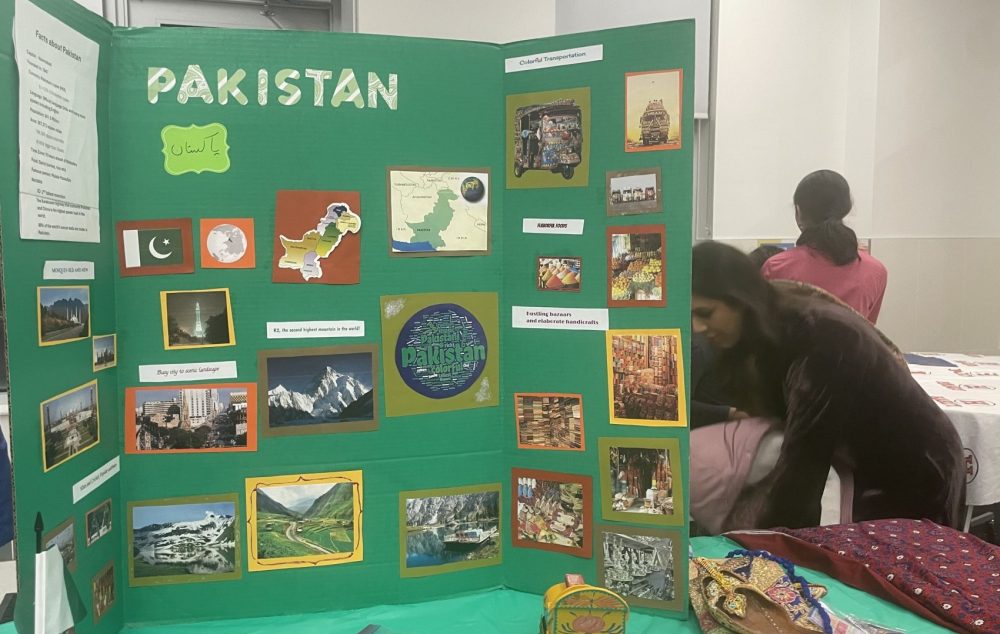
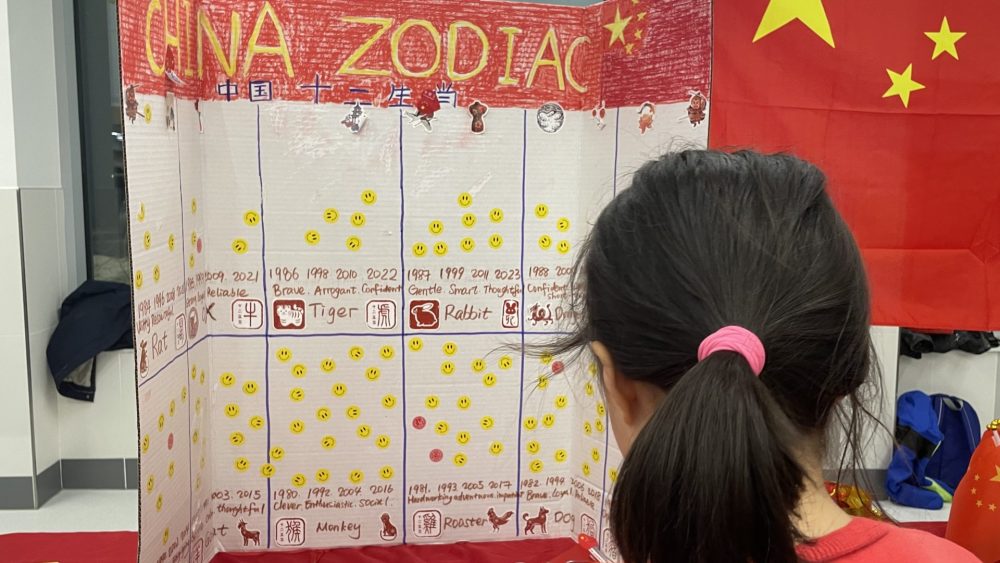
The gymnasium at Hardy Elementary School hummed with anticipation Thursday evening as families streamed through the doors, children clutching newly minted “passports” ready for stamping. By 5:30 PM, the space had transformed into something like a crossroads, with 17 countries represented through food tables, craft stations, and a stage where performers would share their heritage with friends and family alike.
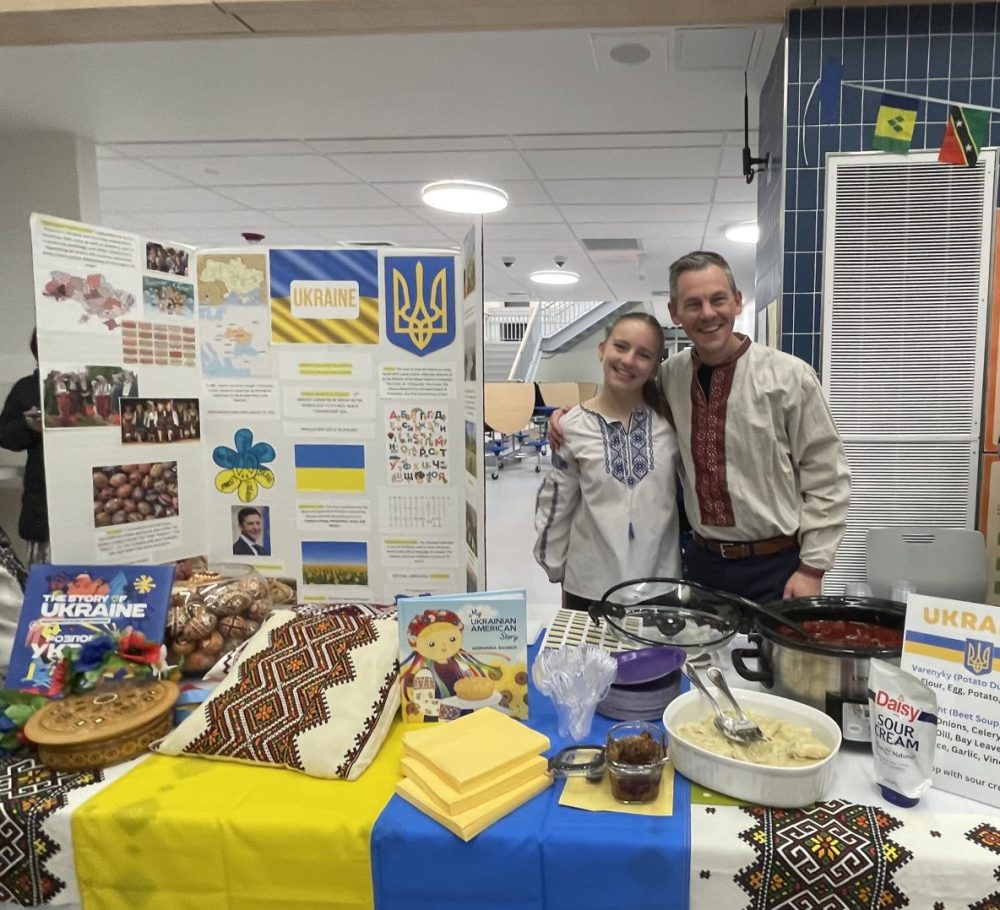
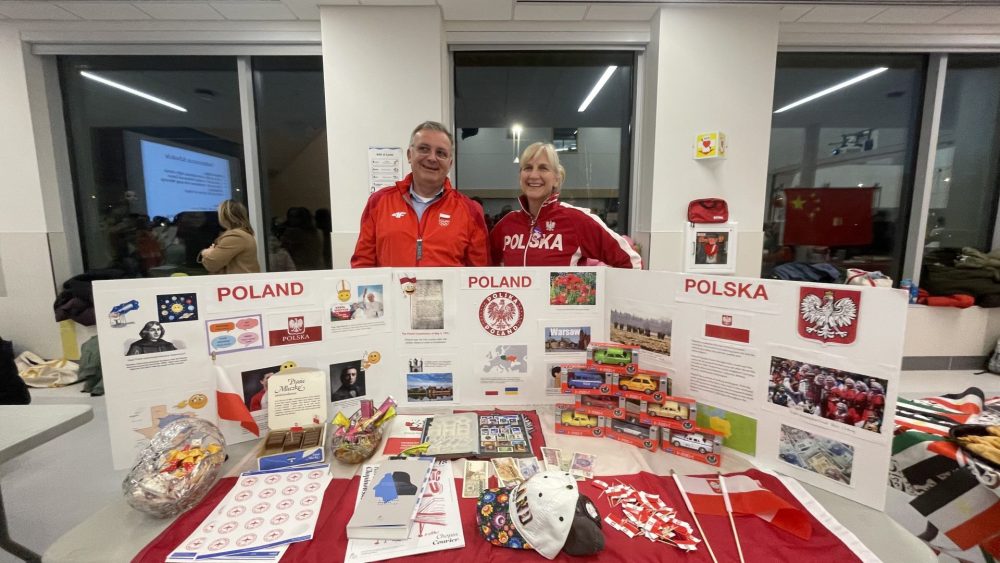
This was Hardy’s International Night, now in its fourth year since the format launched, though celebrations of cultural diversity have long occurred at the school. What distinguished this gathering from a typical school event was its purpose to go further than just acknowledging differences.

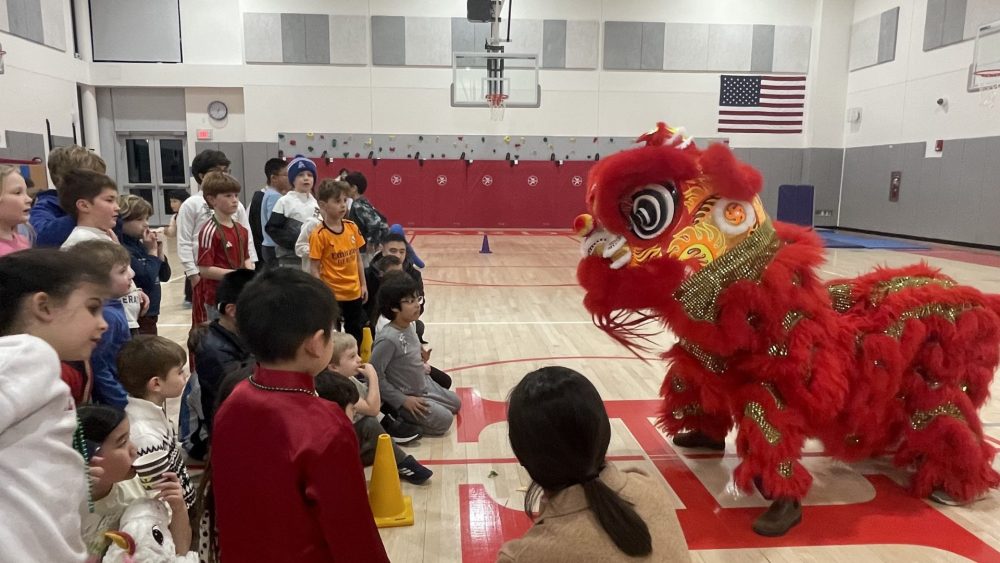
Fourth graders Angela and Freida have attended every year. Their favorite elements, mango lassi and the lion dance performance, captured the event’s ability to share traditions through public demonstration. Fifth graders Aiden and Abe, who represented Nepal in dance, spoke afterward about cricket matches and Mount Everest proudly.

Principal Grant Smith explained the takeaway he hoped for the evening: students need opportunities not just to learn about other cultures, but to see classmates explain the elements that are part of their identities. The event creates what he called a space for students to “perform and explain and share.”

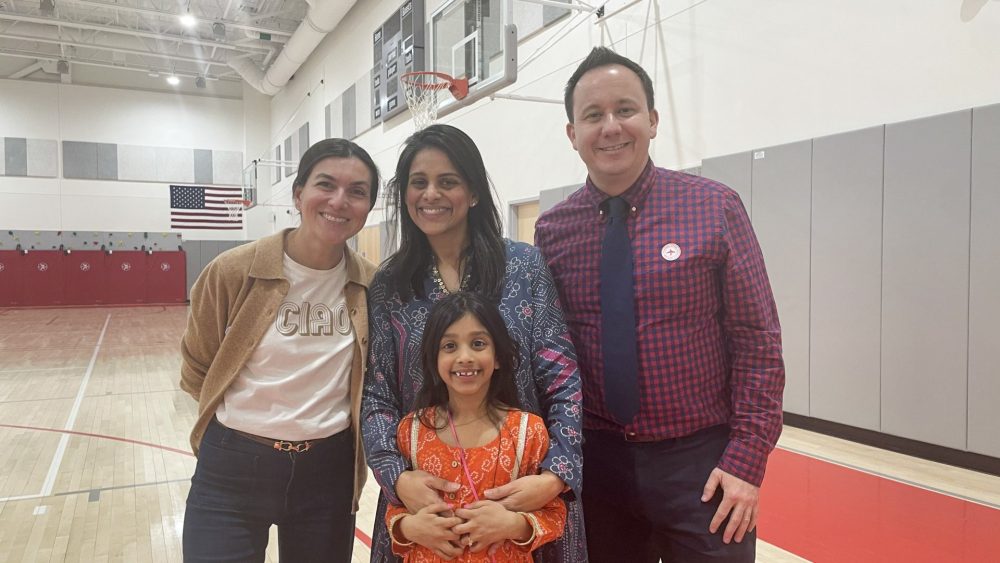
International-night photo of 3 adults, 1 child

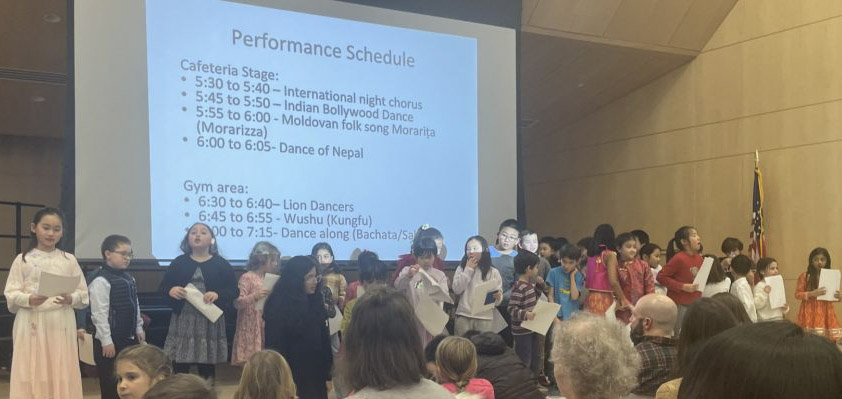
The evening followed with careful planning. From 5:30-5:40pm, the International Chorus, led by music teacher Mr. Corcoran, opened with songs spanning continents: “J’entends le moulin” from Canada, “It’s a Small World,” “El Coquí” from Puerto Rico, “Hum Honge Kamyab” from India, “Numi Numi” from Israel, “Mo Li Hua” from China, “Kye Kye Kule” from Ghana, and “Baba Hai Meta” from Egypt. The lineup itself shows just what elementary school students can process: multiple languages and musical traditions, and cultural contexts.

After this, many performances followed. An Indian Bollywood dance, followed by a Moldovan folk song, and a Nepalese dance. Lion dancers then performed, followed by kung fu demonstrations. The evening wrapped up with a participatory bachata and salsa session, where the audience danced in the gymnasium alongside performers.

Around the perimeter of the cafeteria, families staffed tables representing their countries of origin with food, crafts, language stations, games, and cultural displays. Children moved between stations with passports, collecting stamps.

Event organizers Ada Franchino and Sonia Kolenchary, who coordinated much of International Night’s logistics, described challenges that typically result in community event planning. Flow management has become increasingly complicated as participation grows. Organizers continue experimenting with space arrangements that allow circulation around tables and attention to performances.

International night

The performers deserve better attention, Kolenchary noted. With tables and performances sharing the cafeteria, chaos sometimes overwhelms the preparation that students and families put into their presentations. Having all aspects in such a small space creates a sense of community at the risk of certain aspects being lost in the buzz.

Recruitment happens largely through class parent networks and returning hosts, according to Franchino. Once families host a table, subsequent years become a matter of scheduling.

The new school building has expanded what’s possible. More space means more countries represented and more opportunities for hands-on activities. Yet organizers continue refining the format. In past years, some countries presented brief PowerPoint presentations, and sometimes students presented their own research. Last year marked the introduction of outside professional performers alongside student and family acts.

International night

In the future, Kolenchary envisions a possible international week leading up to International Night, with each grade studying and then representing a country’s culture. It would require teacher involvement and curriculum adjustment, but it allows for cross-cultural encounters to become an ongoing practice rather than an annual event. “I would like to see more kids participating and being involved so they actively learn about world cultures,” Kolenchary explained.

Hardy’s International Night focuses on the exchange of cultural traditions through student performances and family contributions. When fifth graders perform a Nepalese dance, they are sharing generational knowledge with a new audience. The event promotes a community model where distinct traditions are preserved while being made accessible to everyone.

This gathering differs from standard classroom lessons because it relies on the lived experiences of school families. The food and performances are provided by parents and relatives, offering an authentic look at the backgrounds of the community. These interactions allow students to see skills and histories that are not always visible during a typical school day.

The event’s value grows through its status as an annual ritual. Students participate year after year, consistently able to build an understanding of their friends’ and families’ values.

International night sign about pakistan

International night poster about Chinese zodiac

International night

International night


Swellesley’s student-produced arts coverage is funded in part by a grant from the Wellesley Cultural Council, a local agency supported by Mass Cultural Council, a state agency.

Filed Under: Community, Education, Embracing diversity, Hardy Elementary School

Community

Martin Luther King Jr. Day celebration brings message of hope to Wellesley

January 20, 2026 by Maya Hazarika

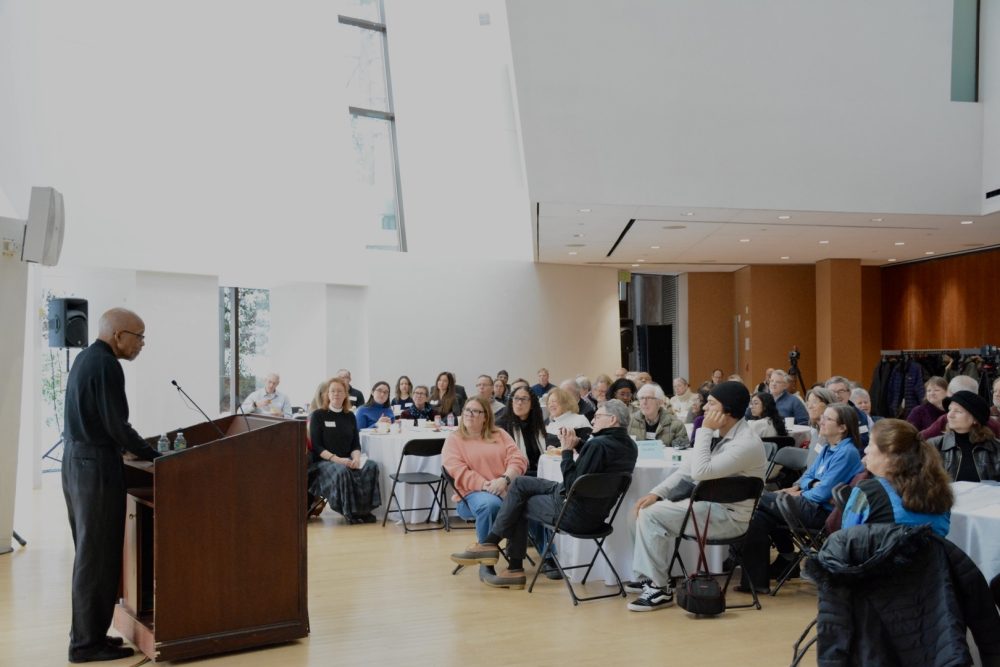
J.R. Harris at MLK Jr. Day event at Tishman Commons, Wellesley College
J.R. Harris addresses audience at MLK Jr. Day event (photo by Iris Zhan)


The Tishman Commons at Wellesley College filled with community members on Monday morning for World of Wellesley’s 26th annual Martin Luther King Jr. Day program. This year’s gathering explored Dr. King’s legacy through the wilderness adventures of J.R. Harris, an 81-year-old explorer with six decades of solo expeditions across remote landscapes that have taught him lessons about endurance and moral clarity.

Harris, author of “Way Out There: Adventures of a Wilderness Trekker,” named one of Backpacker magazine’s 50 best hiking books of all time, began with his story in Queens. A reluctant trip to a Boy Scout mountain camp sparked his interest in wilderness.

What followed during his keynote was a visual journey (through a recorded video) of his decades of exploration through diverse mountains and regions. The underlying message was of courage: “If you want it badly enough, whatever it is, you can do it.”

J.R. Harris at MLK Jr. Day event at Tishman Commons, Wellesley College
(Photo by Iris Zhan)

The presentation took a serious turn when Harris described what he called “a bad day or a good day” in Tasmania’s remote Southwest Arthur range. Nature, indifferent to his experience, nearly killed him. “You can’t [b-s-] alone,” he reflected. “It’s just you, whether you come home or not.” He learned humility is as important as courage.

However, it was his engagement with Indigenous cultures that affected him most. His studies of Inuit traditions were more than reading; Harris went there and learned firsthand how communities navigate their relationship with harsh environments.

He lived his dreams for six decades, almost always unsupported and alone. But exploration, he explained, became more than adventure; it became “a lens to understand” broader human struggles.

The connection to Dr. King’s legacy emerged through Harris’s later work. As the first African American on the board of directors of the Explorers Club and chair of their diversity, equity, and inclusion committee, he has worked to preserve what he calls “the instinct to explore.” As one participant later observed, “Young people need to know that there are so many ways to be in the world and be an example.”

His central insight landed with quiet force: “Mother Nature doesn’t care who you are, it doesn’t discriminate, it’s for everyone and treats everyone the same.” In the wilderness, Harris found a space where worth is measured not by social position but by character and preparation, themes reflected in Dr. King’s vision of a society judged “by the content of character rather than the color of skin.”


Connecting wilderness ideas, contemporary challenges


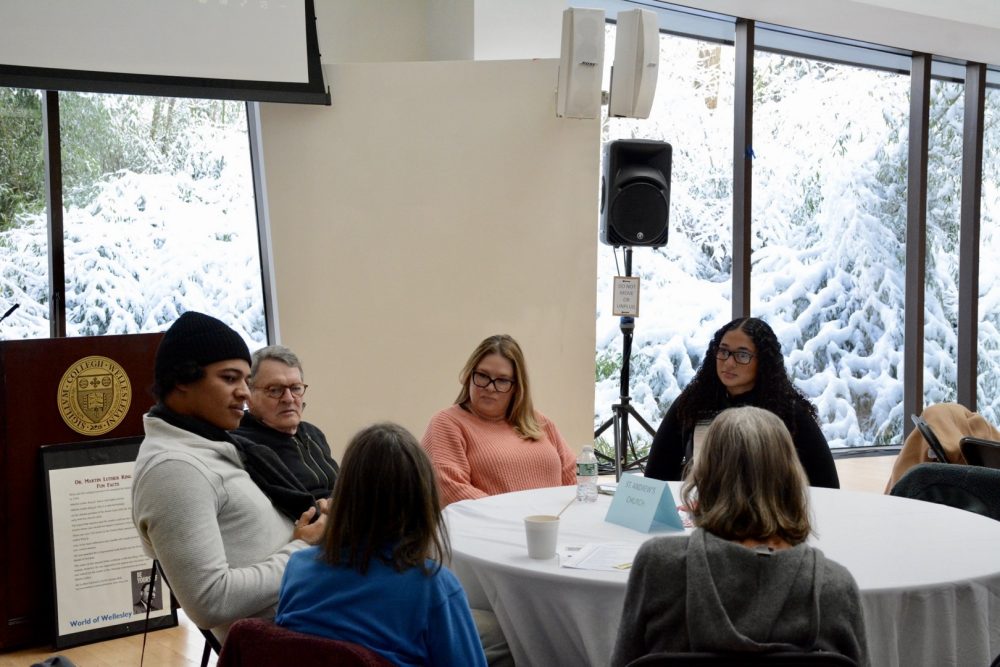
After the keynote, attendees participated in table discussions guided by questions designed to connect Harris’s wilderness ideas with contemporary challenges. One table discussed courage without recognition. A participant shared stories from Minneapolis, where people “step forward anonymously with great courage to bring food” to residents afraid to leave their homes. Others discussed priests in Mexico preparing meals for migrants riding trains north, and undocumented workers who “dare to still go out and work” despite the constant threat of arrest.

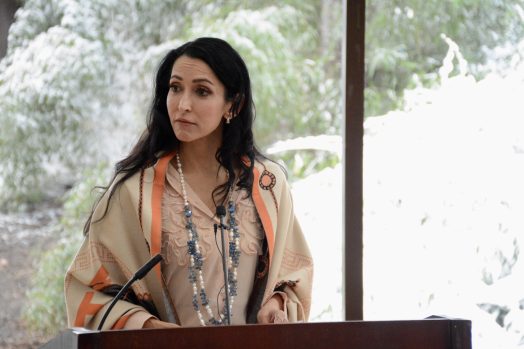
World of Wellesley President Rama K. Ramaswamy
World of Wellesley President Rama K. Ramaswamy (photo by Iris Zhan)


World of Wellesley President Rama K. Ramaswamy said the focus on real-life experience was intentional. The organization chose Harris “to broaden our keynote voices to include resilience, patience, and moral courage,” key to Dr. King’s vision of lasting change. The discussion questions were meant “to encourage depth rather than coverage,” prompting participants to see how Dr. King’s values “show up in everyday choices — how to live them in the here and now, not just remember them as history.” After more than 20 years with the group, Ramaswamy said MLK Day programs work best when they focus on honest reflection and shared responsibility, not “one-day performances.”

The conversation turned to the experience of people who grow up in tight-knit survival communities, develop bonds shaped by shared struggle, but face isolation when moving into professional environments. “They sometimes lose the support of their local community,” one participant explained. “And that takes some courage to thrive without the support of very close friends and community.”

MLK Jr. Day event discussion
Attendees discuss topics inspired by the keynote address (photo by Iris Zhan)


Another table tackled the challenge of sustained commitment in a culture that prioritizes quick wins and visible results. A member of the Wellesley Select Board shared their group’s conclusion: “It looks like commitment to something…being willing to have disagreements but being respectful in the conversation…developing courage to accept backsliding and opposition and tackling difficult questions, but meeting people where they are. Don’t lose heart, or you’re going to get stuck.”

The discussion questions themselves revealed the program’s sophistication. Attendees considered how solitude sharpens moral clarity while community refines it through accountability, and where these “two ways of knowing need each other.” They examined what happens when progress feels incremental and how to maintain commitment over the long term.

Laura Van Zandt, treasurer of World of Wellesley, explained that the organization brings in different speakers each year, and this year’s choice reflected outreach. The MLK Day program, which has shifted from breakfast to lunch over the years, consistently uses keynote addresses with facilitated discussions. “Other times you end up at a table with people you don’t know, and you talk about, you know, what might be difficult things,” Van Zandt noted.

As the program concluded, attendees learned about upcoming World of Wellesley initiatives: the 2026 Community Book Read featuring “Dear America: Notes of an Undocumented Citizen” by Jose Antonio Vargas, and a Feb. 1 reading of Frederick Douglass’s “What to the Slave Is the Fourth of July?” The continuity suggested an organization committed to what one speaker called the long work, the kind that happens when speed and visibility aren’t the measures of progress.

That restlessness and willingness to explore new places or social spaces reflects Dr. King’s legacy, not only on his holiday, but in ongoing discussions about progress.


Interested in sponsoring Swellesley interns? Let us know: theswellesleyreport@gmail.com

Filed Under: Education, Holidays, Neighbors

Next Page »

Tip us off…

Please send tips, photos, ideas to theswellesleyreport@gmail.com

Please support your local online news source with a tax-deductible donation by scanning the QR code
or by clicking on it.

QR Code

Advertisements

Wellesley Square Merchants
Wellesley, Jesamondo
Fay School, Southborough
Sexton test prep, Wellesley
Wellesley Theatre Project
Prepped and Polished
Perdocere, Wellesley
Wellesley HIlls Dental
Admit Fit, Wellesley
entering-swellesley-1
  • Bluesky
  • Facebook
  • Instagram
  • Twitter

Subscribe to our free weekday email newsletter

* indicates required

Follow Swellesley on Google News Showcase

The Swellesley Report has been selected to be highlighted on Google News Showcase. Please follow us there.

Most Read Posts

  • Bat Walk on Aug. 26th, sponsored by Wellesley Conservation Land Trust
  • Wellesley pays tribute to loooongtime DPW employee Smitty Rogers ahead of his retirement
  • Incoming: Teams rooms set to arrive at Wellesley High track and field this week
  • Wellesley High School drops to #35 in latest U.S. News rankings: What the numbers mean & how the community is reacting
  • With Solidcore and Degree Wellness on way to Wellesley, fitness vs. pastries arms race intensifies

Click on Entering Natick sign to read our Natick Report

Entering Natick road sign

Recent Comments

  • Bruce S. Pierce on Wellesley pays tribute to loooongtime DPW employee Smitty Rogers ahead of his retirement
  • Stevo Berg on Wellesley Police Dept. ends Flock license plate reader trial early amidst ‘overwhelmingly’ changed landscape
  • Joe Smith on Wellesley High School drops to #35 in latest U.S. News rankings: What the numbers mean & how the community is reacting
  • Nora Tracy Phillips on Wellesley High School drops to #35 in latest U.S. News rankings: What the numbers mean & how the community is reacting
  • Barry Braunstein on Wellesley High School drops to #35 in latest U.S. News rankings: What the numbers mean & how the community is reacting

Calendar

Upcoming Wellesley events

Upcoming Events

Aug 28
12:00 pm - 5:00 pm

Longfellow Wellesley Blood Drive

Aug 29
1:00 pm - 3:00 pm

Beyond Wellesley—Musical Matinee: The Band Wagon at Weston Newton Cinema

Sep 7
All day

Labor Day

Sep 8
7:00 pm - 8:30 pm

Welcome to the Graveyard (Wellesley library program)

Sep 10
7:00 pm - 8:00 pm

Wellesley Free Library presentation: “Massachusetts: The Library State”

View Calendar

Links we like

  • Danny's Place
  • Great Runs
  • Tech-Tamer
  • Universal Hub
  • Wellesley Sports Discussion Facebook Group

© 2026 The Swellesley Report
Site by Tech-Tamer · Login