• Sign up for free email newsletter
  • Advertise
  • Donate to support our work
  • Events calendar
  • About Us
Boston Medical Center, Wellesley
 
Pinnacle, Douglas Elliman, Wellesley
 
Wellesley Hills Dental

The Swellesley Report

Since 2005: More than you really want to know about Wellesley, Mass.

  • Restaurants, sponsored by black & blue
  • Camps, sponsored by NEOC
  • Wellesley Square
  • Private Schools, sponsored by Prepped and Polished
  • Public Schools, sponsored by Sexton
  • Preschools, sponsored by Longfellow, Wellesley
  • School news
  • Kid stuff
  • Top 10 things to do
  • Business news
  • Worship
  • Letters to the editor
  • Guidelines for letters to the editor
  • Live gov’t meetings
  • Sports schedules & results
  • Deland, Gibson’s Athlete of the Week
  • Deaths
  • Housing
  • Medical providers—sponsored by FIXT Dental
  • Wellesley Wonderful Weekend
 

Top Stories

Temple Beth Elohim launches theatre company
Schofield Elementary principal named
Town gov't meetings this week

Advertisements

Needham bank ad
FIXT
Down Under, Wellesley
Sustainability

Wellesley climate action team breathes sigh of relief over school solar funding decision

March 20, 2026 by Bob Brown

hunnewell elementary school www
Hunnewell Elementary School

 
Enthusiasm at the Feb. 6 Wellesley Climate Action Committee meeting over applying for a $1m state grant to cover a big chunk of the Hardy and Hunnewell Elementary School solar project costs had turned to concern by the time the group met a month later due to the possibility of a delay involving town government protocols that could put the grant application in jeopardy. (See Wellesley Media recordings of the Feb. 6 meeting about 5 minutes in and the March 6 meeting about 11 minutes in).

However, the issue was resolved at a more dramatic than usual Permanent Building Committee (PBC) meeting on March 12 (see Wellesley Media recording), and the town’s application efforts remain on track.

Going back to the Feb. 6 Climate Action Committee meeting, Wellesley Sustainability Director Marybeth Martello shared an update on solar plans for the Hardy and Hunnewell schools that opened in 2024 with what the town touted at the time for each as a “solar panel-ready, reflective roof.” The town, she said, was on the cusp of applying for a big grant from the Commonwealth’s Department of Energy Resources (DOER) that Climate Leader Communities like Wellesley are eligible for and that would help the town adhere to its Climate Action Plan.

hardy hunnewell solar arrays
From Feb. 6 Climate Action Committee presentation

Martello said that the capacity of arrays the town would install on the schools now exceeds that from the original designs and would generate the equivalent of 92% of the electricity Hardy uses on an annual basis and 82% of what Hunnewell uses. This would translate to annual electricity costs being $50k less than 2025 levels for the schools, plus excess capacity would go to the Municipal Light Plant’s distribution grid for community use, she said.

The total solar cost for the schools is estimated at some $5.2m. The School Committee recently voted to allow roughly $3.2m in remaining school project funds to be used toward the solar projects, and the town is seeking grant and other funding to cover the estimated $2m gap.

The Climate Leader grant could cover up to $1m and up to another $1m could come from the MLP’s WECARE program funded by customers, though that contribution is contingent upon the Climate Leader grant from the state coming through. So those two funding sources could cover remaining costs; a decision by the state on Wellesley’s application would likely be made by June.

What’s more, up to some $1.5m could come from a federal tax credit program that the town is doing all it can to comply with, Martello said.

The town would be looking to purchase solar gear by year end, install it in summer of 2027 and have things up and running by the end of that year to qualify for certain funding.

At that Feb. 6 meeting Martello sounded confident about the town’s chances of scoring that Climate Leader grant, as she cited having received correspondence from the head of the state’s Green Communities program encouraging the town to apply (the state already had Wellesley’s notice of intent at that point). “It’s important that they actually wrote to us directly,” she said.

The March 6 Climate Action Committee meeting took on a different tone, as the group voted on a Climate Leader grant application-related memo to be sent to the PBC, which is responsible for estimating, designing, and constructing town projects costing over $500,000.

Hardy Elementary School, new construction, Wellesley
Hardy Elementary School

 
As Martello described it, some PBC members had raised the question of whether a vote to fund the Hardy and Hunnewell schools’ solar needed to go back to Town Meeting for a revote. A presentation regarding an article at the 2021 Special Town Meeting stated that the MLP would fund and do a power purchase agreement for the Hunnewell solar array (it was mentioned this may happen for Hardy at a future time to be determined). The motions voted on by Town Meeting didn’t reference the MLP’s role at all, however, and according to town counsel at a late February meeting, Martello said, there was no legal requirement that this issue go back to Town Meeting for a revote. “The presentation doesn’t have the legal standing that the motions do,” she relayed.

(Note: The MLP determined about a year ago that a power purchase agreement model wouldn’t be viable.)

A revote—that likely couldn’t happen until a Special Town Meeting in the fall—would have been “detrimental to the application we have submitted,” Martello said, since the town had assured the state that funding was secure. Any material change to assertion would need to be reported to DOER, which could decide to dismiss the application and not consider resubmission for the current round. “It would undermine our relationship with DOER that we have been building since 2017,” Martello said.

Climate Action Committee Chair Lise Olney said she had never seen an instance of anyone going back to a 5-year-old Town Meeting presentation and recommending a revote. “Needing to go back to Town Meeting and creating that uncertainty about the funding imperils the project, it clearly puts it at risk…,” she said on March 6.

Fast forward to the March 12 PBC meeting, which featured “School Solar Panel update and discussion” on its agenda and started with a welcome from PBC Chair Michael Tauer to “special guests” who would be commenting during the citizen speak segment at the outset and then later on during the agenda item session. A couple of Climate Action Committee members weighed in on the topic during citizen speak, and then Olney, Martello, Select Board member Tom Ulfelder, and School Committee Chair Niki Ofenloch were on hand to answer questions and comment later on during the hour-plus solar panel discussion (Ulfelder pointed out there were elements included in original construction to support the eventual arrays).

Tauer emphasized that the PBC had not discussed the topic at meetings, and that his thinking on the issue has evolved over time. He found Town Counsel Tom Harrington’s memo persuasive, not so much regarding there being no legal reason not to move forward with the solar plans, but more that it might not be prudent to bring the issue back to Town Meeting (Tauer was one of several lawyers in the meeting, which did get into some legal details). “As a member of the PBC we got a directive from Town Meeting, and I think following the language in that directive should be our primary focus… I think the language of our instructions from Town Meeting is more than broad enough to allow these remaining funds to be put to these purposes,” he said.

PBC member Suzy Littlefield said the committee was approached by a Town Meeting member about whether the solar project would come back to Wellesley’s legislative body, so she researched the matter, reviewing the 2021 Special Town Meeting presentation, and the PBC got opinion on it from town counsel. A remaining question for her was whether enough funds remained to support the project, and whether counting on the state grant and associated funding to come through is something of a “leap of faith.” She described this as a different approach to project funding than getting appropriations up front, then reaping the benefits of any reimbursements later.

Fellow member Tom Goemaat also raised concerns about available funding and wondered whether the topic might even be addressed at a Special Town Meeting this spring instead of waiting for fall (the ability to schedule such a spring meeting would be highly unlikely given the logistics at this point). Further, Goemaat said it was clear from the Advisory Committee’s write-up to Town Meeting members on the article in question that money for solar wouldn’t be coming from the project funds and would be taken care of by the MLP.

Following further discussion during the meeting, Town Counsel Harrington said “I do think the article included the funding for this. In drafting these motions for these articles we purposely make them as broad as we can, because we know that PBC, [the Facilities Management Department] sometimes or [the Department of Public Works] need the flexibility to be able to make decisions along the way… so that we’re capturing not only what we know at the time but what we may want to do in the future.”

The PBC (plus Offenlach as a School Committee rep) voted 5-1 to proceed in expending remaining allocated Hardy and Hunnewell project funds to design and install solar on the buildings without going back to Town Meeting for a confirmatory vote. Goemaat cast the sole dissenting vote.


swellesley green ad

Filed Under: Construction, Environment, Government, Hardy Elementary School, Hunnewell Elementary School


Advertisements

black & blue, Wellesley
Olive Tree Medical, Wellesley
taste of wellesley gif
Education

Hardy’s International Night celebrates cultural diversity

February 11, 2026 by Maya Hazarika

International-night
Photos by Maya Hazarika

 
The gymnasium at Hardy Elementary School hummed with anticipation Thursday evening as families streamed through the doors, children clutching newly minted “passports” ready for stamping. By 5:30 PM, the space had transformed into something like a crossroads, with 17 countries represented through food tables, craft stations, and a stage where performers would share their heritage with friends and family alike.

This was Hardy’s International Night, now in its fourth year since the format launched, though celebrations of cultural diversity have long occurred at the school. What distinguished this gathering from a typical school event was its purpose to go further than just acknowledging differences.

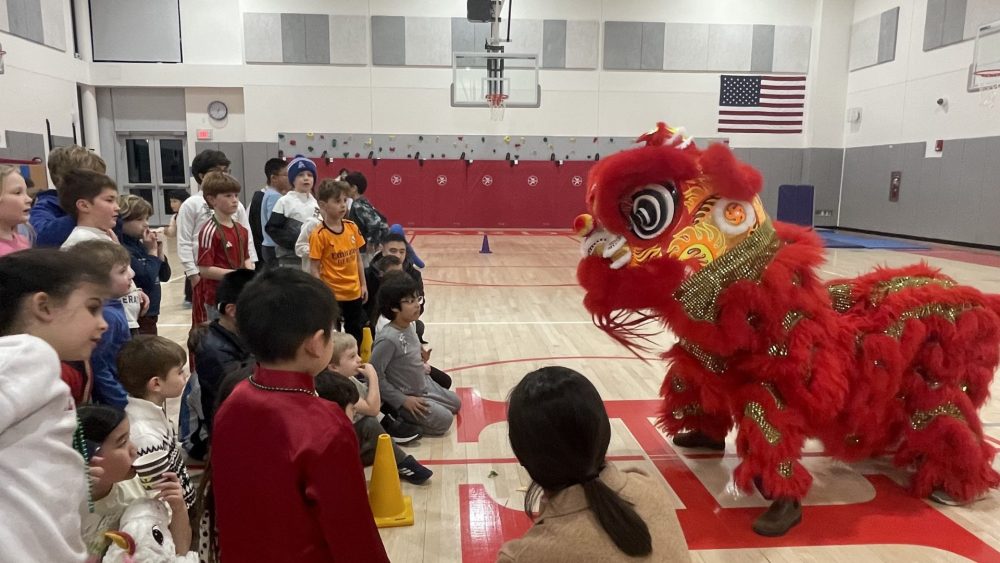
Fourth graders Angela and Freida have attended every year. Their favorite elements, mango lassi and the lion dance performance, captured the event’s ability to share traditions through public demonstration. Fifth graders Aiden and Abe, who represented Nepal in dance, spoke afterward about cricket matches and Mount Everest proudly.

Principal Grant Smith explained the takeaway he hoped for the evening: students need opportunities not just to learn about other cultures, but to see classmates explain the elements that are part of their identities. The event creates what he called a space for students to “perform and explain and share.”

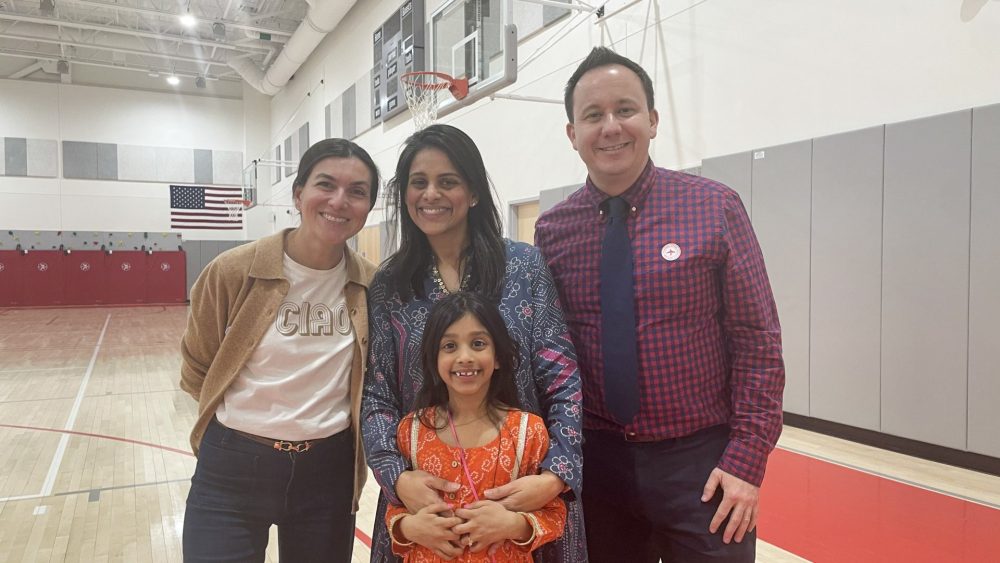
International-night photo of 3 adults, 1 child

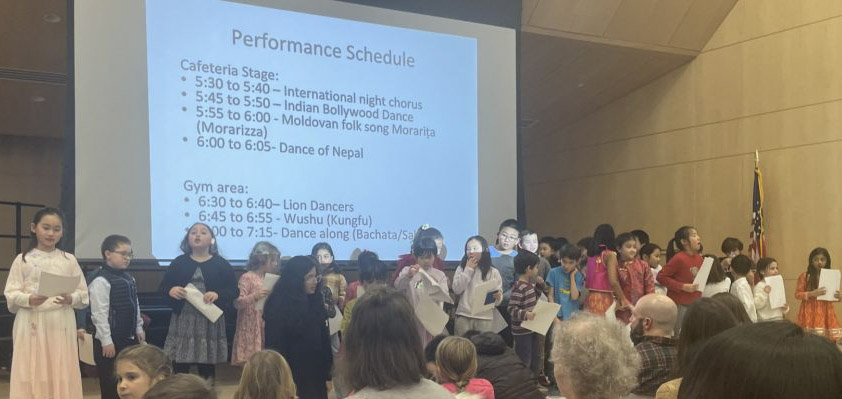
The evening followed with careful planning. From 5:30-5:40pm, the International Chorus, led by music teacher Mr. Corcoran, opened with songs spanning continents: “J’entends le moulin” from Canada, “It’s a Small World,” “El Coquí” from Puerto Rico, “Hum Honge Kamyab” from India, “Numi Numi” from Israel, “Mo Li Hua” from China, “Kye Kye Kule” from Ghana, and “Baba Hai Meta” from Egypt. The lineup itself shows just what elementary school students can process: multiple languages and musical traditions, and cultural contexts.

After this, many performances followed. An Indian Bollywood dance, followed by a Moldovan folk song, and a Nepalese dance. Lion dancers then performed, followed by kung fu demonstrations. The evening wrapped up with a participatory bachata and salsa session, where the audience danced in the gymnasium alongside performers.

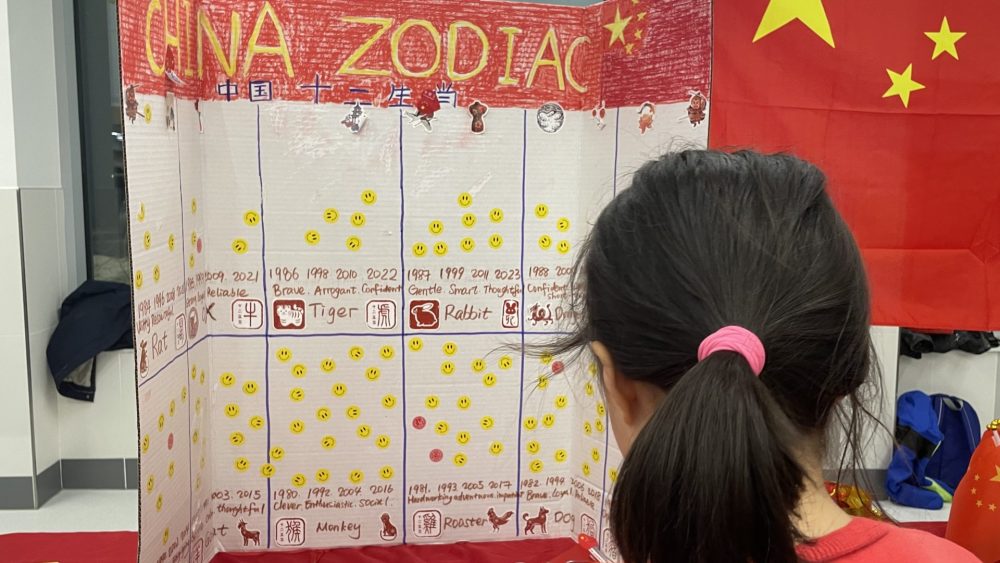
Around the perimeter of the cafeteria, families staffed tables representing their countries of origin with food, crafts, language stations, games, and cultural displays. Children moved between stations with passports, collecting stamps.

Event organizers Ada Franchino and Sonia Kolenchary, who coordinated much of International Night’s logistics, described challenges that typically result in community event planning. Flow management has become increasingly complicated as participation grows. Organizers continue experimenting with space arrangements that allow circulation around tables and attention to performances.

International night

The performers deserve better attention, Kolenchary noted. With tables and performances sharing the cafeteria, chaos sometimes overwhelms the preparation that students and families put into their presentations. Having all aspects in such a small space creates a sense of community at the risk of certain aspects being lost in the buzz.

Recruitment happens largely through class parent networks and returning hosts, according to Franchino. Once families host a table, subsequent years become a matter of scheduling.

The new school building has expanded what’s possible. More space means more countries represented and more opportunities for hands-on activities. Yet organizers continue refining the format. In past years, some countries presented brief PowerPoint presentations, and sometimes students presented their own research. Last year marked the introduction of outside professional performers alongside student and family acts.

International night

In the future, Kolenchary envisions a possible international week leading up to International Night, with each grade studying and then representing a country’s culture. It would require teacher involvement and curriculum adjustment, but it allows for cross-cultural encounters to become an ongoing practice rather than an annual event. “I would like to see more kids participating and being involved so they actively learn about world cultures,” Kolenchary explained.

Hardy’s International Night focuses on the exchange of cultural traditions through student performances and family contributions. When fifth graders perform a Nepalese dance, they are sharing generational knowledge with a new audience. The event promotes a community model where distinct traditions are preserved while being made accessible to everyone.

This gathering differs from standard classroom lessons because it relies on the lived experiences of school families. The food and performances are provided by parents and relatives, offering an authentic look at the backgrounds of the community. These interactions allow students to see skills and histories that are not always visible during a typical school day.

The event’s value grows through its status as an annual ritual. Students participate year after year, consistently able to build an understanding of their friends’ and families’ values.

International night sign about pakistan

International night poster about Chinese zodiac

International night

International night


Swellesley’s student-produced arts coverage is funded in part by a grant from the Wellesley Cultural Council, a local agency supported by Mass Cultural Council, a state agency.

Filed Under: Community, Education, Embracing diversity, Hardy Elementary School

Page Waterman, Wellesley
London Harness, Wellesley

Hardy School makes moves to keep rolling balls off busy Weston Road

October 16, 2025 by Deborah Brown

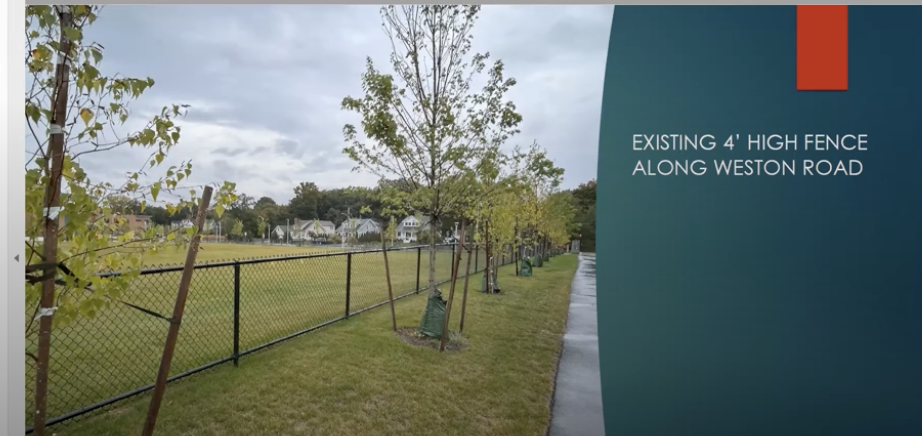
Although Wellesley’s new Hardy Elementary School has been open for just a little over a year, it’s already time for a tweak. Ever hear the adage, “Where there’s a rolling ball, there’s a running child”? So has the school’s principal Grant Smith, who voiced his concerns about how errant balls have sailed over the 4-ft. high chain link fence separating the playing field from busy Weston Road. Brown, along with assistant Town engineer George Saraceno, appeared before Wellesley’s Design Review Board on Oct. 8, seeking approval to add five feet of netting to the existing fence.

You know how when stuff happens, people sometimes ask in despair, “How did we get here?”

Nobody asked that at the Design Review Board meeting. The 5-member Board saw this one coming a mile away. “We knew this was going to come up,” chair Juann Khoory said, recalling that the Board raised exactly the question of balls escaping from the playing field to busy Weston Road during the Hardy School planning process.

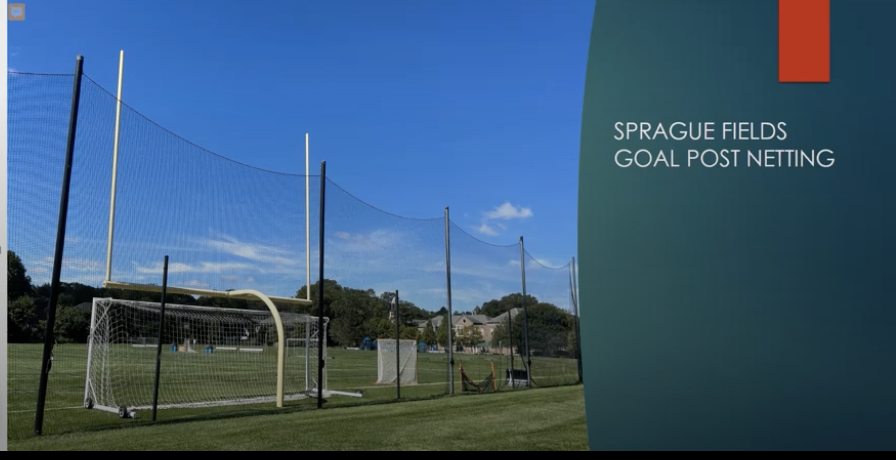
Saraceno laid out the specifics of the ask: to add 200 feet of netting along Weston Road; 40 feet of netting along Hardy Road; and 40 feet of netting along the parking lot. The overall height would come in at 9 feet. Saraceno compared it visually to the netting at Sprague School, albeit on a smaller scale—at Sprague, the netting height is 20 feet because kids up to high school age play there.

Hardy School field, Wellesley
Hardy School field. Wellesley Engineering Division image.


Sprague School fields, Wellesley
Sprague School fields. Not sure the Hardy School neighbors are going to love this visual, but safety first. Wellesley Engineering Division image.

The Board unanimously approved the addition of the netting, without even a, “We told ya so.”

“Good luck with the fence. The project looks amazing. We love it,” Khoory said.

Hardy Elementary School, new construction, Wellesley
The 18-classroom Hardy School opened in Aug 2024. The project was a teardown/rebuild of the old Hardy School, which educated students for 100 years.

Please send tips, photos, ideas to theswellesleyreport@gmail.com

Subscribe to Swellesley’s weekday email newsletter.

Filed Under: Hardy Elementary School

Advertisements

Longfellow, Wellesley
Wellesley Wonderful Weekend
Wellesley Symphony Orchestra, 2026

Artist caught in act of painting Hardy traffic box

August 5, 2025 by Bob Brown

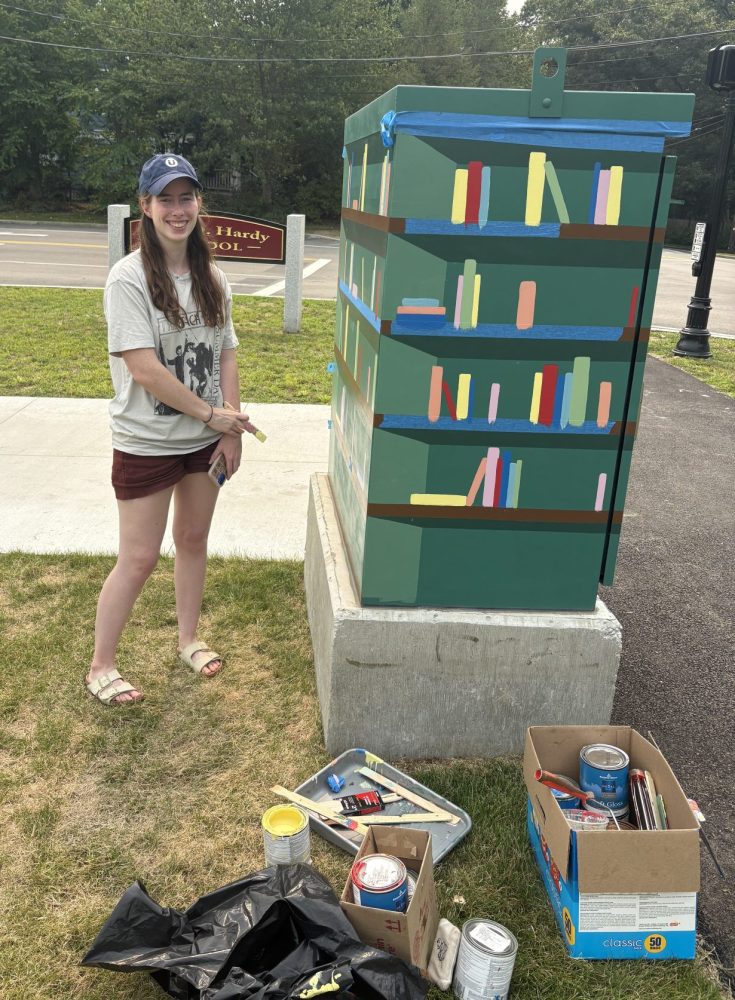
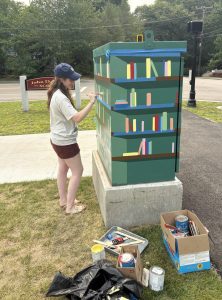
I’ve had a knack this summer for spotting artists commissioned to paint traffic boxes in Wellesley: First there was Ellen Kim (and her mom) painting the box in front of the Rec Center on Washington St. This week, it was Meg Shea working on a bookshelf-themed painting in front of Hardy Elementary School on Weston Road. Books, she figured, was an appropriate theme for this box given its location.

Meg Shea traffic box painting hardy

Shea, a rising junior at Holy Cross, was prompted to apply for a coveted traffic box painting gig after painting one of the bikes during the Wellesley in Bloom promotion earlier this year.

Meg Shea traffic box painting hardyA double major in architecture and accounting, Shea says she started the painting in mid-June and hopes to finish soon.

She still has finishing touches, such as plants and other items, to work into the painting. This is the biggest project size-wise that she has worked on. Challenges have included the weather, including both rain and extreme heat.

The traffic box painting program, in place since 2020 and coordinated by the town’s Public Art Committee and Police Department, has resulted in public art displays across town from Wellesley College to Linden Square to Wellesley Lower Falls.

More on the traffic box art program in this Wellesley Media video.


More:

  • Artists transform four more Wellesley electrical boxes (2020)
  • Wellesley moves to strengthen arts and culture scene with new strategic plan


Our version of public art is writing for Swellesley. Please consider supporting our independent venture with a tax-deductible donation.

Filed Under: Art, Books, Hardy Elementary School

Wellesley Kitchen and Home Tour

Wellesley education news: Hardy presented with parade float award; Student selected for State Dept. summer language program

June 14, 2025 by Bob Brown

The latest Wellesley, Mass., education news:

Hardy presented with parade float award

 
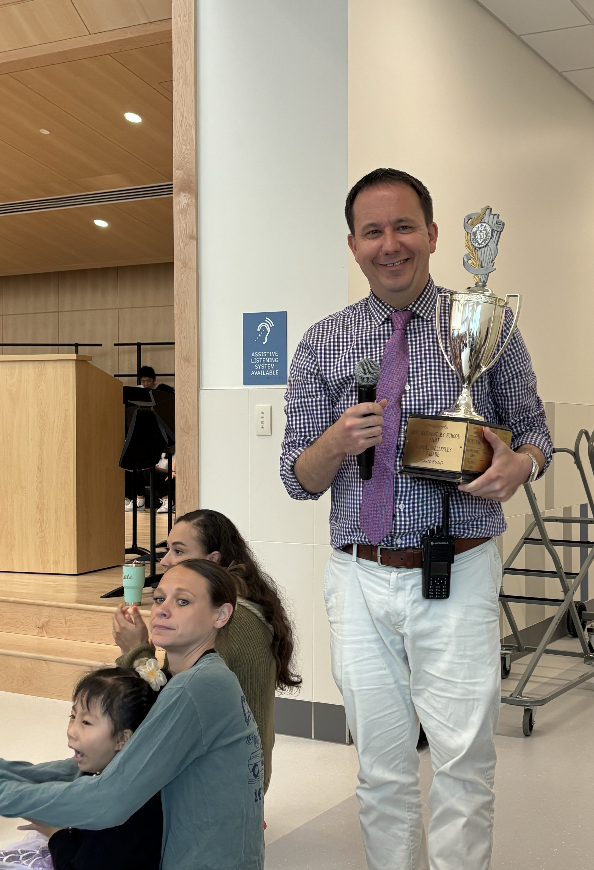
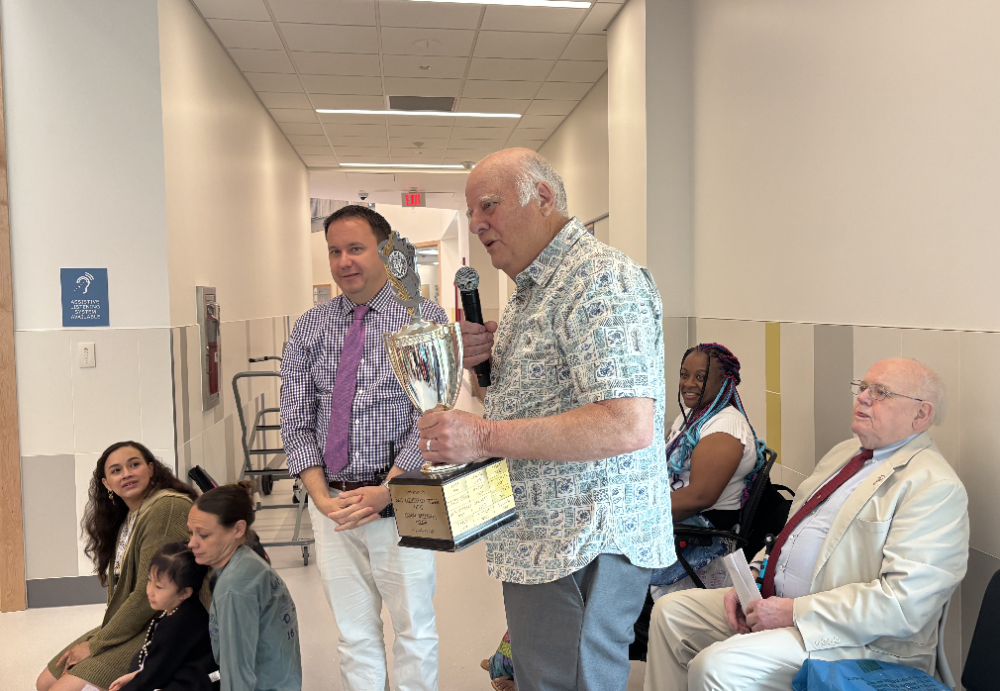
Hardy Elementary earned the award for best school float at the Wellesley Veterans Parade, and this past week Celebrations Committee members Pete Jones and Roy Switzler dropped by to present Principal Grant Smith and the school body with their prize.

Grant Smith Hardy parade award
Principal Grant Smith


Celebrations Committee's Pete Jones presenting award to Principal Grant Smith at Hardy Elementary School
Celebrations Committee’s Pete Jones presenting award to Principal Grant Smith at Hardy Ele

 
Providing entertainment at the event: The Hardy teacher/staff band, which Principal Smith said was created as “a one-time gathering of those teachers who knew how to play an instrument. They were joined by some teachers (and me as well) who sang along to the Bruno Mars song ‘Count on Me.'”

hardy band
One day only….the Hardy band


Student selected for State Dept. summer language program


Diba Demir
Diba Demir

Wellesley’s Diba Demir, a new graduate of Buckingham Browne and Nichols School in Cambridge, will study Mandarin this summer in Taiwan on a National Security Language Initiative for Youth scholarship through the U.S. Department of State. The Department’s Bureau of Educational and Cultural Affairs program promotes the study of Arabic, Chinese (Mandarin), Hindi, Indonesian, Korean, Persian (Tajiki), Russian and Turkish.

Demir, who will continue her education at MIT, describes herself as “a polyglot and avid language learner” who speaks English, French, Spanish, Turkish, and Mandarin. She also has written literature columns for her school’s The Vanguard newspaper.

Demir was one of 440 students selected from thousands of high school applicants across the United States to receive a scholarship. While in Taiwan, the student will live with a host family and engage with local peers.

Launched in 2006, the scholarship program is designed to increase the number of young Americans with language skills necessary to contribute to U.S national security and economic competitiveness.


Please send tips, photos, ideas to theswellesleyreport@gmail.com

Filed Under: Education, Hardy Elementary School

Rotary Club, Taste of Wellesley

New Wellesley METCO students now only going to Hunnewell, Hardy

January 7, 2025 by Jennifer Bonniwell

By corresponding reporter Jennifer Bonniwell


METCO students who are bused from Boston to Wellesley Public Schools are now being centralized in two elementary schools—rather than spread across all elementary schools—a substantial change to the voluntary school integration program that Wellesley joined more than 50 years ago.

New METCO students now start only at Hunnewell and Hardy elementary schools. METCO students currently attending other elementary schools will remain in those schools; but no new METCO students will join the other elementary schools unless they have a sibling already attending that school.

The new policy was announced in April 2024 and took effect in September. Because this was a policy change, the School Committee was told that it did not require committee approval.

The change in how students are placed in Wellesley schools is intended to group more METCO students in each classroom and each grade level. About 155 Boston residents attend Wellesley Public Schools through the METCO program each year. But until last year, the average elementary school had just one or two METCO students per grade. In 2023-24, Hunnewell had just three METCO students in the whole school; Sprague had the most with 15.

“A classroom with three or four METCO students is more ideal than one to two students, as it creates more opportunity for community and is less isolating,” WPS Director of Diversity, Equity and Inclusion Jorge Allen told the School Committee at its April 23, 2024 meeting (see Wellesley Media video starting at 25:25).


Shorter Bus Rides, Better Support


Grouping METCO students at two elementary schools will reduce bus travel times from Boston, said K-12 METCO Director Stephanie Holland. Some elementary students begin their day as early as 6:30 a.m. and don’t get home until 4:30 p.m. Once all elementary students are at two schools, the 90-minute bus trip could be 30 minutes shorter, she said.

Another key factor is that the district can better focus resources on supporting METCO students, Holland said. Moreover, recent MCAS results show wide disparity between student groups by race/ethnicity. The percentage of Black and Hispanic students meeting or exceeding
expectations was lower than the Wellesley average in every test for grades 3 to 8, and almost every test for 10th graders.

“At the core of this change is to increase the opportunity. We want all of our students to thrive, and not all of our students are thriving now,” Holland said.

Other similarly sized school districts including Lexington, Concord, Belmont and Natick already group METCO students into just a few schools, the district told the School Committee.

Lexington also made the change this school year, though it opted to move all of its students—even those currently attending other elementary schools.

Notably, in Concord-Carlisle School District, a METCO parent support group shut down in protest in fall 2024 due to frustration over the achievement gap between white students and METCO’s Black and brown students. In a letter to school officials, the parents group cited MCAS data showing only around 33 percent to 48 percent of METCO students in Concord- Carlisle are meeting standards in math and ELA.

Snapshot of Comparable METCO Districts, with data about total number of K-12 students from METCO in each district.


Segregation by Desegregation?


School Committee member Christina Horner, who is Black and was a METCO student in Weston, raised multiple concerns, including whether grouping METCO students at just two schools was just another way to segregate these students within a predominantly white community.

In response, Superintendent David Lussier reiterated that grouping elementary students in fewer schools will be better for the students.

“For years, I attended end-of-year meetings with our graduating seniors who often recounted in painful terms how socially isolating their elementary experience in Wellesley was and not feeling a sense of affinity until coming together in middle school. And that was something we heard consistently year in and year out,” Lussier said. “With more students in fewer schools, we think we have a far greater chance of creating that sense of affinity and meaningful connections at each grade level.”

During the April School Committee meeting, Horner also read a comment from a resident: “I’m going to read this so I get it right: ‘Are we committed to METCO? If so, we should have students in every school so they can make friends across the town. This decision would mean that only certain families can even host students. The two schools is a negative for black residents who live in town.’ ”

In an interview in December, Lussier responded that Wellesley is fully committed to METCO and its contributions to the community.

“METCO is meant to be disruptive. It is meant to break through some of the isolation when students only attend schools where kids only look like each other. We have leaned into that and also what it means for us our community,” Lussier said. “We have never been more committed to that work.”


But, they’ll be the ‘METCO Schools’


Another concern from Wellesley supporters of METCO is that four elementary schools will lose their connection to the program.

“By putting Boston kids at just two schools, those schools become METCO schools. It isolates the kids a bit more so when they come together at the middle school, they only know kids from two schools,” said Shana Hardgrave, a Wellesley resident and volunteer director of the METCO Family Friend program. “There has been a lot of value in having METCO at each of the elementary schools and having diversity at the elementary schools.”

Hardgrave said many of the Family Friends—Wellesley families who are paired with the family of a METCO student to help them settle in—are saddened by the change, which means no new Family Friends will be needed at four elementary schools.

In response, Holland said that larger district-wide community events will eventually be planned to offer an opportunity for the entire school community to support METCO students.


How we got here


Wellesley is one of the seven founding districts in the state-funded METCO (Metropolitan Council for Educational Opportunity). METCO is a voluntary racial integration program that started in 1966, nearly a decade before court-ordered busing began in Boston in 1974.

A recent Tufts University study found that Boston students who attended suburban school districts as part of METCO program from 1990 to 2020 outperformed their peers in nearly every measure: METCO students were more likely to attend college, graduate from four-year schools, and earn more after graduation than their peers in Boston Public Schools. The study also found stronger gains for boys in METCO than girls and for METCO students whose parents didn’t go to college than those whose parents have college degrees.

Wellesley had considered this change for several years but only took a serious look when the town decided to redistrict due to Upham School closing, Holland said.

Before this change was adopted, the school district held two listening sessions with current METCO families and Holland met with students in 6th and 9th grades. The loudest feedback was that current students didn’t want to switch schools, to which the district agreed.

“It was interesting to hear about their experiences as, sometimes, the only BIPOC student in a class,” Holland said. “We also heard a lot about the ride. … Some of our students get on the bus at 6:30 a.m., and I think about that 5-year-old and about how that affects their day.”

By the numbers


For the 2024-25 school year, 157 METCO students attend Wellesley schools, including 57 at all six Wellesley elementary schools. Since current METCO students can stay in their elementary schools, the consolidation of students at Hardy and Hunnewell won’t be completed for four to six years, or more.

metco numbers


YES, sign me up for Swellesley’s free weekday email newsletter

Filed Under: Education, Embracing diversity, Hardy Elementary School, Hunnewell Elementary School

Hardy School grand opening celebration for public on Nov. 23

November 21, 2024 by Bob Brown

While the new Hardy Elementary School opened to students in late August upon the return of classes, the wider Wellesley community is now invited to a grand opening celebration at 293 Weston Rd. on Saturday, Nov. 23.

A brief ceremony will take place inside the new building at 10am, followed by self-guided tours from 11am-2pm.

Learn about the design and construction of the net-zero-ready school, and more. Plenty of parking will be available.

(We flashed our press pass and secured a tour last month—but you’ll want to see it in person if you can at this rain or shine event.)

Hardy Elementary School, new construction, Wellesley


YES, sign me up for Swellesley’s free weekday email newsletter

Filed Under: Hardy Elementary School

We get a look at Wellesley’s newest building—Hardy Elementary School

October 21, 2024 by Deborah Brown

When the Town of Wellesley goes back-to-school shopping, it goes big. As in, “I think we should get the kids a whole new  elementary school this year, don’t you?”

Although the big-ticket (over $72M) item didn’t exactly come to fruition on such a whim, the new Hardy Elementary School did, indeed, open for students and staff in time for the start of this school year. The original Hardy, which last year celebrated 100 years educating students, was torn down and built back up in near-record time. Teardown start date: July 9, 2024. Hardy School opening date: Aug. 28, 2024. That’s 50 days from demo to done.

Hardy Elementary School, new construction, Wellesley
Hardy Elementary School, front view. All students enter via the front door at the start of each day.

The old building, located in the “front yard” of the property, close to Weston Road, stayed open and operational, while the new Hardy went up in the Route 9 eastbound side “back yard.”

The old Hardy was less than half the size of the new Hardy, a 80,039 square foot, 18-classroom school designed to serve approximately 365 students in kindergarten through fifth grade, and was funded in part with a grant from the Massachusetts School Building Authority (MSBA).

In case you’re planning a Wellesley teardown of your own and would like to stay in your old home while your new one is built in that unused corner of your vast property holdings, the answer is no. Something about safety regulations. Ah well, start looking for your swing space.

We were invited in to tour the brand-new Hardy building, and we’ve got pictures to show you.

If you, too, would like to get a good look at how your tax money is being spent, then save the date. The Grand Opening of Hardy Elementary School will take place on Saturday, Nov. 23,  at 10am. Wellesley Public Schools will hold a brief ceremony celebrating the completion of the new Hardy. Following the ceremony, visitors can tour the building and learn more about the design and construction process. This event is open to everyone in Wellesley.

Hardy Elementary School, new construction, Wellesley
Hardy School Principal Grant Smith served as our tour guide. The school has a nature theme running throughout the building, inspired by Morses Pond, Various nature-themed decals adorn the walls, and a color palette of soothing greens, blues, warm yellows, and neutrals runs throughout the building. The Hardy project isn’t Smith’s first rodeo. Before he came to Wellesley in 2020, Smith was a principal in Winchester, where he was on hand for a major school renovation there.


Hardy Elementary School, new construction, Wellesley
Hardy Elementary School foyer. A Massachusetts School Building Authority reimbursement kept the town’s share of the $72M+ project to under $60M.


Hardy Elementary School, new construction, Wellesley
The library is located in the heart of the school, off the foyer.


Hardy Elementary School, new construction, Wellesley


Hardy Elementary School, new construction, Wellesley
Kindergarten classrooms are 1,150 sq.ft., and grades 1-5 classrooms are 850-1,050 sq.ft. The school was built around the idea of a learning neighborhood concept, in which the classrooms for each grade open out into a pod area—a common learning and “neighborhood” space. Such flex space is where small group work often happens. Each learning common also has a separate closed-off small group room, “so rather than having to go down the hallway, this becomes a space where a special educator or a literacy or math interventionist can work with students without a lot of wasted transition time,” Smith says.


Hardy Elementary School, new construction, Wellesley
Outdoor classroom area.


Hardy Elementary School, new construction, Wellesley
Cubbies.


Hardy Elementary School, new construction, Wellesley
Salvaged Hardy sign that was above the main entrance door at the old school.


Hardy Elementary School, new construction, Wellesley
Every classroom has lots of storage space, a Smartboard, and a sound field system, which allows sound to be distributed around the room so someone sitting furthest away from the teacher, for example, can hear just as well as those closest to the instructional action.


Hardy Elementary School, new construction, Wellesley
School nurse Ann Warmington gave us a tour of the health suite, which includes two exam rooms and an entry area (pictured). The suite also has its own bathroom, a full-sized refrigerator that holds snacks, and a small, locked refrigerator for meds, such as insulin. “It all works,” Warmington says.


Hardy Elementary School, new construction, Wellesley
View from second floor. Hardy is the host school for the Skills program, formerly housed at the now-closed Upham School. The Skills Program provides a highly individualized and modified curriculum for students with autism spectrum disorder and/or other related disabilities that present with similar challenges. Hardy has four classrooms devoted to Skills, which serves students from the entire district.


Hardy Elementary School, new construction, Wellesley
Music room


Hardy Elementary School, new construction, Wellesley
The innovation space connects to library, creating a flex space that can be used for some of the STEAM disciplines, Smith says. The room boasts lots of built-in storage to hold building-related materials. such as Knex and oversized Legos. The area will be uses for project-based learning. basic coding, robotics, and more for all ages including kindergarten.


Hardy Elementary School, new construction, Wellesley
Smith says, “The gym is not only ideal for our fitness and health classes here at the elementary level, but also for future community use, with bleachers and a scoreboard that would primarily be used outside of school hours.”  The full-sized gym is big enough for a high school game, with seating for 100 on the bleachers. It won’t be available for community use until at least January. The gym is adjacent to the cafeteria, and there’s a collapsible wall that separates the two, allowing for expansion if needed for a community event. The cafeteria side doubles as a performance space and can accommodate the current student population of approximately 285, on up to a maximum of 365 kids. There is not a  separate auditorium in the school. Cafeteria tables can easily be collapsed for a school assembly or a creative arts and sciences program. Kids sit on the floor, teachers get chairs on the perimeter of the space.


Hardy Elementary School, new construction, Wellesley
The outdoor spaces are a work in progress. Smith says the playground will be open by the end of October, and the field will be ready by year-end. For now, students use the basketball court and a small back area for recess. The old Hardy had two playground areas, as well as a soccer field and a baseball field. The new Hardy has one playground designed for K-5, and a full soccer field for school use and community use outside school hours. The town lost a baseball field, as the new school building expanded Hardy by more than double.


Hardy Elementary School, new construction, Wellesley
The building is all-electric, with the estimated percentage of energy that will be created for the building at 60% via solar panels, which will be put on the roof during summer 2025. There are 5 EV chargers in the parking lot.

At the end of our tour, Principal Smith had something important he wanted to get across. “We’re all so grateful for the Town’s support and feel that the new Hardy School is a beautiful and a highly functional space that’s able to meet all the educational demands of teaching and learning in the modern age.”


Appreciate The Swellesley Report taking you inside places like Hardy? Please support our work

Filed Under: Hardy Elementary School

Next Page »

Tip us off…

Please send tips, photos, ideas to theswellesleyreport@gmail.com

Please support your local online news source with a tax-deductible donation by scanning the QR code
or by clicking on it.

QR Code

Advertisements

Wellesley Square Merchants
Wellesley, Jesamondo
Fay School, Southborough
Sexton test prep, Wellesley
Feldman Law
Wellesley Theatre Project
Prepped and Polished Boston Tutoring and Test Prep
Perdocere, Wellesley
Center for Life Transition
Natural Resources Commission, Wetlands, Wellesley
Admit Fit, Wellesley
Human Powered Health, Wellesley
charles river chamber
entering-swellesley-1
  • Bluesky
  • Facebook
  • Instagram
  • Twitter

Subscribe to our free weekday email newsletter

* indicates required

Follow Swellesley on Google News Showcase

The Swellesley Report has been selected to be highlighted on Google News Showcase. Please follow us there.

Most Read Posts

  • Great spring running events in Wellesley (and beyond)
  • Wellesley Athlete of the Week: Boys' volleyball's Paxton Lee
  • Today, April 9, is Local News Day in Wellesley & beyond
  • Wellesley kicks off Affordable Housing Trust 5-year action plan process
  • Wellesley Select Board to call for Special Town Meeting that will address MassBay land's future

Click on Entering Natick sign to read our Natick Report

Entering Natick road sign

Recent Comments

  • Michael R Cave on Wellesley kicks off Affordable Housing Trust 5-year action plan process
  • Herb Gliick on Wellesley kicks off Affordable Housing Trust 5-year action plan process
  • Mary Crowley on Reflecting on the Wellesley Inn’s demolition 20 years ago
  • Jodie Zinna on Reflecting on the Wellesley Inn’s demolition 20 years ago
  • Fred Wright on Reflecting on the Wellesley Inn’s demolition 20 years ago

Calendar

Upcoming Wellesley events

Upcoming Events

Apr 16
12:00 pm - 1:30 pm

Wellesley Select Board office hours with Tom Ulfelder

Apr 16
7:00 pm - 9:00 pm

Opening night: The Babson Players Present  Rodgers and Hammerstein’s Cinderella 

Apr 16
8:00 pm - 9:30 pm

Wellesley Theatre Project presents “Come from Away”

Apr 17
8:45 am - 9:45 am

Walk with a Doc, sponsored by Olive Tree Medical

Apr 17
8:00 pm - 9:30 pm

Wellesley Theatre Project presents: “Come From Away”

View Calendar

Links we like

  • Danny's Place
  • Great Runs
  • Tech-Tamer
  • Universal Hub
  • Wellesley Sports Discussion Facebook Group

Wellesley in Bloom starts May 2!

Wellesley in Bloom starts May 2!

© 2026 The Swellesley Report
Site by Tech-Tamer · Login