The Wellesley Police Department, which began testing a Flock Safety Falcon automated license plate reader (LPR) in spring of 2025, has ended its trial about a year early.
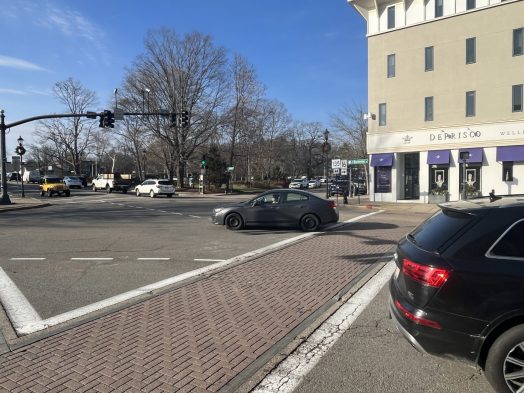
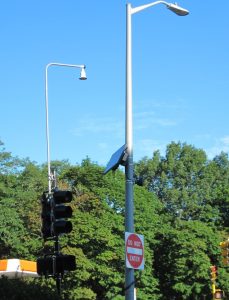
The camera, which had been located on a pole at the intersection of Rte. 9 East and Rte. 16 near Elm Park, was removed on Aug. 18. Flock devices capture license plate and other vehicle data, but don’t, for example, support facial recognition.
 “The landscape surrounding the use of Flock cameras has overwhelmingly changed since we began testing one Flock camera last year,” according to Wellesley Police Chief Scott Whittemore. “After reviewing the last year of use, I would not be inclined to deploy additional Flock cameras in the community or continue to use Flock after our contract expired in June of 2027. As such, I saw no reason to continue testing the Flock camera.”
The Swellesley Report posted an article on Aug. 5 sharing the department’s reasons for testing the technology. The town had not sent notice to residents about the trial, which it says is consistent with its general practice for departmental equipment and technology purchases unless it invests in a widespread deployment.
Increased scrutiny over municipal use of Flock Safety LPRs across the country has led to more and more cities and towns ditching them in the face of privacy concerns raised by members of the public and organizations such as the ACLU. Natick’s Select Board at the start of the year quashed a police pilot of Flock technology.
Flock last week responded to rising concerns about its technology by pledging to make changes, such as cutting default data retention to seven days and requiring customers to make misuse detection mandatory in the wake of disturbing reports.
Whereas some communities have installed networks of Flocks, leading to concerns about vehicles being tracked across a town or city and beyond, Wellesley had only a single Flock automated LPR at a high traffic spot.
You can check out an interactive map to see where Flock systems are installed.
The Wellesley Police department has been using mobile LPRs since 2014, and the ones it is using now come from Motorola. LPRs are also used by private businesses and the state police.
Whittemore says Wellesley installed the Flock at a time when many police departments in the area and in metro Boston were using the technology. “At the time we were an outlier who didn’t,” he says.
Flock devices capture license plate and other vehicle data, but don’t, for example, support facial recognition.
Using mobile LPRs has played a major role in helping the Wellesley Police Department solve a number of cases over the years, including mail theft, car thefts, a kidnapped dog, and a house break-in. The Flock system itself hasn’t contributed to any breakthroughs during its year-plus in town.