A reader shared some fun videos of beavers swimming and getting busy at Skating Pond (near the high school track and field).
See something? Send something: theswellesleyreport@gmail.com
Since 2005: More than you really want to know about Wellesley, Mass.
A reader shared some fun videos of beavers swimming and getting busy at Skating Pond (near the high school track and field).
See something? Send something: theswellesleyreport@gmail.com




I’m a pretty early riser, but some local gym rats have me beat—as apparently do the actual vermin that they increasingly find themselves jumping over, running around, or accidentally kicking in Wellesley Lower Falls when exercising outside their workout spot.
I did venture out before the crack of dawn one morning in late August to catch up with these fitness enthusiasts and see for myself what they were telling us about in emails with subject lines such as “Local rat infestation.” I got to the location at 5:30am on the dot, and immediately saw a few rats using bait traps as an obstacle course. Apparently, if I’d gotten there 15 minutes earlier when it was darker, I would have seen many more rats, some performing acrobatics on the fence.
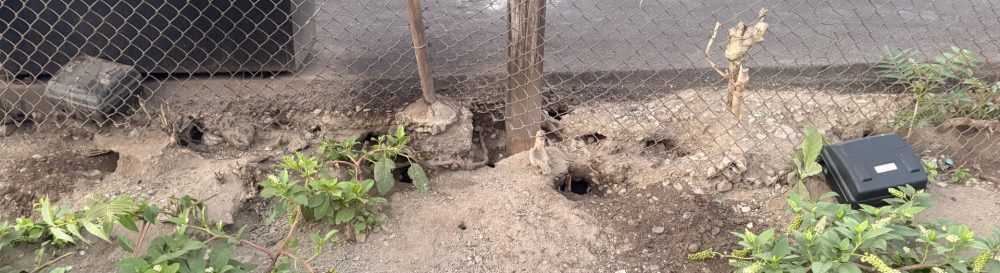
I’m keeping the exact location of where I went vague here, to protect nearby businesses that have nothing to do with creating the rat issue. But the problem is something of an open secret and a worrying one given the infectious diseases rats carry.
We spoke or emailed with owners or managers of three of the businesses in the area, and all are frustrated. “It smells like a farm out there,” says one, and there’s no actual farm anywhere nearby. Another lamented the fact that property owners weren’t working together to try to resolve the issue.
One workout participant told me the problem has been worsening throughout this year. Those who regularly see the rats have reported the issue to the Wellesley Health Department and tell us they have been dissatisfied with efforts to address the problem; the department says it has been on top of the situation but that improving it will take time.
While bait traps have been added by property owners in the area we visited—we saw about a dozen such black boxes in a fairly small space—we’ve been told that the rat colony has been able to thrive in a dirt berm between two paved surfaces. Those running into the rats would love to see that gap sealed.
The rodent problem at this site isn’t isolated. One business owner told me of a restaurant parking lot in another part of town that seemingly “moves” after hours. We separately received email from a reader who was aghast at seeing pest control workers spraying one early September morning at CVS in Linden Square near food (CVS has acknowledged pest control challenges in the recent past). “I am shaking. I am so upset and disturbed by this,” wrote the reader, who was with two young children at the time.
Chuck Danielson, who runs Integrated Pest Control in Sherborn and has been in the field for decades, says problems with rats and house mice have been bad “up and down the east coast” for at least 4-5 years. “People need to know what’s going on with these rats,” he says.
(An event called the National Urban Rat Summit will be held in Boston next week if you really are interested in knowing more.)
Danielson’s seen it all, including once catching 65 rats in a Natick house where hoarding was taking place. He’s not surprised about the rise of rats in Wellesley given all the restaurants.
“Every one has a dumpster. If you feed the rats, they’re going to be there,” he says, noting that even with regular emptying and no overflow rats can sneak into some dumpsters through drain holes or chew through some covers.
Female rats can have four or five pups every other month, he says, and mice can have six to eight every other month. So it doesn’t take long for their numbers to grow.
The Wellesley Health Department, too, acknowledges the rise in rodents in town (and beyond), particularly in commercial areas, and says it has been taking steps to address the situation. The increase began before the pandemic, but the town has seen larger numbers since then, with the shift to more people eating outside and more frequent droughts both seen as contributing factors. Rats, like us, need their food and water.
Wellesley has also been attracting more restaurants, not that anyone is complaining about that. Though some are looking to open where it’s not easy to have dumpsters, and that’s a concern for town health leaders.
In the the town’s FY 2025 annual report, under “Animal and Rabies Control,” 120 rodent inspections is shown. It’s hard to do year-to-year comparisons, though, because of the way the data has been shared publicly.
The rise of rodents has become a regular topic for discussion at Wellesley Board of Health meetings (see Wellesley Media recordings of the Sept. 15 meeting, about 52 minutes in, and Aug. 25, about 9 minutes in). The department in late August cited having received about a dozen complaints, some of them repeats.
Lenny Izzo, director of community and public health in Wellesley, told us that “We are aware of significant rodent activity in lower falls. Unfortunately we are not unique as most communities are having similar increases.” During the Aug. 25 meeting, Izzo says at one point “we are plagued with rodents across the board,” adding in chipmunks, squirrels, and more.
Following an uptick in complaints this summer, Health Department personnel visited the area in Lower Falls and met with nearby food service businesses. It then followed up by reaching out to all property owners to try to come up with a coordinated response.
“Fortunately, the food services and their individual pest control companies have not reported any activity inside their business. All of the issues we noted has been outside,” Izzo says.
The best practice underway in this area involves removing organic material, laying down wire mesh, and covering it with crushed stone, Izzo says. The process of eliminating burrows has possibly increased rat visibility in the short term as the vermin scramble for new accommodations.
“These situations take time to eliminate,” Izzo says.
Adam DiPersio, senior environmental health specialist for the town, says getting property owners and their pest control companies to work together is key. Otherwise, a pest control effort at one location can drive critters to others, and possibly undo their recent pest control work. The Health Department strives to take an educational approach with businesses and residents, though could be forced to bring a property owner or business before the Board of Health if issues persist.
Izzo added that he has met recently with those from other Wellesley departments to discuss potential town-wide changes to combat increased rodent activity.
While rat problems have surfaced largely in commercial areas, questions have been raised at Board of Health meetings about possible issues in more residential neighborhoods in light of more people using private companies for trash pickup. Izzo says that with consolidation in that industry, he’s seen less well managed operations, and that the department has received more and more complaints related to trash barrels.



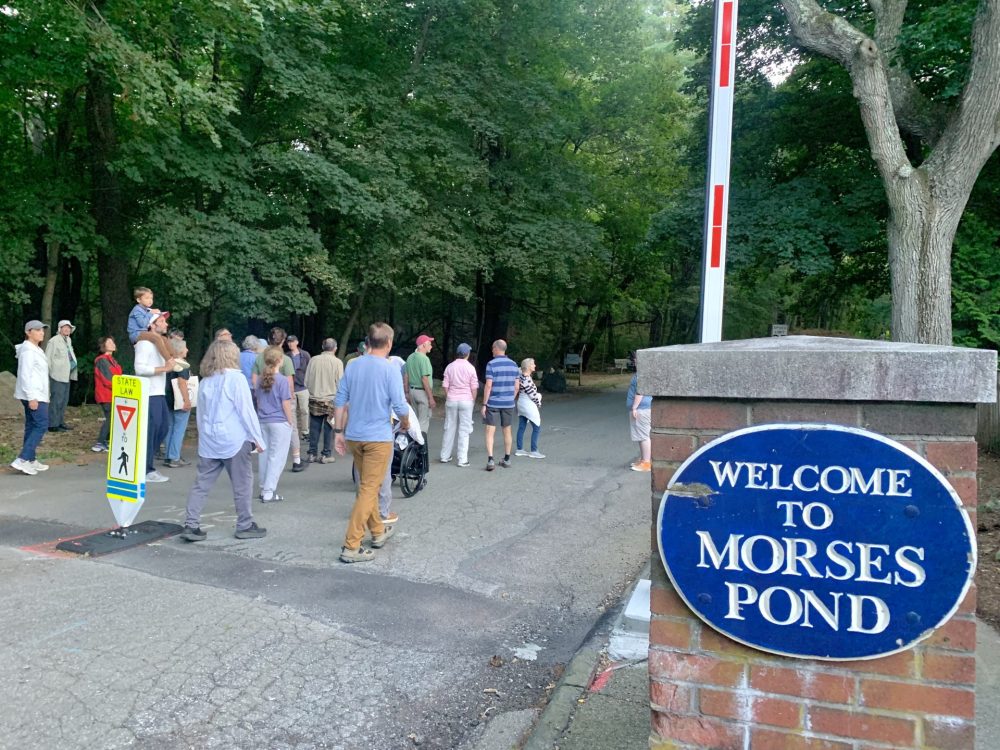
As dusk settled over Wellesley, a expectant crowd of thirty gathered at the Turner Road gate, off Weston Rd. The scent of DEET was in the air, along with a sense of excitement. Adults and kids were gathered to see bats and learn about these often misunderstood mammals.
Leading the twilight excursion was Wellesley Conservation Land Trust (WCLT) board member and naturalist Bill Giezentanner. As the group moved down the access road, heading down toward the quiet waters of Morses Pond, the forest began its nightly transition. The daytime songbirds fell silent, and the true custodians of the night sky began to flit about.
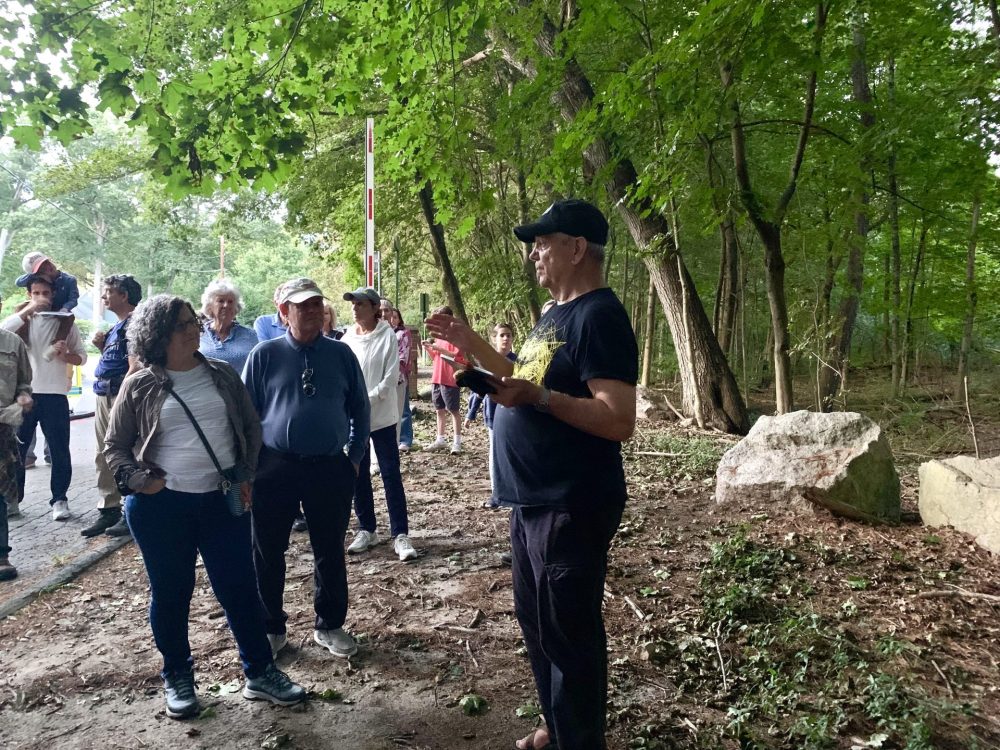
Armed with his trusty bat detector, Bill spoke about New England’s bat populations the challenges they face, and why humans need these creatures. All nine species of bats residing in Massachusetts are insectivores, fulfilling a vital ecological role. A single bat can devour a few thousand mosquitoes in a single night. Despite the presence of bats overhead, a few of the insects dared to break through the bat gauntlet to pester some in the crowd, attracted, no doubt, by the cloud of carbon dioxide produced by our breath.
Bill broke down the bat species particulars. The Eastern Red Bat, the Hoary Bat, and the Silver-Haired Bat are migratory travelers that head south for the winter, while the rest make Massachusetts their year-round home. During the summer months, Little Brown Bats and Big Brown Bats often choose human neighbors, preferring to roost in attics, barns, and building walls. Tri-colored bats, Eastern Small-Footed Bats, Indiana Bats, and Northern Long-Eared Bats tend to retreat deeper into the wilderness, taking up residence in hollow tree trunks and quiet woodland shelters.
Throughout the walk Bill held up a bat detector, an electronic device designed to pick up high-frequency ultrasonic echolocation calls and translate them into sounds human ears can perceive. Several Little Browns were darting about and although not swarming in the dozens, there were more than enough to captivate the onlookers and make the evening a true bat walk.
But sight of these tiny flyers was bittersweet. Bill explained the tragic history hanging over local bat populations.
A struggle for survival
The Little Brown Bat was once the most abundant bat species in Massachusetts. Indeed, Mrs. Swellesley recalls hundreds upon hundreds of them flying out of the chimney of her junior high school during outdoor fife and drum corp practice at dusk on warm summer evenings in the 1970s. It was quite a site. (As for why bats in the school, let’s just say Hamden, CT adopted a “live and let live” philosophy toward the creatures.)
Little Browns moved from commonplace to rare after White-Nose Syndrome reached American shores in 2006. The deadly fungal disease was accidentally introduced into an upstate New York cave by a European visitor carrying spores on their gear. The fungus infects bats while they hibernate, disrupting their deep winter sleep and causing them to burn through crucial fat reserves until they starve to death. Because European bats coevolved with the fungus, they are unaffected, but North American populations had no natural immunity.
The devastation was catastrophic. According to MassWildlife, Little Brown populations in Massachusetts plummeted by more than 99%. Overall, the disease killed about 90% of cave-hibernating bats in affected regions. In 2012, MassWildlive listed all four cave-hibernating species as endangered. (The Little Brown Bat, Northern Long-eared Bat, Eastern Small-footed Bat, and Tricolored Bat.)
Yet, as Bill pointed out, there is hope. Researchers believe surviving local bats may finally be developing a tolerance to the fungus, following in the footsteps of their European counterparts. Recent years have shown gradual signs of a slow, fragile rebound.
In fact, as the group stood listening near the shoreline, the bat detector suddenly kicked into action. The device flagged the sound as belonging to a Tricolored Bat—one of the state’s most severely threatened, endangered species. Bill examined the readout with a seasoned eye, acknowledging he wasn’t 100% convinced the detector’s automated identification was correct. But the possibility alone was a highlight for the walk and enough for Bill to tell the group he would report the audio log and location details to MassWildlife for further analysis.
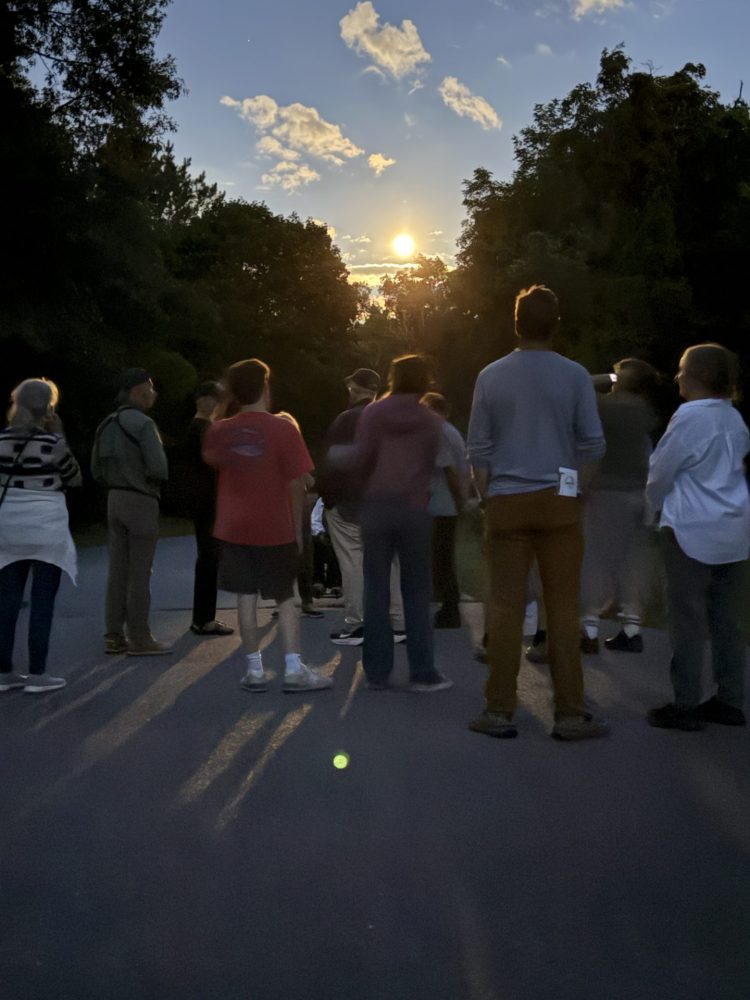
As the group made its way from Morses Pond back to the Turner Road gate, a brilliant waxing gibbous moon rose gracefully above the tree canopy, lighting the way back to everyone’s waiting cars.
No registration required for the following trail walks, and all walks are free. Walks take place unless it pours rain and there are high winds. Participants are encouraged to wear sturdy footwear.
TRAIL WALK: Wellesley Trails Committee Walk, North 40
DATE/TIME: Friday, Sept. 18, 10am-11:15am
LOCATION: Meet on Turner Road near the vernal pooL, which is near the Weston Road end of the street
DISTANCE: 1.0 mile
The North 40 offers a wide range of interesting sites and history. You will see a vernal pool, 500-foot-long boardwalk, community gardens, the aqueduct, a huge and unique seedling tree and more. You will also learn of the Crosstown trail, of which North 40 is a part of.
EVENT: Wellesley Trails Committee, Morses Pond Kids Trail Day
DISTANCE: 1.0 miles
DATE/TIME: Saturday, Oct. 3, 10:30am – 12:30pm
An annual highlight when kids delight in exploring nature in the beautiful woods at Morse’s Pond. Every year, the children enjoy looking for treasure boxes using letterboxing (written clues). Refreshments served at the end of the activities. Children must be accompanied by an adult. Meet at the Morses Pond beach parking lot. From Weston Road, follow Turner Road to the entrance to Morses Pond.
TRAIL WALK: Wellesley Trails Committee, Town Forest -1.6 miles
LOCATION: Meet at Longfellow Pond parking lot. Use this address for GPS: 204 Oakland St., Wellesley.
DATE/TIME: Saturday, Oct. 17, 10am – 11:15am
There is so much more than the loop around Longfellow Pond! The Town Forest is the largest reservation in Wellesley and supports a wide variety of wildlife and birds in a natural environment. Walk along the Longfellow Pond shoreline and climb to the top of a spectacular high esker deposited by glaciers and then back at the pond, view the summer residence of Chief Maugus and his Algonquin tribe.


EVENT: Bat walk
DATE: Wednesday, August 26 (Rain date: Thursday, August 27th)
SIGN-UP: Signing up will help the group communicate with you in case of postponement
TIME: 7:15pm
LOCATION: Meet at the Morses Pond gate at the end of Turner Road. Park on the North 40 (wooded) side of the street.
SPONSOR: Wellesley Conservation Land Trust
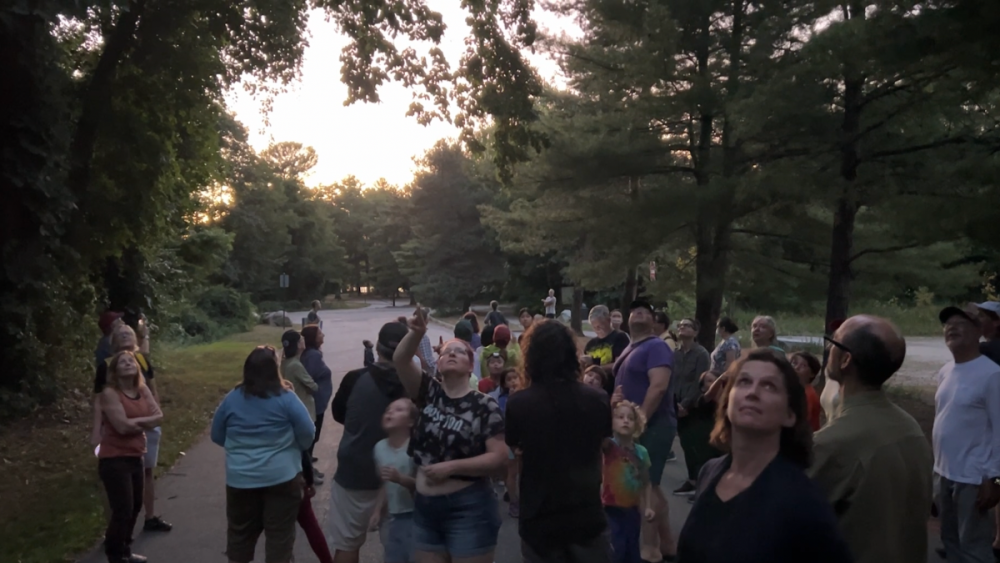
DESCRIPTION: Come see, hear, and learn about bats in Wellesley (Wellesley Conservation Land Trust’s fifth annual)! See a real bat detector in action. Did you know bats eat a few thousand mosquitoes every night?
Please take proper mosquito precautions.


We’ve been swarmed over the past week with reports and photos of invasive spotted lanternflies descending upon Wellesley’s trees and plants.
Especially disturbing was a photo shared on social media of a tree at Centennial Reservation covered by lycorma delicatula, to get scientific about it.
This quarter-sized insect has gray wings with black spots and red underwings that are visible during flight. They’re pretty pests.
According to the Commonwealth’s Department of Agricultural Resources, spotted lanternflies damage trees (like the tree of heaven) and other woody plants by sucking their sap. The department informed Wellesley in 2023 about lanterflies at Carisbrooke Reservation, near the Weston line.
You can report sightings to the state online.
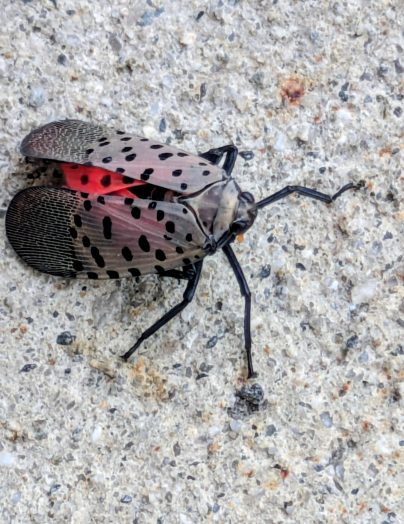
We’d come across a couple of lanternfly nymphs ourselves earlier this month in Natick. We are in peak spotted lanternfly season as the nymphs become adults.
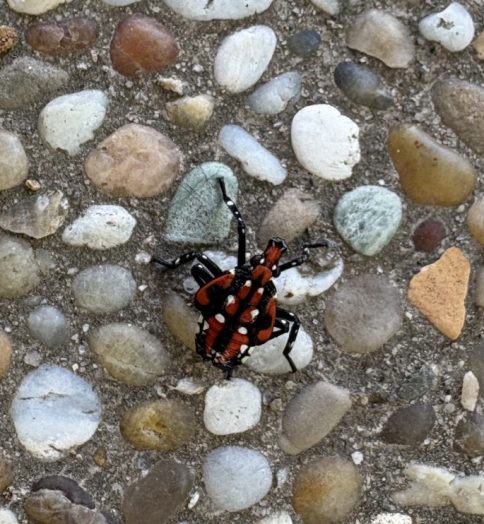
Wellesley Natural Resources Director Brandon Schmitt says the town has alerted gardeners at both the Weston Road and Brookside Community Gardens, where the presence of spotted lanternflies has been observed.
“I’m not sure this is something new, except maybe now we are seeing them in greater numbers than before. The state has not changed any of their protocol or recommendations in terms of management, reporting, etc,” Schmitt says.
He adds that early stage research suggests the insects may not be as destructive to fruit and other tree species as once thought.
Residents are encouraged to remove invasive species, such as tree of heaven, that spotted lanterflies are attracted to, and the town tries to follow its own advice on that front, too.
“Folks are still encouraged to report sightings, squish the insects and scrape off egg masses when they can,” Schmitt says. The insects don’t bite or sting.

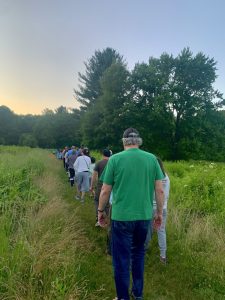 Light up your night! Join WCLT Board Member, Chris Crowley, on a guided walk of Boulder Brook Reservation learning about and scouting out fireflies! Last year’s walk was crazy good. Safely catch & release.
Tuesday, June 30th at 8:25PM (Rain date Wednesday, July 1st)
Meet: Bates Elementary School parking lot by fields, 116 Elmwood Rd, Wellesley
Sign up (recommended but not required) so we can let you know if it is postponed for rain.
Please wear mosquito protective clothing. Go light on insect repellant.

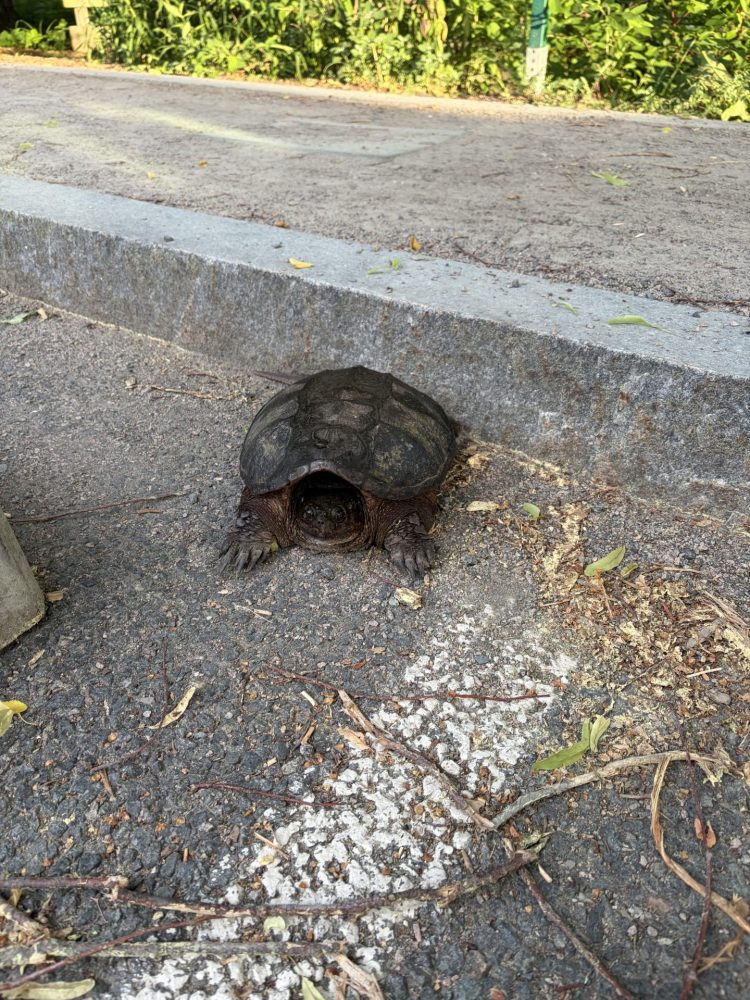
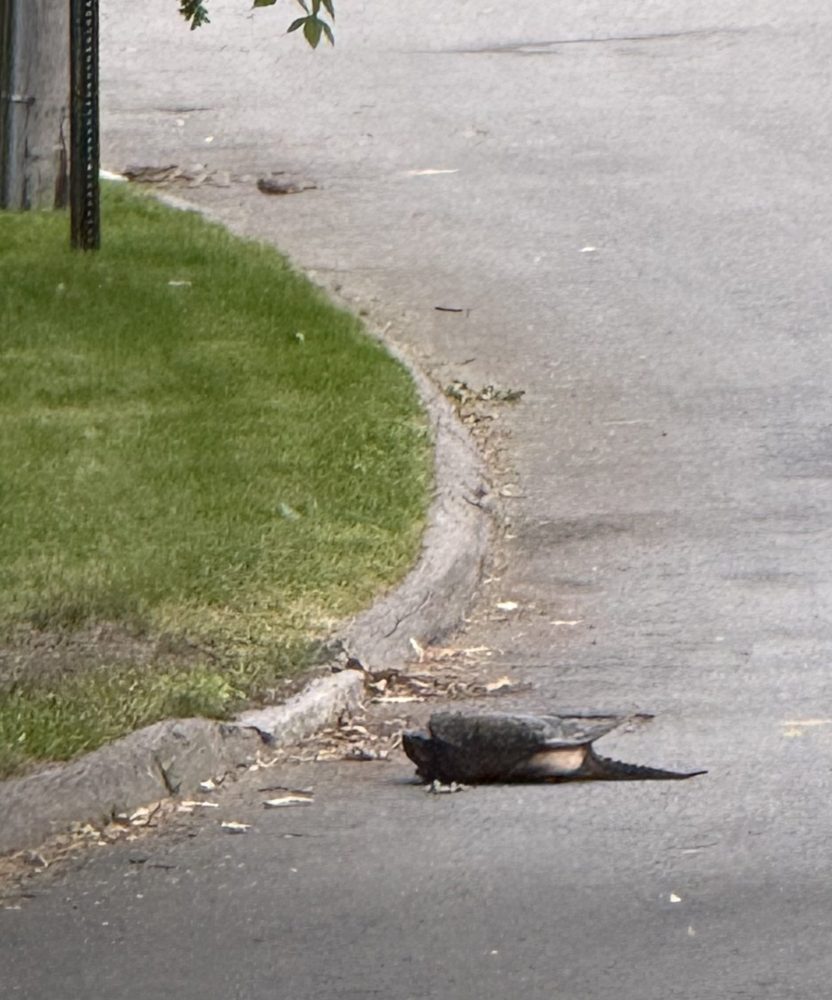
We’re hearing about increased turtle sightings in Wellesley, and indeed it is peak turtle nesting season.
One resident reports having just seen big turtles in the parking lot at the high school track, and then another over by Glen Road.

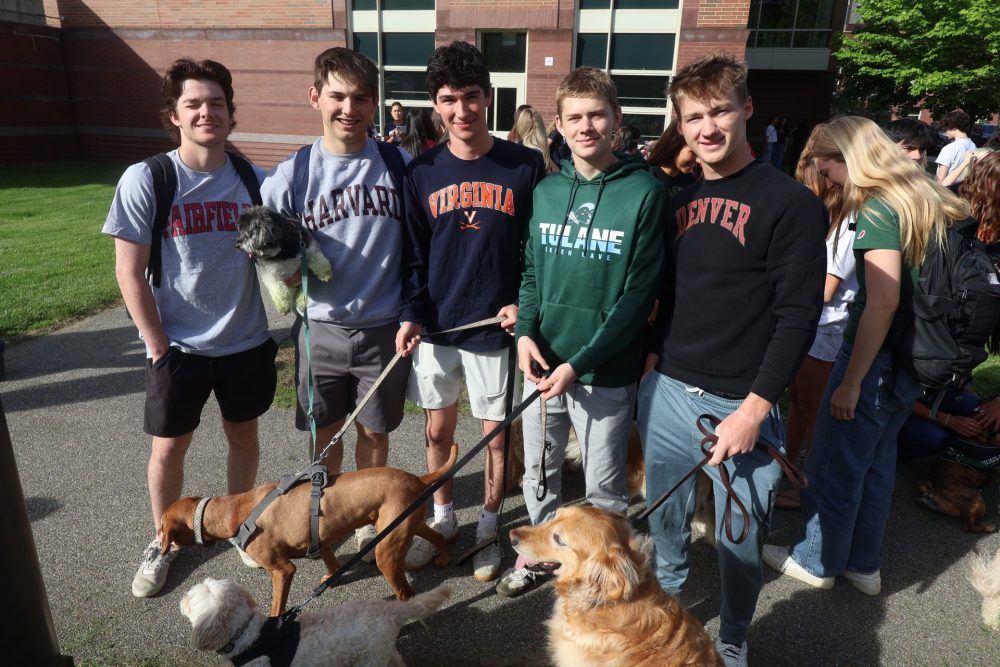
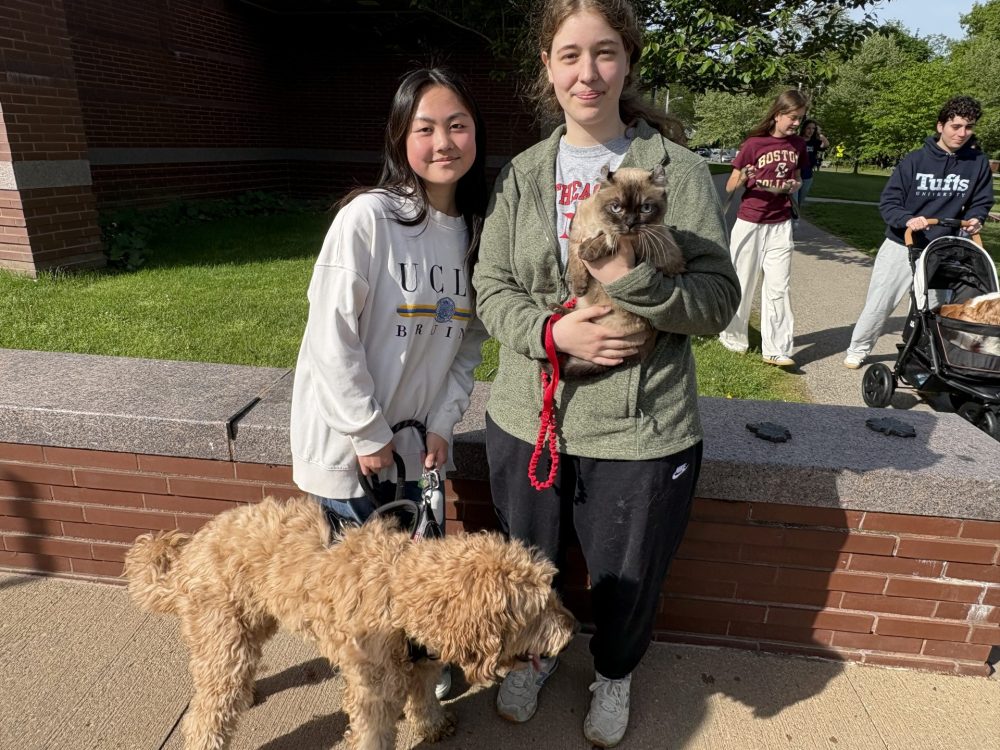
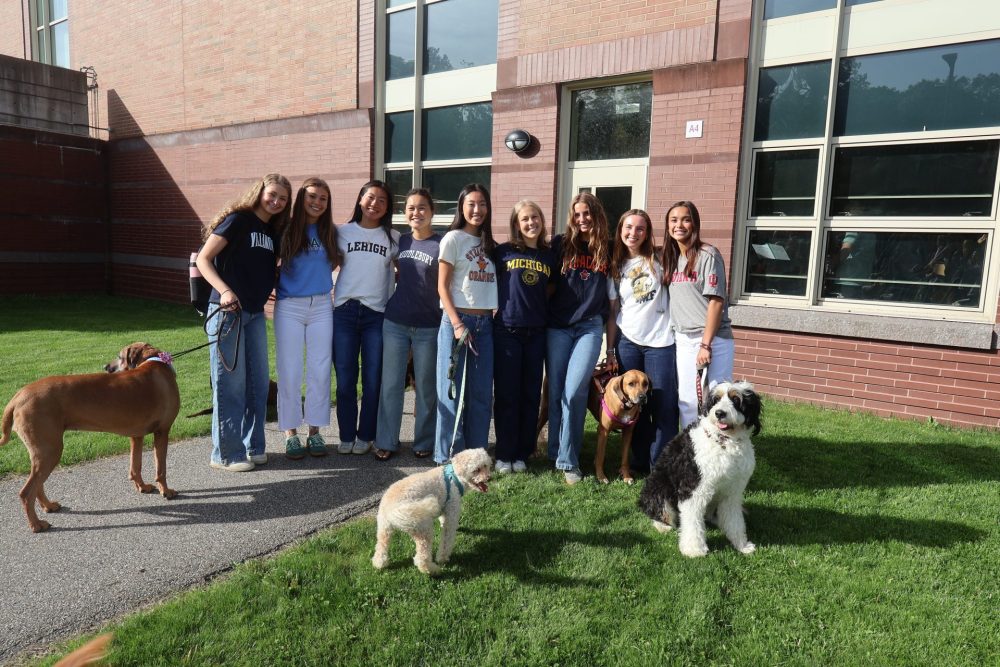
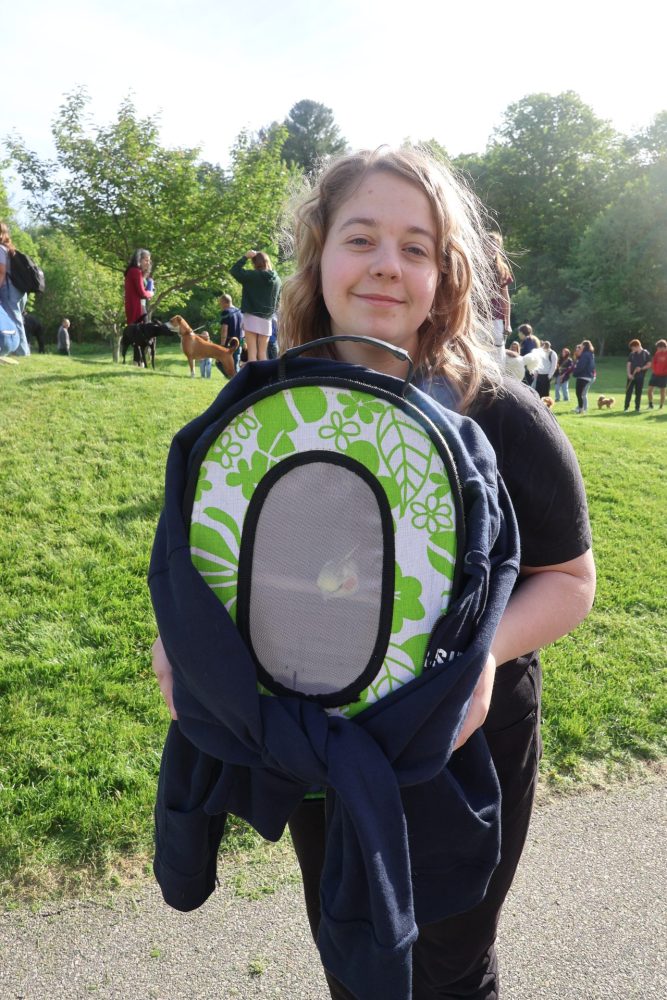
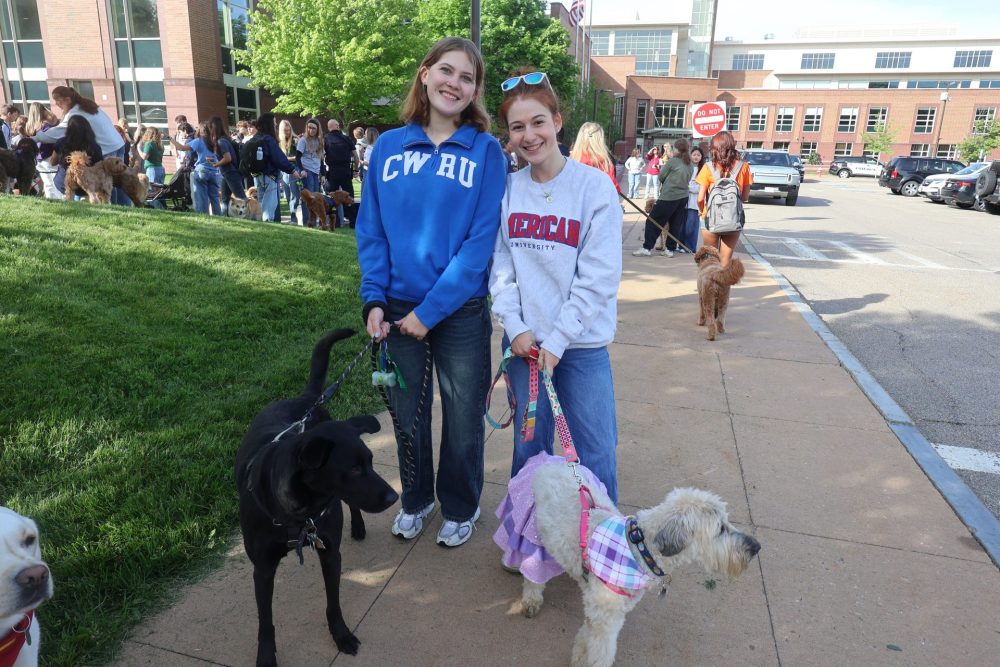
The fun seemingly never stops for Wellesley High School seniors leading up to their Friday, June 5th graduation. That included last week’s annual Pet Parade, which we were glad to see included a variety of critters, not just dogs (not that they weren’t adorable).
Cats, turtles, and birds also represented.
Last year, according to John Malone, Assistant to the Principal, a few ferrets joined the action.



Need more? Check out Wellesley Media’s video on the recent Pups in the Park during Wellesley Wonderful Weekend.
See something? Send something: theswellesleyreport@gmail.com